


Cu Chi Tunnels often confuse travelers with conflicting network lengths and visitor site choices. Are they 250km or 121km long? Should you book Ben Dinh or Ben Duoc? This guide clarifies the real measurements, wartime history, and current entry details. Discover exactly what to expect, avoid crowded tourist traps, and plan an authentic underground exploration without the guesswork.
Countless guidebooks describe the network as a 250-kilometre labyrinth, a figure repeated so often it has become gospel. Wikipedia gives a different number entirely. I am Vani, founder of Truly Voyage. This guide sorts out what is actually verifiable about this site: how long the tunnels really were, which of the two visitor sites you should book, and what changed here in 2025 that almost no other article mentions. None of this is trivia for its own sake. It changes what you should actually expect when you go. 💡

Table of Contents
ToggleBen Dinh or Ben Duoc, Which Site Should You Pick?
Ben Dinh if you are on a budget group tour and time matters significantly. Ben Duoc if you want more of the original tunnel system and a site that feels less like a theme park.
Distance, Size and What Each Site Actually Offers
Ben Dinh sits 40 to 50 kilometres from central Ho Chi Minh City, roughly an hour to ninety minutes by road, and it is where numerous budget group tours go. 🚌 The shorter drive fits more bus groups into a single day, which keeps tour prices down and explains why it is a common stop on nearly every US$16 to US$20 half-day tour sold in the city.
Ben Duoc sits further out, 57 to 70 kilometres, closer to two hours in real Saigon traffic. It is roughly five times larger than Ben Dinh, and it holds more of the original wartime tunnel system rather than sections rebuilt or enlarged specifically for visitors. Private and premium tours favour Ben Duoc precisely because it feels less like a theme park, with fewer coach groups and a layout that has not been produced around tourist throughput the way Ben Dinh has (Source: Jungle Boss Tours).
| Feature | Ben Dinh Site | Ben Duoc Site |
|---|---|---|
| Distance from HCMC | 40 – 50 km | 57 – 70 km |
| Travel Time | 1 to 1.5 hours | ~2 hours |
| Network Preserved | Heavily widened for tourists | More original & authentic |
| Crowd Levels | High (mostly large bus tours) | Low (quieter, private tours) |
Digging at Cu Chi began in 1948, against French colonial forces, well before the American war most visitors associate with the site. ⛏️ Expansion accelerated through the early 1960s, reaching its greatest extent by around 1966 to 1967, and the network served as a staging base ahead of the 1968 Tet Offensive (Source: History.com). That two-decade construction timeline is one reason the two sites differ so much in character. Ben Duoc simply preserves more of that original build.
Vani Tips: If a tour operator does not name which site you are visiting, ask directly before you book. Ben Dinh and Ben Duoc differ enough in size, crowd levels and how much original tunnel survives that the choice genuinely changes what kind of day you have.
How Long Was the Tunnel Network Really?
Somewhere between 121 and 250 kilometres, depending on what exactly is being measured. No single figure here is settled fact.

Two Numbers, Two Different Things Being Measured
The 250-kilometre figure is the one you will see everywhere, repeated across tour listings and blog after blog. It describes the tunnel network’s extent at its wartime peak, across the whole of Cu Chi district and neighbouring communes, by around 1967. 🗺️ Wikipedia, by contrast, cites a considerably lower 121-kilometre figure for the tunnel complex as it is currently mapped and preserved for visitors (Source: Wikipedia).
Both numbers can be true at once. They simply describe different things. No primary government source with an authoritative figure could be found for either number in this research. Treat 250 kilometres as the commonly cited figure rather than an uncontested fact, and treat 121 kilometres as the conservative estimate for what is actually preserved and walkable today.
Vani Tips: If you hear a guide state a single precise figure with total confidence, especially anything beyond 250 kilometres, treat it as showmanship rather than data.
Is This Actually a UNESCO World Heritage Site?
No, not yet. Ho Chi Minh City has pursued the designation since at least 2021, but as of this research, no approval has been granted.

A Pending Bid, Not a Finished Listing
Ho Chi Minh City’s authorities have been pursuing UNESCO World Heritage recognition for the Cu Chi Tunnels since at least 2021, when the effort was already being reported by Vietnamese state media (Source: VietnamPlus). Coverage of the bid has continued to surface periodically since then. None of it confirms an actual inscription. 🏛️
If you read or hear that the Cu Chi Tunnels are a UNESCO World Heritage Site, stated as settled fact, that claim is currently false. The site may well earn the designation eventually. It has not yet.
Explore the Authentic Tunnels Without the Crowds
Join our premium private tours to experience the real Ben Duoc tunnels, guided by local experts.
What Changed Here in the 2025 Administrative Reform?
Cu Chi District stopped existing as an administrative unit on 16 June 2025, absorbed into commune-level units directly under the expanded Ho Chi Minh City.
A Paperwork Change, Not a Visitor-Experience One
Cu Chi District was formally dissolved on 16 June 2025 and reorganised into commune-level units sitting directly under Ho Chi Minh City. This fell under the same Resolution 1685/NQ-UBTVQH15 that restructured wards and administrative boundaries across the whole newly merged city (Source: Wikipedia). It is the same nationwide reform that folded Binh Duong and Ba Ria-Vung Tau provinces into an enlarged Ho Chi Minh City that same year. 📝
Nothing about actually visiting changes because of this. The tunnels sit in the same physical location, the roads out there have not moved, and Grab or a private car will get you there exactly as before. The name Cu Chi will keep appearing informally on road signs and in every tour listing for the foreseeable future.
What Was the Tunnel Network Actually Used For?
Far more than hiding spots. The tunnels functioned as a complete underground settlement: hospitals, kitchens, weapons workshops, communication routes and living quarters, all dug by hand.
An Underground Settlement, Not Just a Hiding Place
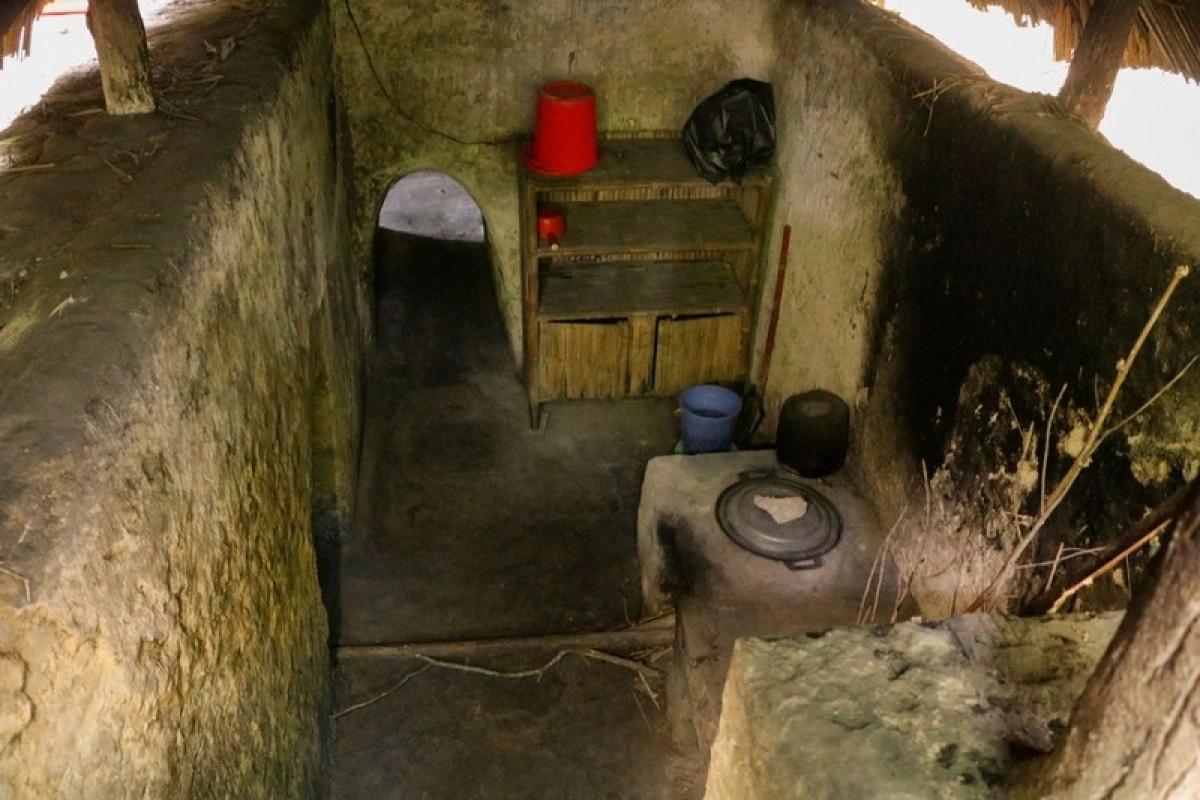
The network served as genuinely multi-purpose underground infrastructure rather than a simple set of hiding holes. Sections functioned as communication and supply routes, field hospitals, food and weapons caches, living quarters, kitchens, and even ordnance workshops and spaces used for entertainment (Source: History.com). This was, in effect, an underground settlement built by hand over two decades.
Vani Tips: Ask on-site, or ask your guide directly, which specific sections of what you are shown were used for what purpose during the war. A good guide will point to the difference rather than treating every tunnel as identical.
Case Study: A Step-by-Step Experience at Ben Duoc
To understand the real visitor journey, here is a practical step-by-step breakdown of a recent Truly Voyage traveler’s morning exploring the Ben Duoc site.
Step 1: Morning Departure
Leaving the city centre at 7:30 AM helps avoid heavy commuter traffic. The two-hour drive offers a scenic transition from urban streets to sprawling rubber plantations. 🚗
Step 2: Arrival & Ticketing
Arriving by 9:30 AM, the entrance fee is paid in cash at the counter. The atmosphere here remains exceptionally quiet, with significantly fewer large coach buses compared to Ben Dinh. 🎟️
Step 3: The Jungle Walk
Walking through the preserved foliage with a local on-site guide reveals incredible camouflage techniques, such as ventilation shafts completely disguised as termite mounds. 🌿
Step 4: Underground Navigation
Crawling through a 20-metre section of original, un-widened tunnel requires moving on hands and knees. It vividly showcases the harsh, claustrophobic reality of the wartime network. 🔦
Step 5: Traditional Rations
The visit concludes with a taste of boiled tapioca dipped in salted peanuts—the staple survival food that sustained guerrilla fighters for years underground. 🍲

How Do You Actually Get There, and What Does a Visit Cost?
Expect roughly 110,000 to 135,000 VND per foreign adult at the gate. A commercial tour is convenient here, not required.
Transport, Tickets and Whether You Need a Tour

A private car or Grab is a highly practical way to reach either site, running roughly one to two hours each way depending on traffic. Admission runs approximately 110,000 to 135,000 VND per foreign adult, cash only at the counter. The exact figure has shifted in recent years, so it is worth confirming at the time of booking rather than relying on any single published number (Source: Joy Journeys). 💵
Visiting independently without a commercial tour package is genuinely possible. You can buy admission directly at the gate, and public buses reach both sites for a fraction of a private car’s cost. The real choice is between arranging your own transport or having it arranged for you, not between a guided and unguided experience, as most independent visitors still walk the complex alongside a local on-site guide once inside.
For the fuller picture of what an actual day here involves, including the shooting range and the walk-through tunnels themselves, our Cu Chi Tunnels tour guide covers that in depth.
Need Help Planning Your Ho Chi Minh City Itinerary?
Let our travel experts arrange a seamless, uncrowded experience to the Cu Chi Tunnels and beyond.
Frequently Asked Questions About the Cu Chi Tunnels
How long is the Cu Chi tunnel network really?
Quick Answer: Somewhere between 121 and 250 kilometres, depending on what is being measured. The higher figure describes the wartime-peak network across the district by 1967; the lower figure, from Wikipedia, describes the complex as currently mapped and preserved.
Should I visit Ben Dinh or Ben Duoc?
Quick Answer: Ben Dinh if time and budget matter most, since it is closer. Ben Duoc if you want more of the original tunnel system and fewer crowds, despite the longer drive.
Are the Cu Chi Tunnels a UNESCO World Heritage Site?
Quick Answer: No, not yet. Ho Chi Minh City has pursued the designation since at least 2021, but no approval had been granted as of this research.
What changed in the 2025 administrative reform?
Quick Answer: Cu Chi District was dissolved on 16 June 2025 and reorganised into commune-level units under the expanded Ho Chi Minh City. This affects official paperwork, not the visitor experience.
What were the tunnels actually used for?
Quick Answer: Far more than hiding. Sections served as hospitals, kitchens, weapons workshops, supply routes and living quarters, forming a genuine underground settlement.
Conclusion
Pick Ben Duoc if the choice is genuinely open to you, and say so explicitly when you book rather than letting a budget tour operator default you into Ben Dinh. You will pay slightly more and travel a little longer. But you will spend your time in a place that still holds more of what was actually dug here by hand between 1948 and 1968, rather than a version rebuilt around how many buses fit in the car park. The 250-kilometre figure will still be on the sign either way. What you are actually standing in changes completely.
Further Reading & Resources
- Jungle Boss Tours, Ultimate Cu Chi Tunnels Guide – Direct Link
- History.com, Cu Chi Tunnels: Facts, History and Length – Direct Link
- Wikipedia, Cu Chi tunnels – Direct Link
- VietnamPlus, Cu Chi Tunnels on path of becoming world treasure – Direct Link
- Wikipedia, 2025 Vietnamese administrative reforms – Direct Link
- Joy Journeys, Cu Chi Tunnels Tickets Price – Direct Link

Vani is the Founder and Lead Travel Designer at Truly Voyage. With over a decade of experience and a deep passion for her Vietnamese heritage, she specializes in crafting bespoke, unhurried itineraries. Vani is dedicated to helping travellers experience the authentic soul of Southeast Asia with absolute financial security and 24/7 on-ground support.
3 Comments