
A wellness retreat in Vietnam differs from a beach spa holiday when built around structured daily sitting practice. Using a real nine-day group journey arranged by Truly Voyage—five days of guided meditation at Yen Tu followed by Ninh Binh’s rivers—this guide compares mountain, lake, highland and coastal settings so you can match pace, seating and meals.
Leaving the Noise Behind: A Silent Retreat in Vietnam Begins
Choosing between a quiet resort stay and a structured silent retreat in Vietnam starts with deciding how you want each day organized: open leisure hours by the sea or scheduled group sitting in a dedicated hall.
When Ms. Julie and a group of forty travellers landed in Hanoi for a nine-day retreat coordinated by Truly Voyage, they transferred directly out of the capital rather than starting with street food or city sightseeing. Their base was Legacy Yen Tu at the foot of Yen Tu Mountain in Quang Ninh Province, roughly three hours east of Noi Bai Airport by private coach.
Yen Tu is the historic cradle of Truc Lam Zen Buddhism, founded in the thirteenth century by King-Monk Tran Nhan Tong (Source: Vietnam Tourism). On 12 July 2025, UNESCO inscribed the Yen Tu – Vinh Nghiem – Con Son – Kiep Bac Relics and Landscape Complex on the World Heritage List, recognizing seven centuries of living Truc Lam heritage across northern Vietnam.
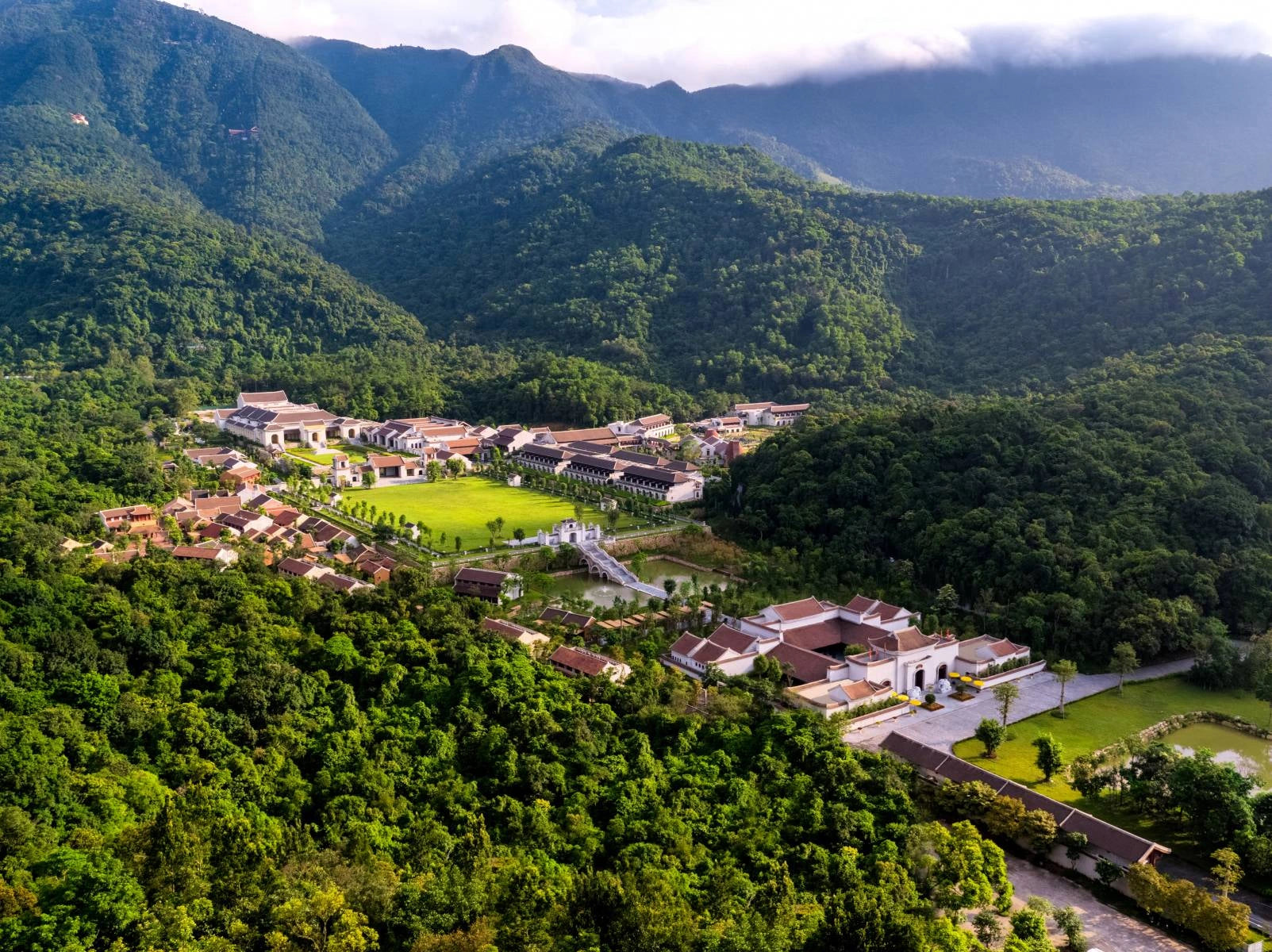
Built with thirteenth-century Tran Dynasty architectural motifs, the valley property uses rice-husk wall plaster, dark timber pillars, ceramic tiles and quiet courtyards. Because it functions as a full-service mountain hotel rather than an austere monastic dormitory, older travellers can sleep in private en-suite rooms with Western beds while walking on flat stone corridors to a dedicated practice hall.
The Art of Meditation: Inside a Vietnam Meditation Retreat
Before choosing a venue, clarify whether your party wants facilitator-led breath meditation, monastic chanting, or gentle mindfulness combined with cultural touring.
Sitting meditation trains attention on a clear anchor—most often the physical sensation of breathing in and out—without chasing past regrets or rehearsing future tasks. When thoughts arise during a forty-five-minute sitting period, participants note them quietly and return attention to the breath rather than forcing the mind blank.
For travellers in their sixties and seventies, physical comfort determines whether multi-hour practice feels steady or exhausting. Floor cushions strain knees and lower backs that are unused to cross-legged sitting, so Truly Voyage confirms individual meditation stools or straight-backed chairs in advance alongside room temperature, quiet-hour boundaries and English-speaking facilitation.
Origins
King Tran Nhan Tong abdicated the throne in 1293 after leading Dai Viet through two thirteenth-century Mongol invasions, passing royal authority to his son before entering monastic life on Yen Tu Mountain in 1299. Uniting existing Zen lineages into the Vietnamese Truc Lam school, he emphasized mindfulness carried into ethical daily life rather than permanent withdrawal from society.
Steep ridges, bamboo groves and pine forests separated Yen Tu from court politics in Thang Long (modern Hanoi) while keeping pilgrimage paths open to lay practitioners. Seven hundred years later, those forested slopes still buffer valley retreat halls from highway noise and urban distractions.
The Journey Starts
Morning mist hangs over the tiled roofs when the wake-up bell sounds at 6:30 a.m., opening five consecutive days of structured sitting, walking meditation and quiet meals.
During Ms. Julie’s retreat, each day followed a predictable rhythm totaling up to eight hours of guided sitting and mindful movement, broken into manageable blocks with warm lotus-tea pauses and unhurried midday rest. Keeping phones silent and excursions off the schedule during the first five days gave participants time to settle into a calmer pace without packing and unpacking luggage.
Kitchen teams play an equally practical role on a meditation itinerary. Depending on your group’s tradition, Buddhist vegetarian catering (chay) in Vietnam may exclude not only meat, poultry and fish sauce, but also the five pungent roots—onion, garlic, shallots, leeks and chives—so dietary rules must be written into hotel banquet sheets before arrival.
| Stage | Daily focus | Mobility |
|---|---|---|
| Day 1: Yen Tu | Airport pickup, three-hour coach transfer, hall orientation and early rest | Flat corridors; luggage handled |
| Days 2–6: Yen Tu | Guided breath meditation blocks, tea breaks, vegetarian meals and rest | Low; stools or chairs arranged |
| Day 7: Yen Tu | Two-stage cable car ascent and stone stair walk toward Dong Pagoda | Moderate; steep summit steps |
| Day 8: Ninh Binh | Transfer south, Bai Dinh electric buggy visit and Trang An rowboat | Easy; electric cart and boat |
| Day 9: Hanoi | Quiet morning reflection and private transfer to Noi Bai Airport | Easy; two-hour highway drive |
The Climb Through the Clouds of Yen Tu
After five days of quiet sitting in the valley, the seventh morning shifts from stillness to an unhurried mountain pilgrimage toward the summit.
Rather than climbing the entire stone trail from the valley floor, the group boarded the two-stage Hoang Long and Bach Long cable car system over dense pine and bamboo canopy. Between cable car stations, stone walkways pass centuries-old pines and hillside pagodas such as Hoa Yen, allowing travellers to pause on shaded terraces whenever needed.
Yen Tu’s rocky summit rises to 1,068 meters above sea level, where Dong Pagoda—the Bronze Pagoda—stands above shifting mountain clouds (Source: VietnamPlus). Cast entirely in bronze and completed in its current 70-ton form in 2007, the compact shrine houses statues of Shakyamuni Buddha alongside the three Truc Lam patriarchs: Tran Nhan Tong, Phap Loa and Huyen Quang.
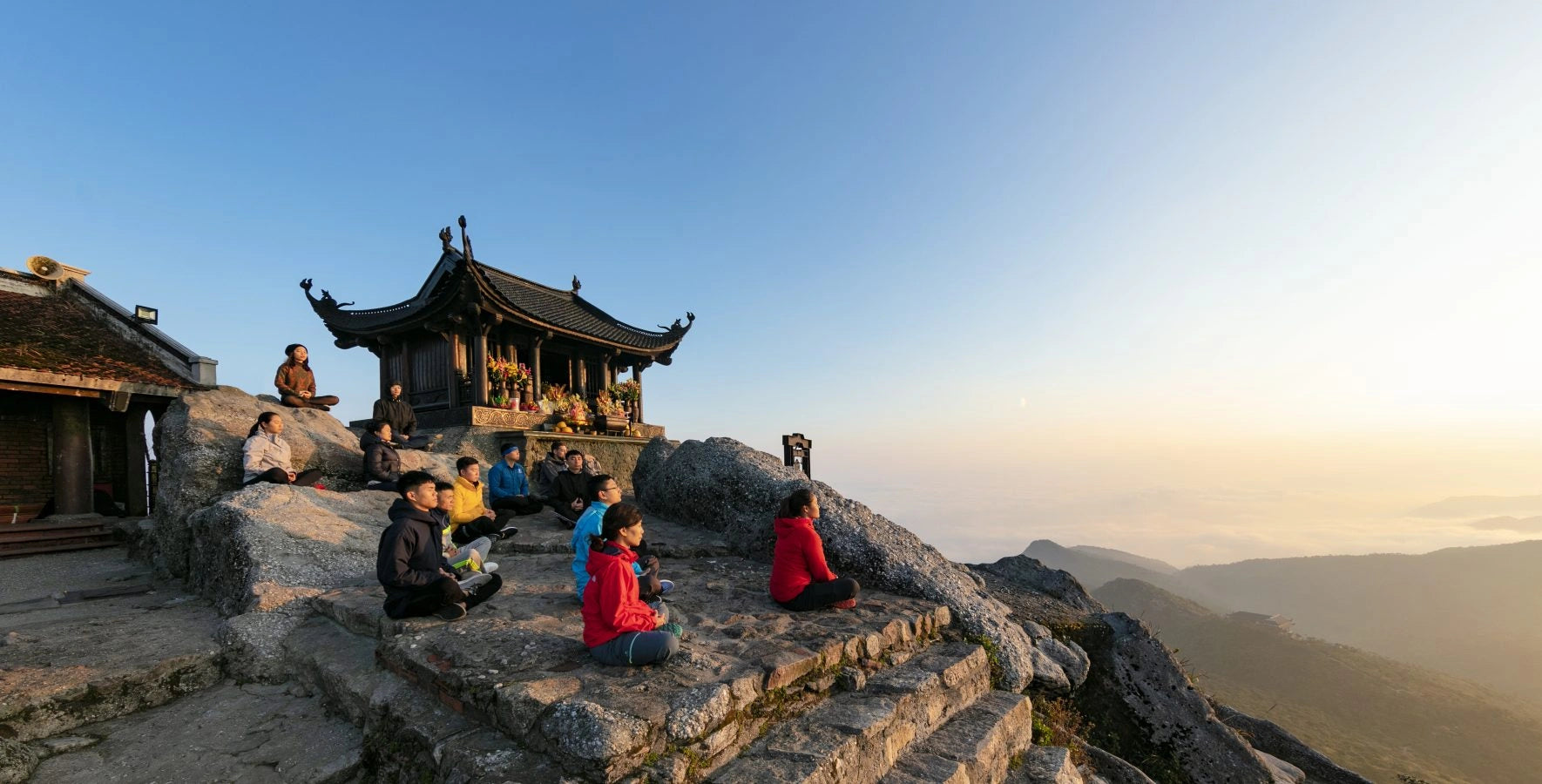
Even when riding both Yen Tu cable car stages, the final approach to Dong Pagoda involves uneven rock steps, cool wind and mist; travellers who prefer to skip the steep upper stairs can rest at the upper station plaza or Hoa Yen Pagoda while companions visit the peak.
The Waters of Trang An
On the eighth day, the group drove southwest from Quang Ninh to Ninh Binh Province, where limestone karsts frame flat river valleys. At the Bai Dinh Pagoda complex, electric shuttle carts carry visitors from the parking gate to the courtyard corridors lined with 500 carved stone Arhat statues, saving a long walk under midday sun.
Just beside Bai Dinh and Trang An lies Hoa Lu, the tenth-century royal capital of the Dinh (968–980) and Early Le (980–1009) dynasties, when learned Buddhist monks served as court advisors. Recognized by UNESCO in 2014 as Southeast Asia’s first mixed cultural and natural World Heritage property, the Trang An Landscape Complex links ancient temple caves with quiet waterways.
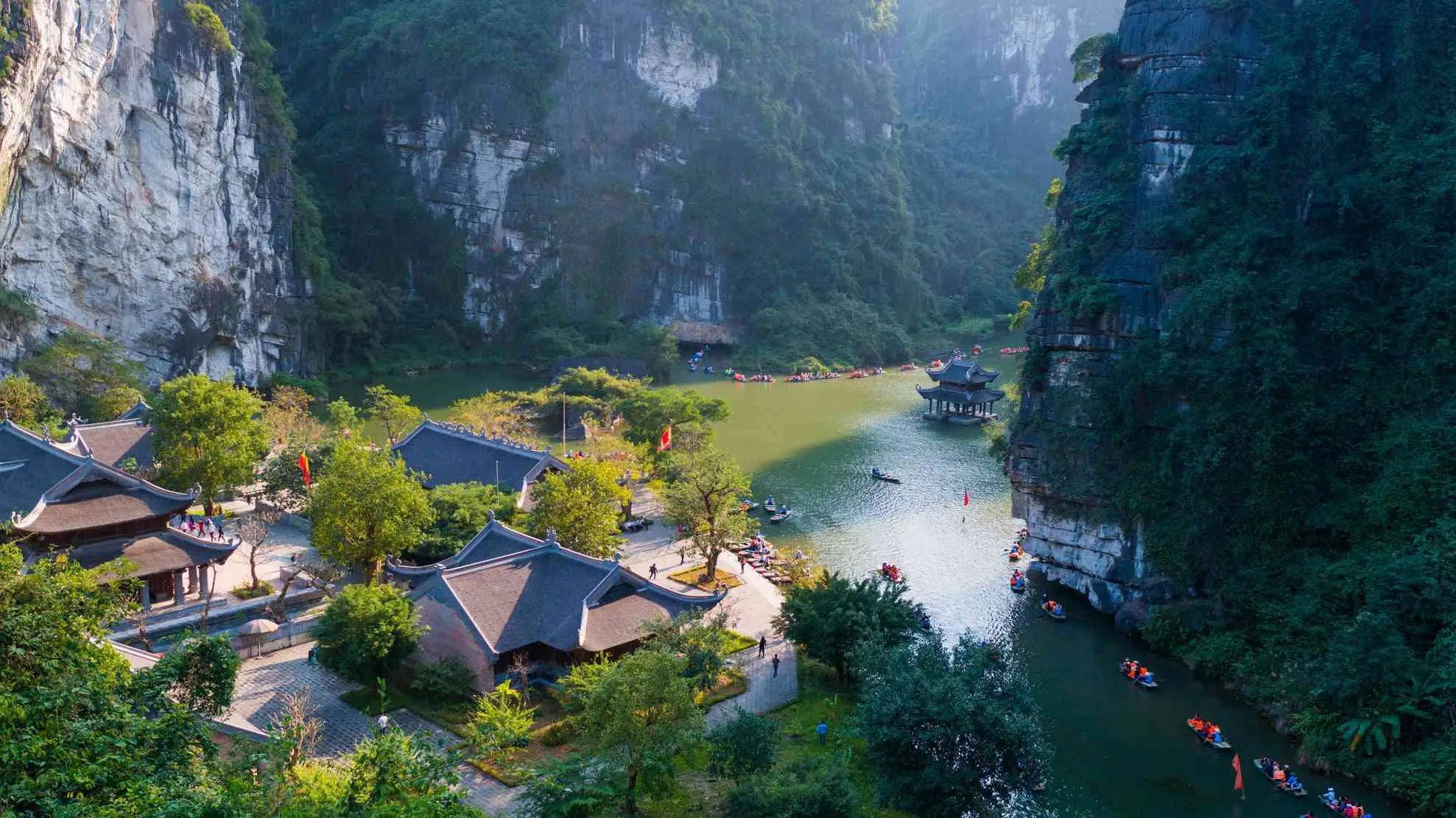
In the afternoon, small hand-rowed sampans carried four guests per boat through low water caves and enclosed karst valleys with only the sound of wooden oars on calm water. Travellers comparing boat routes or meat-free dining in the province can also check our Trang An vs Tam Coc comparison and Ninh Binh vegetarian dining guide.
Plan a meaningful journey at your own pace
Tet celebrations, meditation retreats, pilgrimages and homecoming trips, arranged around you.
Inside a Group Meditation Retreat Arranged by Truly Voyage
Photographs from Ms. Julie’s forty-person retreat illustrate how logistics—group arrival, hall setup, opening protocol and seating—work in practice.
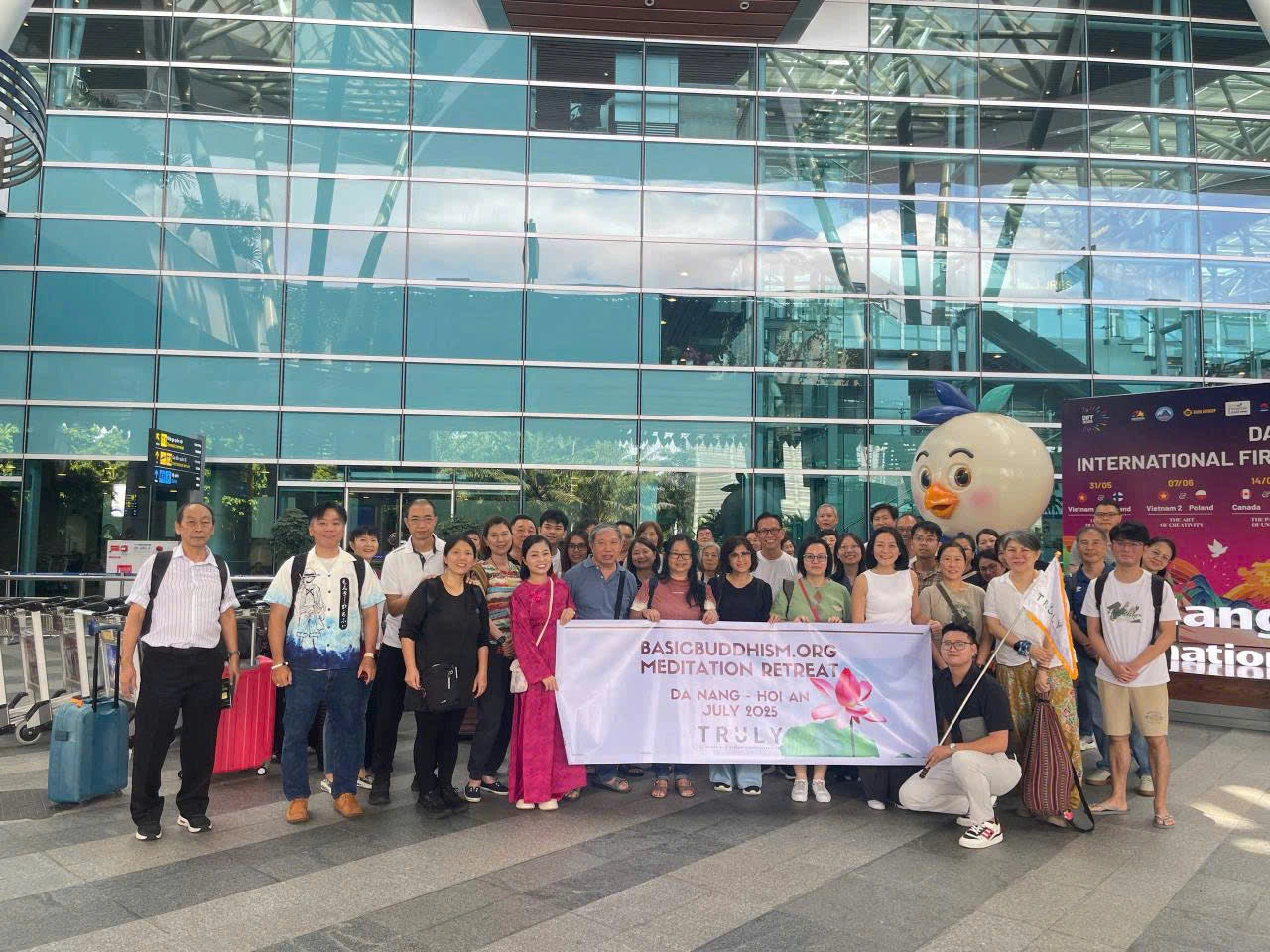
Step 1 — Coordinated Group Arrival
Travelling as an affinity group means airport greeting, luggage trucks and coach assignment happen together on arrival so guests reach the valley hall without navigating transfers individually.
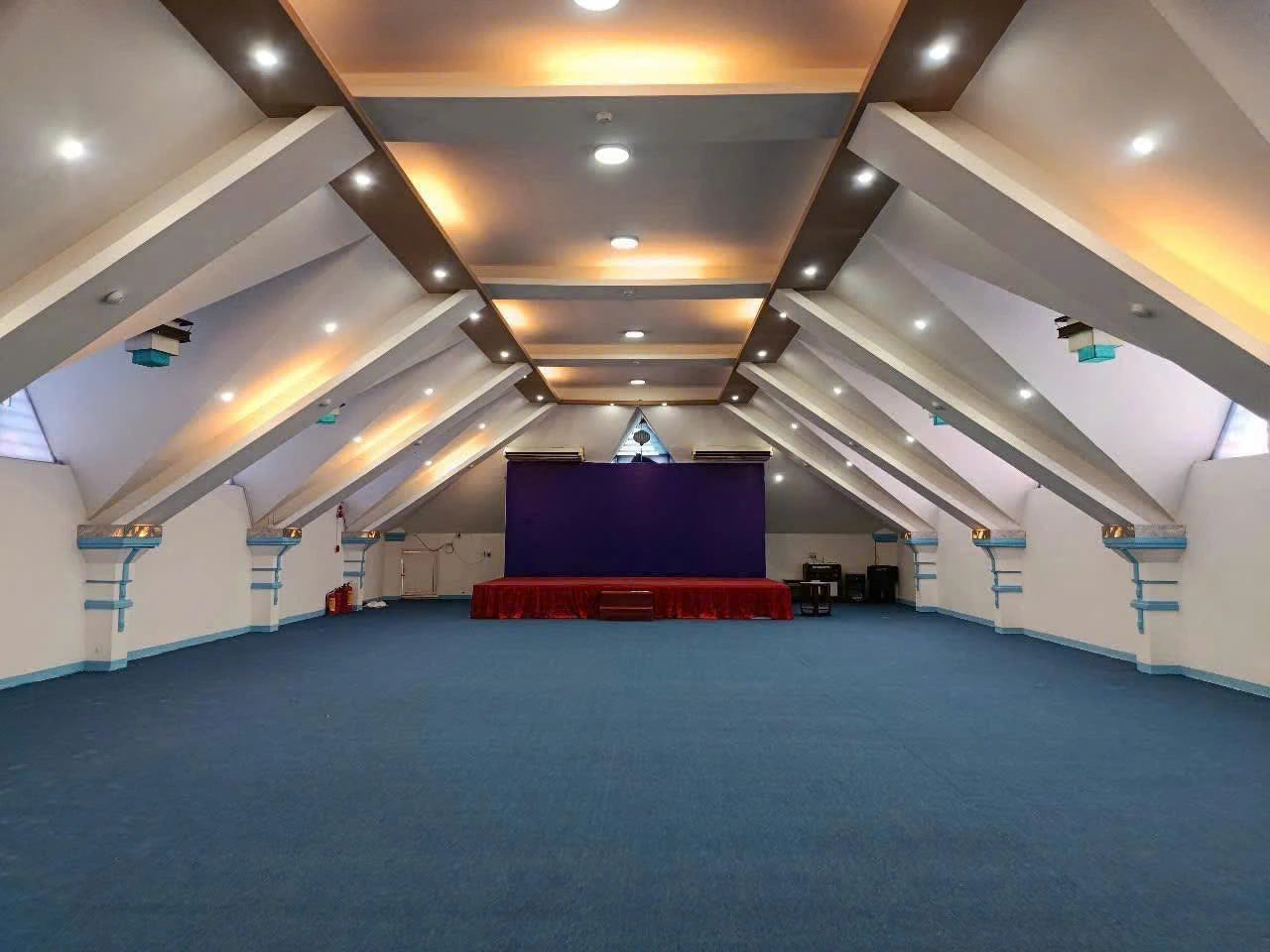
Step 2 — Preparing a Dedicated Practice Hall
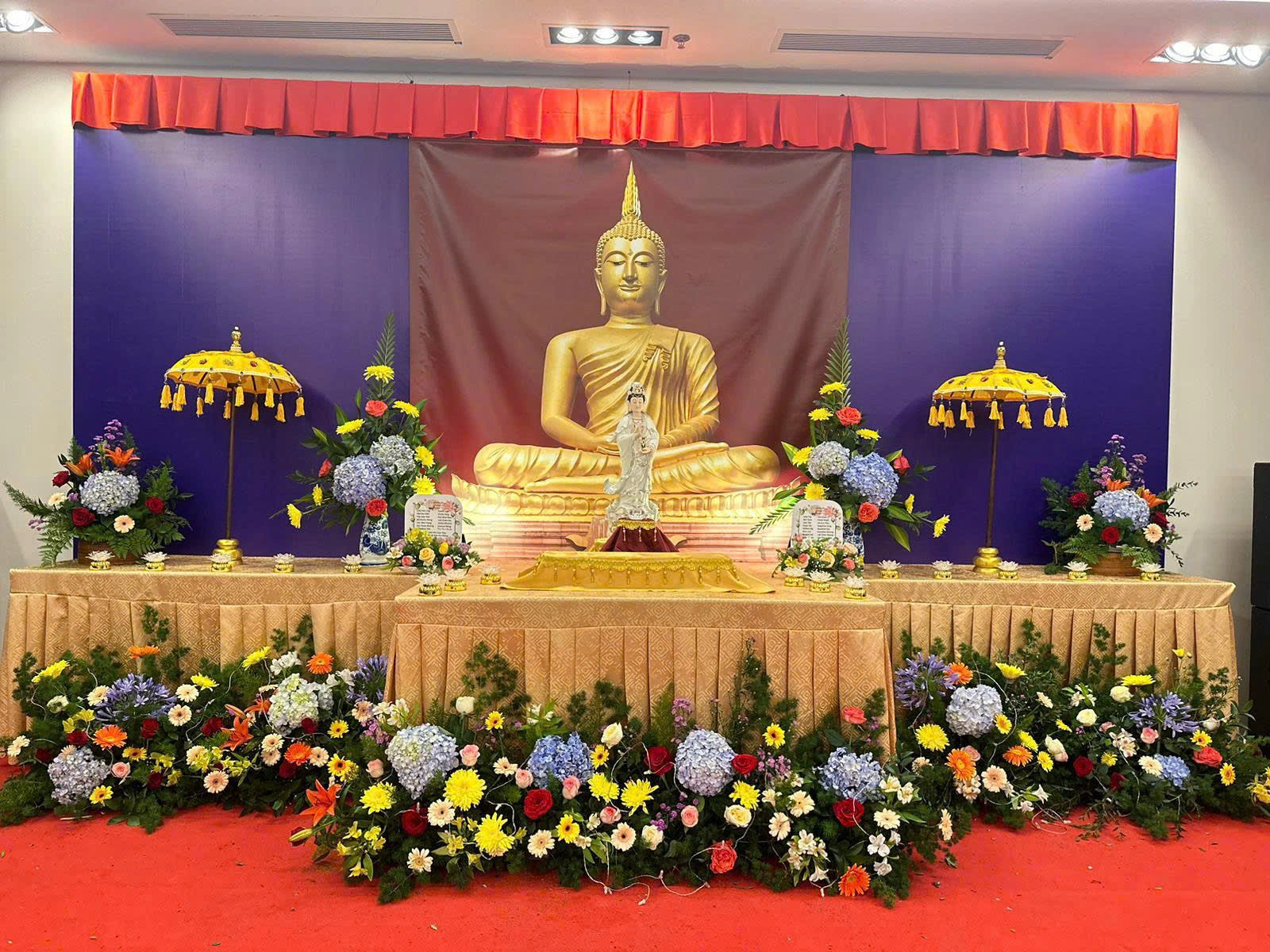
Before guests step inside, the private hall is cleared of banquet clutter, sound-checked and arranged so lighting, temperature and floor spacing stay consistent throughout the week.
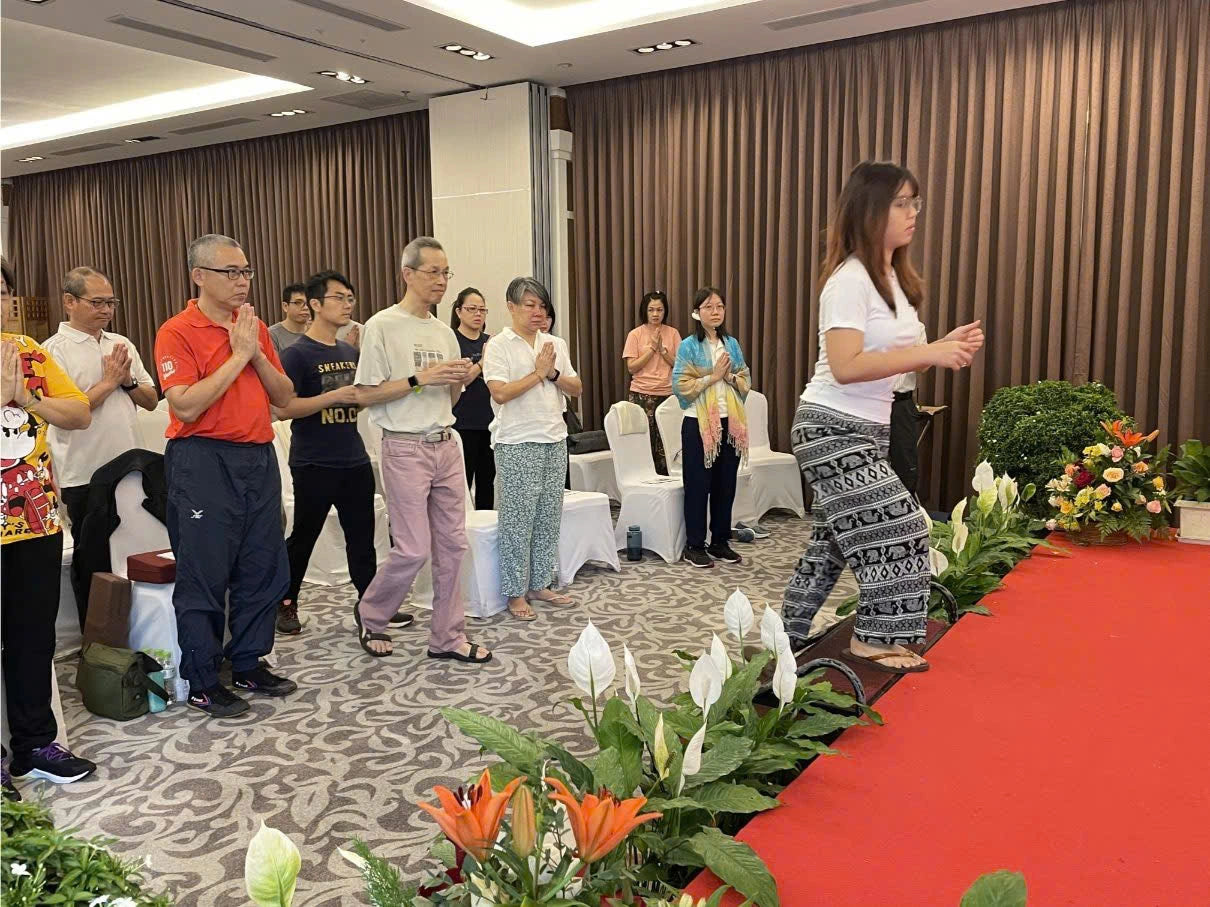
Step 3 — Opening Gathering
An opening session led by the group’s teacher introduces hall etiquette, bell signals, silent intervals and daily meal times before formal sitting begins.
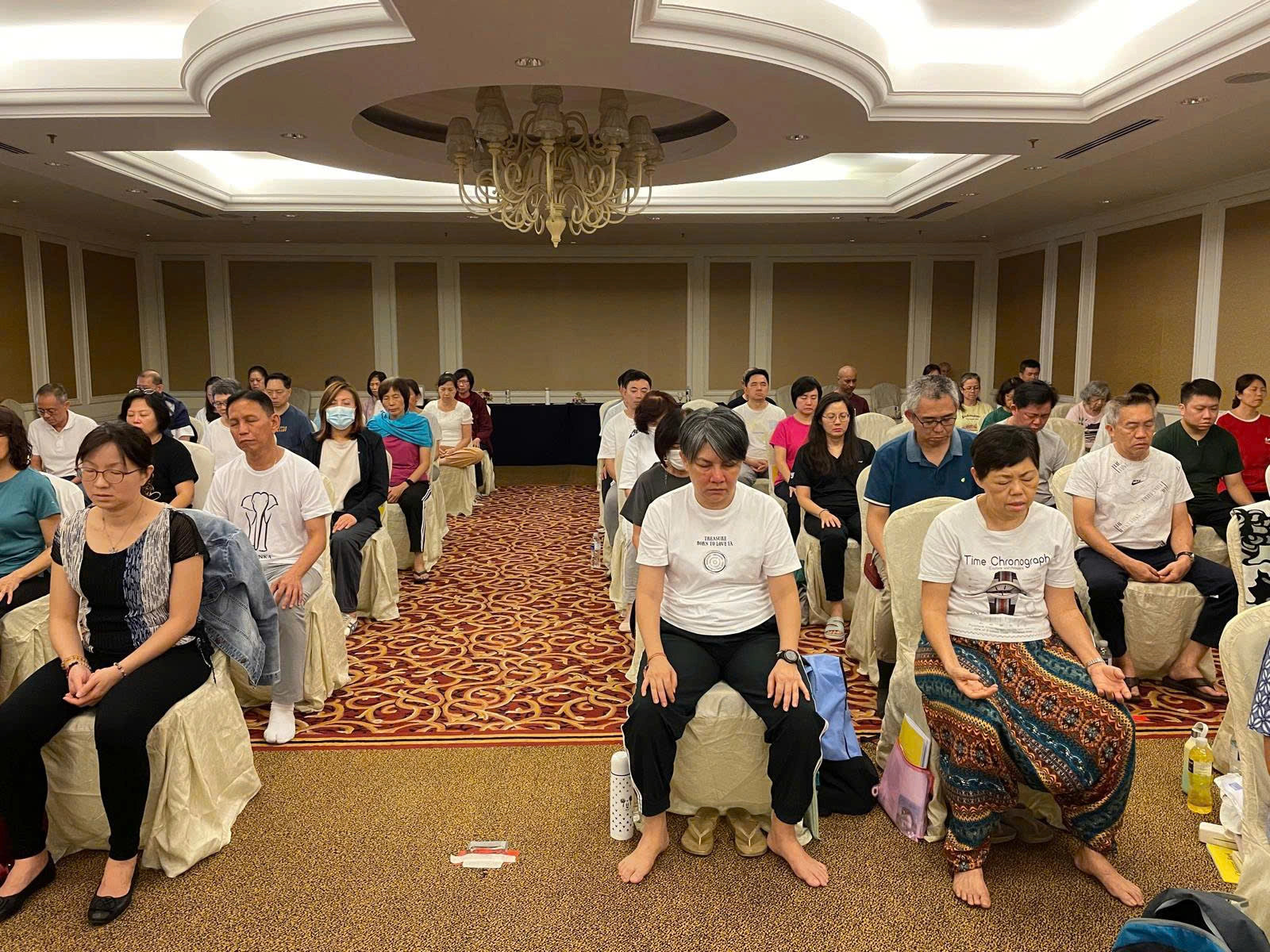
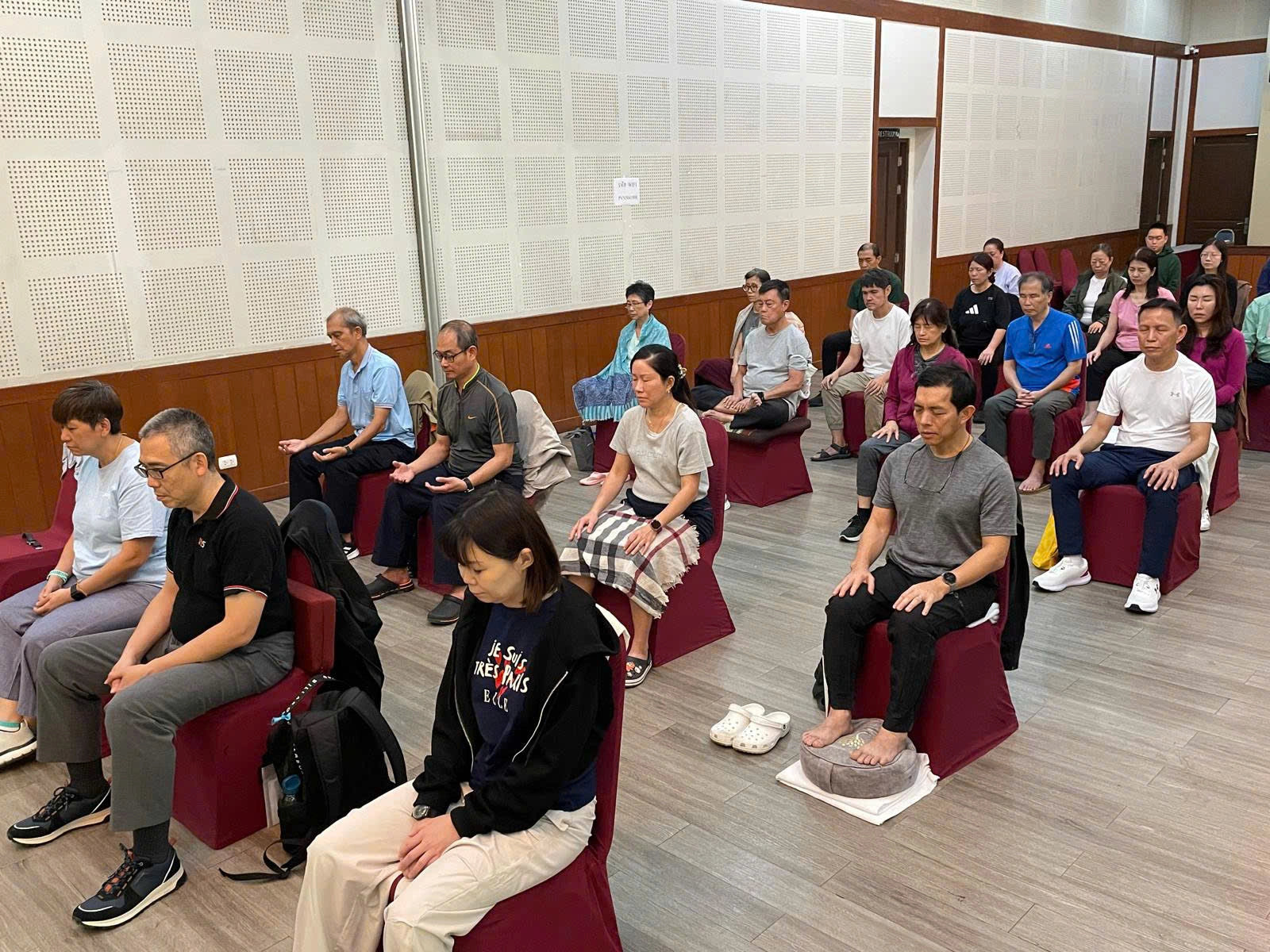
Step 4 — Rows of Supported Sitting
Participants sit on individual padded meditation stools or chairs spaced in clean rows, allowing knee and hip alignment without floor strain across multi-day sessions.
Groups combining mindfulness with company retreats in Central Vietnam can also review how we structured a Da Nang and Hoi An meditation and vegetarian retreat.
Beyond the Mountain: Other Vietnam Wellness Retreat Paths to Peace
Yen Tu suits northern Zen heritage, while Hue, Da Lat and the south-central coast offer distinct climates, stair counts and retreat formats across the year.
| Area | Setting & dry months | Access notes |
|---|---|---|
| Yen Tu | Forested Zen mountain valley; Oct–Apr cool dry | Cable car plus steep upper peak stairs |
| Hue | Truoi Lake monastery & pagodas; Feb–Aug drier | 15-min boat plus 172 stone gate steps |
| Da Lat | 1,500 m pine plateau & lake; Nov–Apr dry cool | Cable car option; mild year-round air |
| Nha Trang | Coastal bays & resort spas; Jan–Aug sunny | Flat resort paths; spa-led, not monastic |
Bach Ma and the Perfume River (Central Vietnam)
South of Hue’s Perfume River, Truc Lam Bach Ma Zen Monastery occupies Linh Son Mountain in the middle of Truoi Lake. Visitors cross the water on a fifteen-minute boat ride and climb 172 stone steps to reach the three-arched monastery gate (Source: Hue Tourism Portal).

Back toward the city, pine-shaded Tu Hieu Pagoda is where Zen Master Thich Nhat Hanh entered monastic life as a sixteen-year-old novice in 1942 before returning in his final years. Combining quiet pagoda visits, lotus tea and Thuy Xuan incense village fits smoothly into a Hue cultural itinerary.
The Pine Forests of Da Lat (Central Highlands)
In the Central Highlands, Da Lat sits at roughly 1,500 meters above sea level, keeping daytime air spring-like all year with chilly evenings and afternoon rains mainly from May to October. Overlooking Tuyen Lam Lake south of town, Truc Lam Zen Monastery in Da Lat sits among tended hydrangea gardens and pine woods reachable by road or Robin Hill cable car.
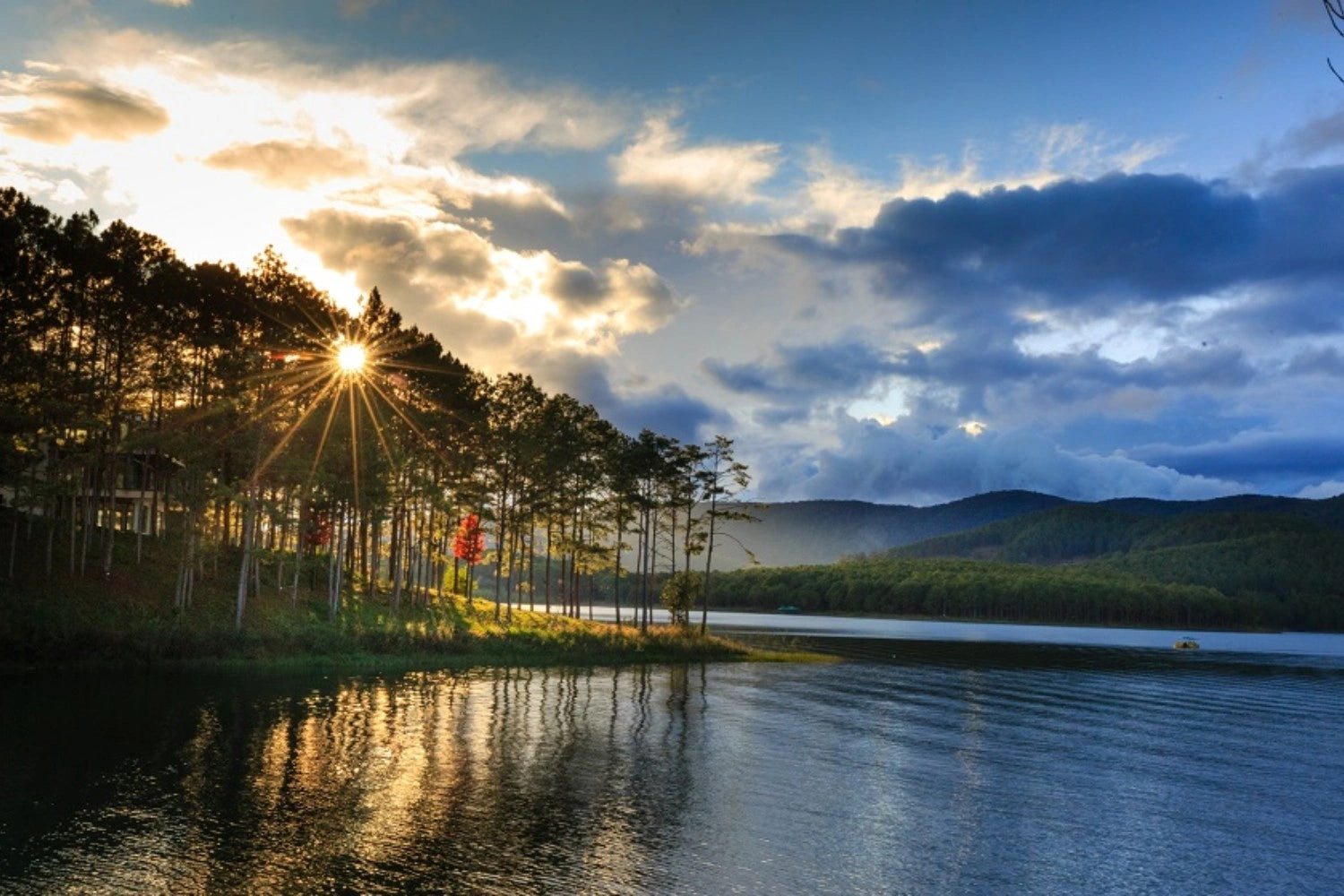
Cool highland air helps travellers sit comfortably without tropical humidity, while lakeside paths allow gentle afternoon walking between sessions; travellers who want coastal warmth instead—such as beachfront wellness resorts near Nha Trang and Cam Ranh—should note those properties focus on spa hydrotherapy, yoga decks and rest rather than monastic Buddhist instruction.
Your Invitation to Peace: Book Your Vietnam Wellness Retreat
A well-run meditation journey depends on clear operational details confirmed before you pay a deposit, not vague promises of transformation.
What we confirm with you before booking
- Teacher & format: Whether your group brings its own meditation teacher or requests local monastic visits, English translation and private hall rental hours.
- Seating & mobility: Stools versus straight-backed chairs, elevator or ground-floor room access, cable car tickets at Yen Tu and electric carts at Bai Dinh.
- Dietary rules: Strict Buddhist chay (without onion and garlic), vegan, vegetarian or medical meal adjustments briefed directly to each hotel kitchen.
- Clear commercial terms: Itemized USD pricing per traveller, inclusions and exclusions in writing, and our standard 10% deposit with balance on arrival.
Who this suits
Affinity meditation groups with a teacher, couples or older travellers seeking a private slow-paced cultural and mindfulness route, and vegetarians who want properly briefed kitchens.
Who may prefer something else
Walk-in solo travellers looking for an open drop-in ashram without pre-booking, or guests seeking clinical medical detox or guaranteed health outcomes.
Browse our private Vietnam journeys for broader route ideas, or contact our Hanoi team to discuss dates, group size and hall requirements.
Frequently Asked Questions
How many days should a wellness and meditation retreat in Vietnam last?
Five consecutive days in one valley venue gives participants enough quiet repetition to settle past travel fatigue, typically by day three. Adding arrival buffer days, the Yen Tu cable car pilgrimage and a gentle closing stop in Ninh Binh brings the complete pace to nine days without rushed hotel changes.
Is a Vietnam meditation retreat suitable for beginners or older travellers?
Yes, when sessions focus on guided breath awareness and seating is adapted to your joints. You do not need to sit cross-legged on the floor: we arrange padded meditation stools or chairs, build rest breaks between sittings and use cable cars and electric carts on sightseeing days.
Can couples book a private mindfulness journey instead of a forty-person group?
Yes. While full-hall silent retreats are usually booked by a teacher leading an affinity group, couples and small families can travel privately through Yen Tu, Ninh Binh, Hue or Da Lat with quiet boutique stays, pagoda visits, tea sessions and custom vegetarian dining.
What is the difference between a Yen Tu retreat and a wellness resort near Nha Trang?
Yen Tu, Hue and Da Lat center on Buddhist heritage sites, mountain or lake quiet and structured sitting practice. Coastal wellness resorts near Nha Trang and Cam Ranh focus on oceanfront rest, spa treatments, yoga pavilions and warm winter sun rather than monastic meditation.
Further Reading & Resources
Sources
- Yen Tu – Vinh Nghiem – Con Son – Kiep Bac UNESCO World Heritage Site Vietnam Tourism
- Yen Tu Mountain in Quang Ninh Province VietnamPlus
- Trang An Landscape Complex and Hoa Lu Heritage VietnamPlus
- Truc Lam Bach Ma Zen Monastery on Truoi Lake Hue Tourism Portal
- Zen Master Thich Nhat Hanh and Tu Hieu Pagoda in Hue VietnamPlus
- Da Lat Highland Climate and Tuyen Lam Pine Forests Vietnam Tourism
Related guides
Plan a meaningful journey at your own pace
Tet celebrations, meditation retreats, pilgrimages and homecoming trips, arranged around you.