


Lak Lake often confuses travelers with conflicting size records and outdated tourism claims. Tired of misleading brochures? Here is the honest truth. Discover Vietnam’s second-largest natural freshwater lake, explore authentic M’Nong culture in Jun village, and learn the step-by-step reality of dugout canoes versus ethical elephant concerns.

Ask an M’Nông elder in Liên Sơn town how this lake got here, and the story you hear will not mention geology. 🌊 A boy named Y Lắk, so it goes, caught a small eel from a puddle behind his home and kept it as a pet. The eel would not stop growing. Neither would the puddle. By the time the water settled, an entire M’Nông community had somewhere to fish, bathe, and paddle, and the boy’s name was stamped onto more than six square kilometres of it, permanently. A second, harsher version of the same story has the lake forming out of a war between a fire god and a water god, the water god’s victory literally reshaping the land. Either way, Lak Lake does not need the exaggeration Vietnamese tourism copy keeps bolting onto it afterward. The real story, and the real record, is already strange and impressive enough on its own.
I am Vani, founder of Truly Voyage, and the exaggeration I mean specifically is the massive natural lake in Vietnam claim that keeps circulating about this place, repeated by tour operators who really ought to know better by now. It is not true, and in November 2024 Vietnam’s own Records Institute had to publicly walk its own wording back. What Lak Lake actually is remains genuinely remarkable regardless: a M’Nông village living on its shore, a real royal hunting lodge from 1951 still standing above the water, and an honest, sometimes uncomfortable answer on elephant rides that many listings avoid giving you outright. 🐘
Chư Yang Sin’s forested ridgeline rings the water on almost every side, dropping mist over the surface most mornings before the Central Highlands sun burns it off. The lake itself runs 40 to 60 metres deep in places, fed by mountain streams and drained, at its western edge, into the same Krông Ana river that later carves out Dray Nur Waterfall, much further downstream. You are looking, whether you realise it at the time or not, at part of the headwaters feeding a remarkably photographed waterfall, covered in our separate Dray Nur Waterfall guide.
Table of Contents
ToggleIs Lak Lake Really Vietnam’s Largest Natural Lake?
No, it is not, and Vietnam’s own Records Institute had to formally correct itself on this exact point in November 2024. 📝
On 15 November that year, the Vietnam Records Institute announced three new records for Đắk Lắk province, one of them awarded to Lắk district’s People’s Committee for Lak Lake, worded as the natural freshwater lake in the Central Highlands with the largest area in Vietnam (Source: SGGP). Read quickly, that wording sounds like a claim to the national title outright. Enough people apparently read it that way, because eleven days later, on 26 November 2024, the Institute formally recalled Certificate No. 3245/KLVN/2024 specifically to fix the ambiguity, and committed to reissuing clearer wording together with local authorities.
| Lake Name | Region | Classification | Approximate Area |
|---|---|---|---|
| Ba Be Lake | Northern Vietnam | First nationally | 6.5 sq km |
| Lak Lake | Central Highlands | Second nationally | 6.2 sq km |
Table 1: Natural freshwater lake area comparison in Vietnam
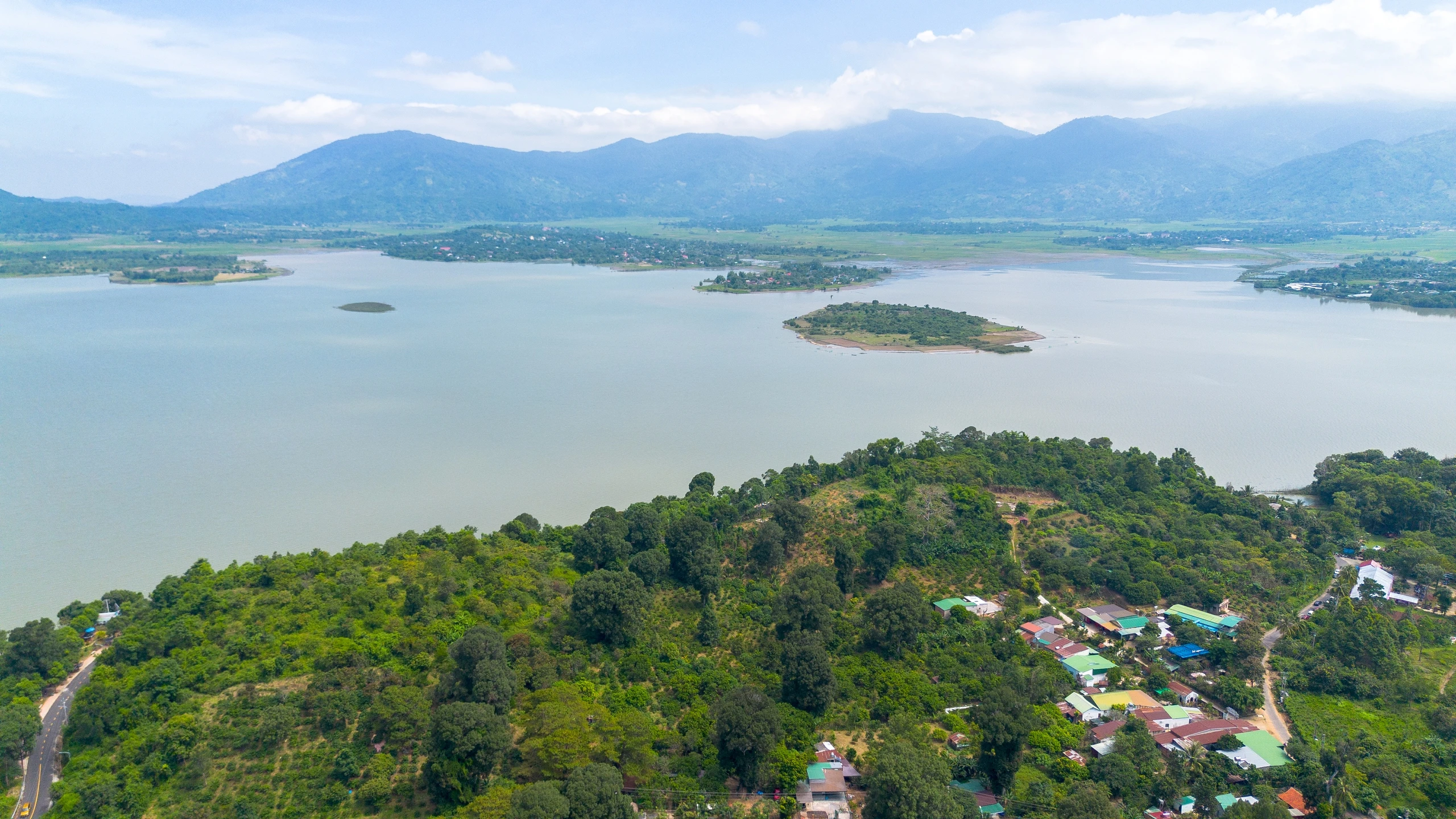
The corrected, accurate claim is still genuinely impressive. Lak Lake, at roughly 6.2 square kilometres, is the largest natural lake within the Central Highlands region specifically, and the second-largest natural freshwater lake in the whole of Vietnam, trailing Ba Be Lake in the northern province of Bắc Kạn, a lake our own travel blog covers in full. Second nationally is still a genuine, defensible record. It is simply a smaller, more precise claim than largest in Vietnam, and that precision is exactly the detail lots of tourism copy flattens out.
The lake itself sits at a documented depth of 40 to 60 metres in places, fed by streams draining off the surrounding hills (Source: Vietnam Environment Sourcebook). Elevation figures vary depending which agency you ask, anywhere from around 417 to 440 metres above sea level, a small inconsistency that matters far less than the size correction above.
💡 Vani Tips: Lak Lake is genuinely the second largest natural freshwater lake in Vietnam. It does hold the record for largest natural lake within the Central Highlands region specifically, which is still a real and worthwhile distinction.
What Is Emperor Bao Dai’s Lakeside Retreat, and Can You Visit It?
Yes, and it is neither an abandoned ruin nor a sealed-off museum: you can genuinely book a room in it. 🏛️
Built in 1951 for Bảo Đại, Vietnam’s last reigning emperor and then Head of State of the State of Vietnam, the hunting lodge sits on a hill roughly 422 metres above the lake, around 40 kilometres from Buôn Ma Thuột. Empress Nam Phương personally managed and funded its construction, and the three-storey building blends French colonial lines with Central Highlands vernacular touches, its oversized windows angled specifically to frame the water below (Source: VnExpress).
Its original purpose was blunt and practical rather than romantic: a comfortable base for Bảo Đại’s elephant-hunting expeditions into the surrounding forest. The building’s own history since then is not a straight line. It fell into disrepair after 1975 and sat effectively abandoned for decades before a restoration brought it back into use in the early 2000s.

What stands today is a genuine working hybrid: a restaurant occupies the ground floor, the second floor is preserved and presented largely as Bảo Đại left it, open for visitors to walk through, and the third floor operates as ordinary, bookable guest rooms. Entrance runs a modest 10,000 VND (Source: Origin Vietnam).
💡 Vani Tips: The hunting lodge built for Emperor Bao Dai in 1951 is real and still standing, restored in the early 2000s and currently operating as a hotel and restaurant with lake views, not an abandoned ruin.
If a night with that specific history appeals to you, the villa’s own rooms are a great choice. If you would rather sleep directly on the water instead, a small cluster of independent lodges around Liên Sơn town and Yang Tao commune covers a wider range of budgets, which I get into properly in the FAQ below.
Want to Sleep Above Emperor Bao Dai’s Lake?
Discover genuine Central Highlands accommodations and tailor-made experiences away from the usual crowds.
What Is Life Really Like in Jun Village?
It is a working M’Nông community first and a tourist stop second, and in practice the two genuinely overlap rather than sitting side by side. 🛖
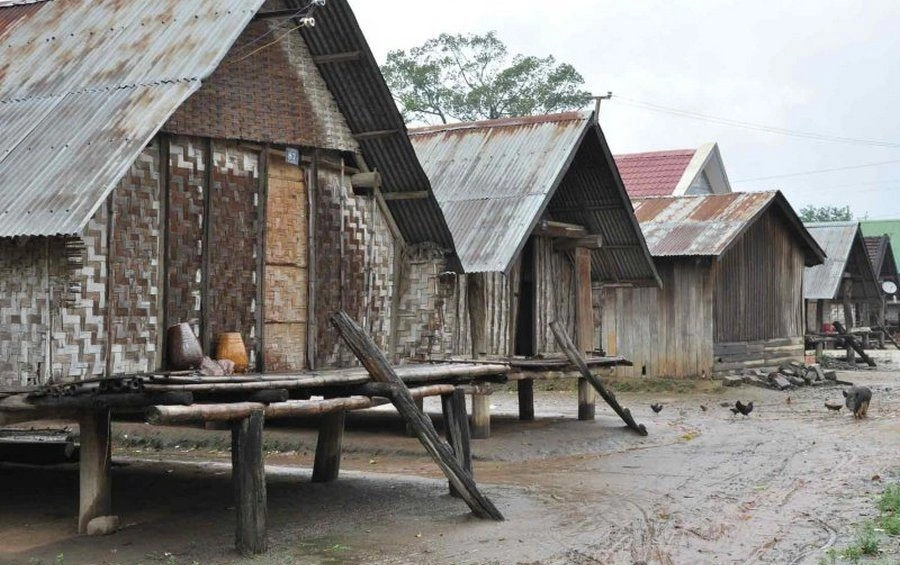
Jun village sits directly on the lakeshore, home to roughly 450 residents across 117 households, about 95 percent of them M’Nông (Source: Báo Đắk Lắk). Eight of the village’s traditional stilt longhouses currently take in overnight guests, alongside two restaurants serving local M’Nông dishes, five souvenir shops, and two active gong-performance troupes.
Late in 2024, the provincial Department of Culture, Sports and Tourism formally recognised Jun as a community tourism destination, around the same time a roughly 30-billion-VND lakeside road project finished, tightening the physical link between the village and the wider lake.
Cultural life here runs deeper than a scheduled show staged for visitors. Villagers still hold water-spirit and health-blessing ceremonies, weave brocade, work basketry, and ferment their own rice wine, most of it for their own use rather than a tourist’s camera. A clear annual proof of that living culture is the Lắk district dugout-canoe racing festival, now in its fourth year, held every March alongside the Buôn Ma Thuột Coffee Festival.
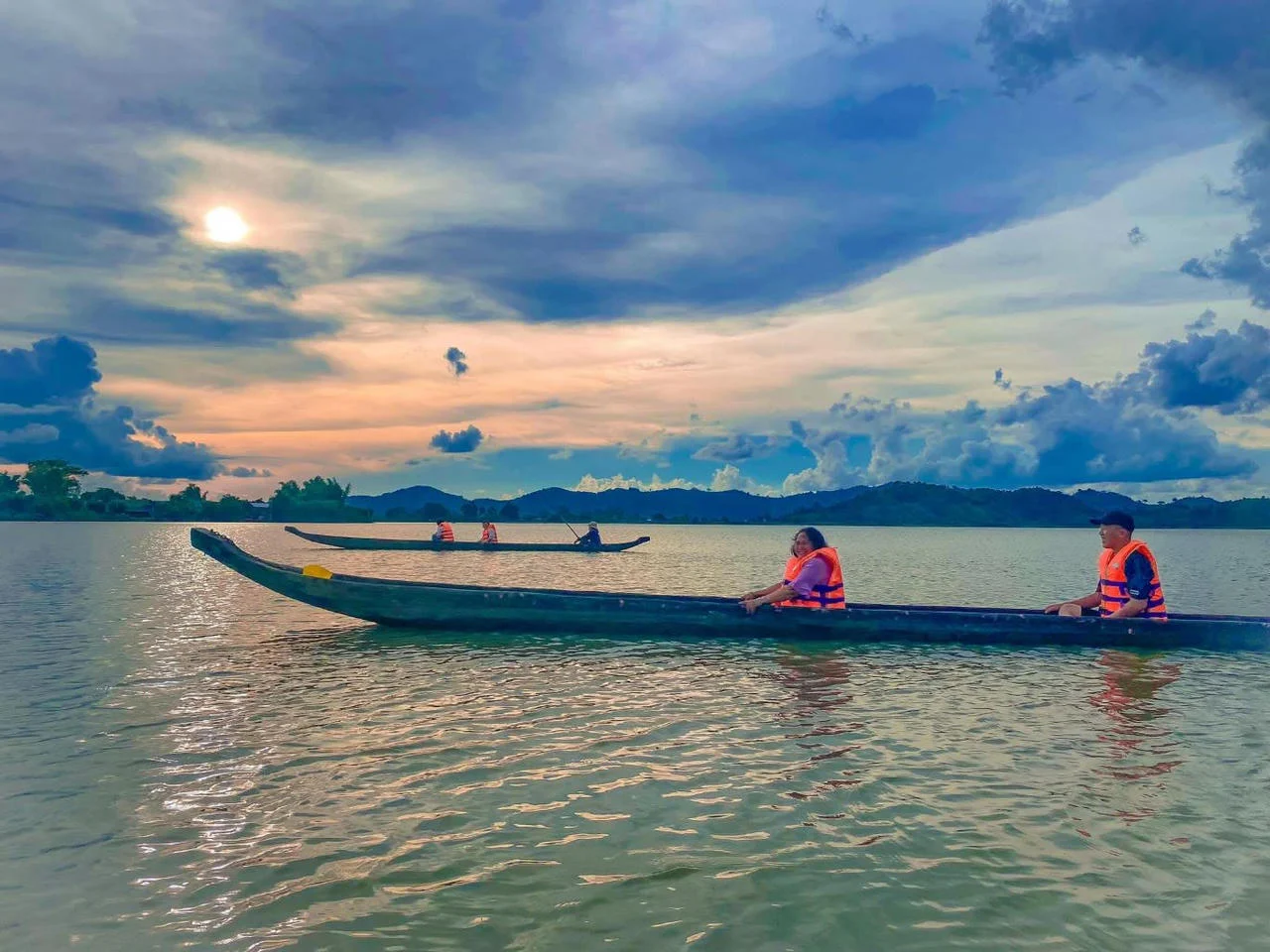
The 2025 edition drew paddlers from Liên Sơn town and the surrounding communes of Đắk Liêng, Bông Krang, and Yang Tao, racing two, three, and four-person canoes, with a full slate of ceremonies built around it, including a water-source blessing and an elders’ longevity celebration (Source: Đại Biểu Nhân Dân). If you want the specific mechanics of the canoes themselves, how they are carved and who still makes them today, our dedicated Lak Lake canoe guide goes deep on exactly that rather than repeating it here. 🛶
💡 Vani Tips: Jun village on the lakeshore is around 95 percent M’nong, home to roughly 450 residents, and is where the area’s gong culture, longhouse architecture, and dugout canoe traditions are highly visible to visitors.
A longhouse night in Jun, or in the nearby villages of Buôn Lê and M’Liêng, is a wonderful approach to a genuine overnight experience here, though it is worth knowing upfront that a rice-wine-and-gong-music evening is typically a paid, arranged extra rather than a nightly guarantee. Our Dak Lak longhouse homestay guide sets realistic expectations before you book one.
Real Experience: A Step-by-Step Morning at Lak Lake
To give you a practical idea of what visiting looks like, here is a recent step-by-step itinerary from one of our guests, Emma, who visited in January 2026:
- Step 1: Dawn at Jun Village (5:30 AM): Emma woke up early in a traditional M’Nong longhouse. The morning mist was still thick, hugging the water surface and creating a serene atmosphere right outside her window. 🌅
- Step 2: Dugout Canoe Ride (6:00 AM): Instead of riding elephants, she opted for a 45-minute traditional dugout canoe trip. Paddling quietly across the glassy surface provided incredible, uninterrupted photo opportunities of the Chư Yang Sin mountains in the background. 🚣♀️
- Step 3: Emperor’s Villa Breakfast (7:30 AM): A short walk up the hill brought her to Bao Dai’s hunting lodge. Here, she enjoyed authentic local coffee overlooking the exact waters she had just navigated, connecting the natural beauty with the region’s royal history. ☕
Can You Still Ride Elephants at Lak Lake?
Yes, technically, though I would not book that specific activity here if the ethics of it actually matter to your trip.

This is the section many Lak Lake guides either skip entirely or get wrong. Đắk Lắk has committed real money to ending elephant riding: the Animals Asia Foundation and the province jointly fund a transition project worth over 55 billion VND, running from November 2022 through December 2026, and it specifically covers the forest management area around this lake, not just the widely publicised no-riding programme at Yok Don National Park (Source: Báo Văn Hóa).
The intent is real. The funding is real. Completion is not. Buôn Đôn, Yok Don’s neighbouring district, ended elephant riding outright on 10 February 2023, an early site in the province to do so. Lắk district has not followed, at least not yet.
Recent reporting states plainly that riding continues here because no formal regulation currently prevents it, and the province’s own target for ending riding everywhere has already slipped once, now pointing to sometime after 2026 rather than a date already behind it. What has genuinely changed is the scale of what is even left to phase out: Đắk Lắk’s domesticated elephant population has collapsed from roughly 500 animals four decades ago to just 33 today, with just 9 of those left in the former Lắk district area around this lake (Source: Nông Nghiệp Môi Trường). 📉
💡 Vani Tips: Be aware that elephant riding is still actively offered at Lak Lake as of recent reporting I could find, unlike the no-riding model now used at Yok Don. The province has set a target to phase out riding everywhere, but that target has already slipped once and currently points to sometime after 2026.
None of that is a reason to skip the lake entirely. It is a reason to be deliberate about which specific activity you actually book while you are here. Canoeing carries none of this baggage: a genuine M’Nông tradition, paddled by people who have done it for generations, calmest and highly photogenic in early morning or late-afternoon light.
If the ethical treatment of elephants matters to your trip, choose the Yok Don programme covered in our separate guide rather than assuming every Dak Lak elephant experience follows the same standard, they currently do not. Our full Yok Don ethical elephants guide walks through exactly what that alternative looks like, what it costs, and why it exists specifically because riding here has not stopped yet.
Need Help Planning an Ethical Dak Lak Trip?
Let Vani and the Truly Voyage team design a responsible, culturally rich itinerary matching your travel style.
Frequently Asked Questions About Lak Lake
Is Lak Lake the largest lake in Vietnam?
Quick Answer: No. It is Vietnam’s second-largest natural freshwater lake, after Ba Be Lake in Bắc Kạn province, and holds the record for largest natural lake within the Central Highlands specifically. Vietnam’s Records Institute corrected its own wording on this exact point in November 2024.
Can you still ride elephants at Lak Lake?
Quick Answer: Yes, as of the recent reporting available, though a funded transition project is actively working to end it, with a provincial target of sometime after 2026. If riding-free tourism matters to you, book the no-riding programme at Yok Don instead.
Where to stay near Lak Lake?
Quick Answer: Emperor Bảo Đại’s restored hunting lodge rents rooms directly above the water, Lak Tented Camp offers lakeside bungalows and safari tents in Yang Tao village, and community homestays in Jun and Buôn Lê villages put you inside a working M’Nông longhouse.
How far is Lak Lake from Buon Ma Thuot?
Quick Answer: Roughly 55 to 60 kilometres depending on the exact route, generally under two hours by car or motorbike. Our Dak Lak transport guide covers getting into Buôn Ma Thuột itself first. 🛵
What is there to do at Lak Lake?
Quick Answer: Paddle a traditional dugout canoe, tour Emperor Bảo Đại’s 1951 hunting lodge, walk through Jun village’s longhouses and gong culture, and, if you time it right, catch the annual dugout-canoe racing festival every March.
Is a Lak Lake M’Nong homestay experience worth booking?
Quick Answer: Yes, with realistic expectations. The dinner, the setting, and the longhouse sleeping arrangement are genuine, but a full evening of rice wine and gong music is typically a paid, arranged extra rather than an automatic part of every stay.
Is the Bao Dai hunting lodge open to the public?
Quick Answer: Yes. A 10,000 VND ticket gets you into the ground-floor restaurant and the preserved second floor where Bảo Đại himself once stayed, and the third floor operates as ordinary guest rooms if you want to sleep there.

Conclusion
Do not let the largest lake in Vietnam headline pull you here expecting a record that does not actually exist.
As Central Highlands lakes go, this one comes with an unusually well-documented paper trail: come instead for the record that does hold up, second nationally, first in the region, a working M’Nông village on the shore, and a real emperor’s lodge you can still sleep in. Book the canoe without hesitation. Book the elephant activity only after you have read what that genuinely involves right now, not what the brochure quietly implies. Truly Voyage’s own Central Highlands itineraries pair this lake with Yok Don specifically so guests get the honest elephant-tourism picture from both ends, not just the version that is easier to sell. 🌿
Further Reading & Resources
- Direct Link, SGGP — the November 2024 record certificate, its wording, and the recall.
- Direct Link, Đại Biểu Nhân Dân — confirms the corrected second-largest-in-Vietnam figure and lake area.
- Direct Link, Vietnam Environment Sourcebook — depth, elevation, and hydrology detail.
- Direct Link, VnExpress — construction history and architecture of the 1951 hunting lodge.
- Direct Link, Origin Vietnam — current villa entrance fee and visitor practicalities.
- Direct Link, Báo Đắk Lắk — Jun village population, households, and tourism infrastructure.
- Direct Link, Đại Biểu Nhân Dân — the 2025 dugout-canoe racing festival.
- Direct Link, VietnamPlus — confirms Buôn Đôn as the first no-riding site, and that riding continued in Lắk district.
- Direct Link, Báo Văn Hóa — funding and timeline for the elephant-friendly transition project.
- Direct Link, Nông Nghiệp Môi Trường — current domesticated elephant population figures.
- Direct Link, Intour.vn — current official Lak Lake entrance fee.

Vani is the Founder and Lead Travel Designer at Truly Voyage. With over a decade of experience and a deep passion for her Vietnamese heritage, she specializes in crafting bespoke, unhurried itineraries. Vani is dedicated to helping travellers experience the authentic soul of Southeast Asia with absolute financial security and 24/7 on-ground support.
0 Comment