


Yok Don National Park often sparks debate: is it truly Vietnam’s most expansive nature reserve? If confusing brochures and tiger myths have left you hesitant, this honest guide clarifies the reality. Discover accurate park sizes, the distinctive dry forest ecosystem, and a step-by-step look at ethical elephant tracking for your upcoming adventure.

Vietnam does not do this anywhere else. Walk into the forest here in February and the canopy above you is not really a canopy at all, it is scattered, sunlit, and turning a slow, defiant red-gold, weeks before the trees let go of their leaves completely and stand bare through the rest of the dry season 🍂. Every other forest in the country is racing to stay green through the heat. This one strips itself bare on purpose instead, and the ground underfoot, a thickening carpet of fallen dipterocarp leaves, crunches in a way no rainforest trail in Vietnam ever will.
Yok Don National Park protects the most expansive surviving stretch of this dry deciduous rừng khộp forest anywhere in the country, 115,545 hectares pressed right up against the Cambodian border. I am Vani, founder of Truly Voyage, and before you book anything here I want to walk you through two things almost every other guide gets slightly wrong: exactly how this park’s size actually compares to its rivals, and what wildlife you will honestly see once you are inside it, tigers very much not included.
The border sits close enough that guides here will genuinely not let you trek without one, which tells you more about how wild this place still is than any brochure could 🥾.
Table of Contents
ToggleIs Yok Don Really Vietnam’s Largest National Park?
Not quite as advertised, though the honest version of that answer still works out in Yok Don’s favour once you look at the actual hectares involved.
Even Yok Don’s own tourism materials describe the park as Vietnam’s second-largest national park, after Phong Nha-Kẻ Bàng. Run the numbers yourself and that specific claim falls apart. Phong Nha-Kẻ Bàng’s own core protected area, per Vietnam’s National Biodiversity Conservation Agency, is 85,754 hectares (Source: National Biodiversity Conservation Agency). Yok Don’s is 115,545 hectares. That makes Yok Don the larger park by a wide margin, not the smaller one.
The confusion almost certainly traces back to a different, much bigger number. Phong Nha-Kẻ Bàng’s UNESCO World Heritage Site designation covers 217,447 hectares (Source: UNESCO World Heritage Centre). That figure combines the Vietnamese park with Laos’s neighbouring Hin Nam No National Park and shared buffer zones, a transboundary heritage listing, not one country’s national park boundary. Compare like with like, core hectares to core hectares, and Yok Don comes out ahead of Phong Nha-Kẻ Bàng, ahead of Pù Mát in Nghệ An at 91,113 hectares, and roughly one and a half times the size of Cát Tiên, at somewhere between 72,000 and 74,000 hectares depending on the source.
| National Park | Core Protected Area (Hectares) | Location |
|---|---|---|
| Yok Don | 115,545 | Central Highlands |
| Pù Mát | 91,113 | North Central Coast |
| Phong Nha-Kẻ Bàng | 85,754 | North Central Coast |
| Cát Tiên | ~73,000 | Southeast |
Table 1: Comparing the core protected hectares of major Vietnamese National Parks based on official data.

I am still not going to hand you a bare, unqualified largest national park in Vietnam claim, because Wikipedia’s own comparative list ranks Yok Don first by hectares while the park’s own site says second, and that kind of disagreement, even among Vietnamese sources, is exactly the sort of overclaim that erodes trust the moment a reader checks it themselves. What I will hand you is the one ranking nobody disputes: Yok Don is Vietnam’s most expansive national park protecting dry deciduous dipterocarp forest, genuinely larger than Cát Tiên, and that alone is worth the trip.
Vani Tips: Avoid repeating the unqualified largest in Vietnam claim, it does not hold up against Phong Nha Ke Bang once you compare core protected areas rather than a separate cross-border UNESCO figure. The fully defensible claim is an expansive national park protecting dry deciduous dipterocarp forest, and it is measurably larger than Cat Tien specifically.
Why Does This Forest Shed Its Leaves?
Because it survives the Central Highlands dry season the opposite way almost every other Vietnamese forest does, and the result looks like nothing else in the country 🌳.
Vietnam is, overwhelmingly, a country of wet, evergreen, closed-canopy forest. Yok Don’s rừng khộp is the ecological exception: broad-leaved dipterocarp trees spaced far enough apart that the canopy stays open and sunlit, closer in feel to a savanna woodland than to jungle. The reason is water.
Rather than fighting to stay green through the roughly November-to-April dry season the way rainforest does, these trees shed their leaves deliberately, conserving moisture by going dormant instead of burning through it (Source: Vietnam.vn).
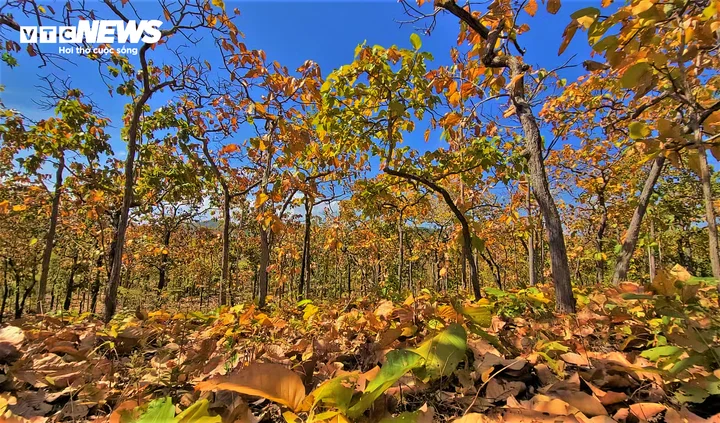
Visually, that turns into the closest thing Vietnam has to a European autumn: green fading to yellow and red across the canopy before the leaves finally drop, except it happens in Central Highlands dry-season heat rather than a cold northern winter, which is exactly the detail that makes the comparison worth making and worth correcting in the same breath. This rung khop ecosystem is, per multiple independent ecological sources, a distinctive one of its kind protected as a national park’s dominant cover anywhere in the country, though not its total cover: pockets of evergreen and semi-evergreen forest persist along the park’s rivers and hills. It is a genuine trade-off, too. This same open, dry structure is explicitly unsuitable habitat for gibbons, which need unbroken closed canopy to move through. Only two confirmed gibbon sightings exist in the park’s entire recorded history, one in 2002 to 2003, one in 2007. If you came hoping to hear gibbon calls at dawn, this is the wrong park for it.
Vani Tips: This dry deciduous forest, locally called rung khop, is ecologically rare in Vietnam precisely because the trees shed their leaves seasonally to survive the dry months, the opposite survival strategy from the evergreen rainforest covering most of the rest of the country.
What Wildlife Will You Realistically See at Yok Don?
Birds, butterflies, and, if you book the right activity, a small tracked group of former working elephants. Do not come expecting a tiger.
Set your expectations here honestly, because almost nothing else about this park needs correcting as urgently as this does. Vietnam’s Forestry Administration estimates 28 to 60 wild Asian elephants live within Yok Don, officially one of the country’s most prominent wild elephant populations (Source: Mekong Eye). Genuinely seeing one is a different matter entirely. These are wild, human-shy animals spread across more than 1,150 square kilometres, and multiple visitor guides describe sightings as rare specifically because the elephants actively avoid people.
Tigers deserve a firmer correction. Some older material still lists tigers among Yok Don’s wildlife. They are functionally gone, here and everywhere else in the country.
Vietnam’s last confirmed wild tiger photograph came from a camera trap in Pù Mát National Park in December 1999, and a nationwide survey running camera traps across 21 nature reserves between 2019 and 2023 recorded zero tigers (Source: VietnamPlus). Gaur, leopard, and several deer species remain on the park’s official species list, but their populations have suffered major declines, and no source I checked reports a confirmed recent tourist sighting of any of them.
Explore the Wild Central Highlands
Ready to venture into Vietnam’s unique dry forests and track elephants ethically? Let our local experts handle the logistics.
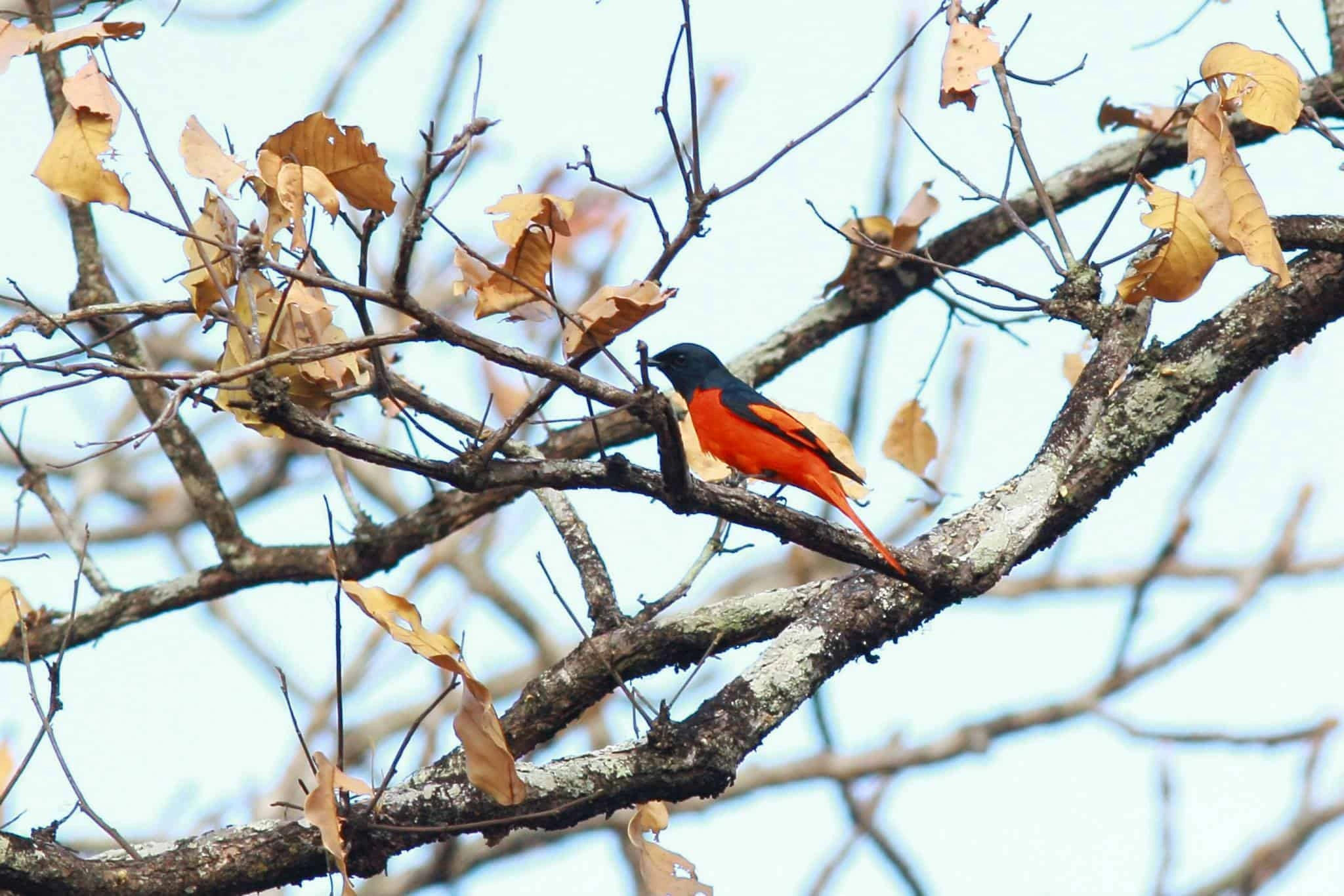
What you will actually, reliably see: birds, somewhere between 300 and 373 species depending which count you trust, plus butterflies and the occasional snake, turning up consistently in visitor trekking accounts. And then there is the one dependable large-animal encounter in the park: former working elephants, mahout-tracked daily rather than roaming unmonitored, viewable through the managed elephant programme next door 🐘. It is worth being precise about why that sighting is reliable. It is not luck. Someone already knows roughly where the elephants are that morning.
Real Experience: A Step-by-Step Ethical Elephant Trek
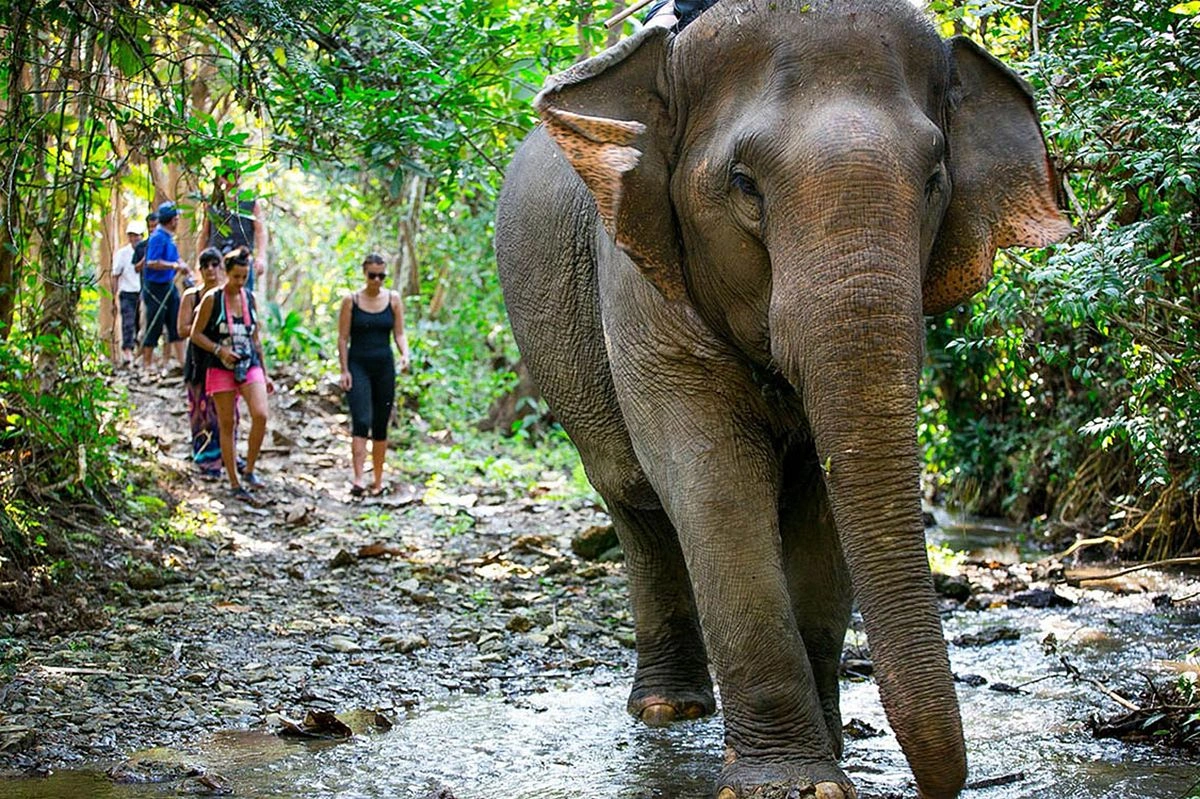
To give you a clearer, more practical picture, here is a step-by-step account from Sarah, a recent Truly Voyage guest who joined the half-day ethical elephant tour:
- Morning Briefing (8:00 AM): Met with the local guide at headquarters to understand the strict “no riding, no bathing” rules and learn the rescue history of the elephants.
- Tracking the Herd (8:30 AM): Hiked for about 40 minutes through the crunching dipterocarp leaves alongside a traditional mahout who tracked the elephants’ footprints.
- The Encounter (9:15 AM): Found two former working elephants foraging naturally in the bamboo thickets. Sarah’s small group stood quietly at a safe 15-metre distance, observing them eating and tossing dirt onto their backs.
- Return & Reflection (11:00 AM): Hiked back to base, leaving with a profound sense of satisfaction from supporting true animal welfare over staged entertainment.
Vani Tips: Set honest expectations. Wild elephants do live here, an estimated few dozen, but sightings are genuinely rare, and tigers have been functionally absent since national camera-trap surveys found zero between 2019 and 2023. Your most reliable wildlife encounter is the managed elephant programme covered in our separate guide, not a chance sighting on a trek.
That programme deserves its own explanation rather than a footnote here. Our full Yok Don ethical elephants guide covers exactly how it works, what it costs, and why Yok Don’s no-riding model is genuinely the exception in this province rather than the rule, a distinction that matters if you are also planning a stop at Lak Lake, where riding was still being offered as of the most recent reporting.
What Are Yok Don’s Hours, Fees, and How Do You Get There?
The park itself never really closes. The specific activities worth booking do, and getting here takes longer than at least one popular listing claims.
Entrance runs around 60,000 VND for a standard adult ticket, 20,000 VND for students (Source: Origin Vietnam). The park itself has no fixed closing gate. What does have fixed hours are the activities that actually make a visit worthwhile: guided treks and the elephant experience both run in two daily sessions, roughly 8:00 to 11:30 in the morning and 13:30 to 16:30 in the afternoon. A local shuttle bus connects Buôn Ma Thuột to the park from 6:00 AM to 5:00 PM if you are travelling without a private vehicle 🚌.

On distance, be sceptical of at least one figure still circulating online. The park sits roughly 38 to 40 kilometres from Buôn Ma Thuột, a consistent figure across the park’s own transport page, Wikipedia, and independent guides, translating to about 1 to 1.5 hours by road.
One tourism board feature claims 30 minutes. Do the maths on that and it implies sustaining roughly 80 kilometres an hour the entire way on a Vietnamese secondary road, which is not realistic. Budget the full 1 to 1.5 hours and treat any 30-minute claim you see elsewhere as an error, not a shortcut you are missing.
Getting there costs vary by method: the local bus, look for the pink or green buses running every 30 to 60 minutes, costs around 40,000 VND a ticket; a taxi from the city runs about 600,000 VND, closer to 700,000 VND or more from the airport specifically; scooter rental sits at 120,000 to 200,000 VND a day if you would rather drive yourself 🛵.
Vani Tips: Entrance runs around 60,000 VND, and the park has no fixed closing time since bookable activities run in two daily sessions instead. It sits roughly 40 kilometres from Buon Ma Thuot, about 1 to 1.5 hours by road, not the 30 minutes one tourism listing claims.
Can You Trek and Sleep Inside Yok Don National Park?
Yes to both, though sleep happens near park headquarters rather than deep in the forest, for reasons that make more sense once you remember how close the Cambodian border actually is.
Guides are effectively mandatory for any trek here, partly a straightforward safety measure and partly a function of the park sitting directly against that border. Options range from short forest walks to genuine multi-day trekking and camping trips, and the activity list runs well beyond walking: mountain biking, birdwatching, boat trips on the Serêpốk River, and visits to nearby Ê Đê and M’Nông villages.
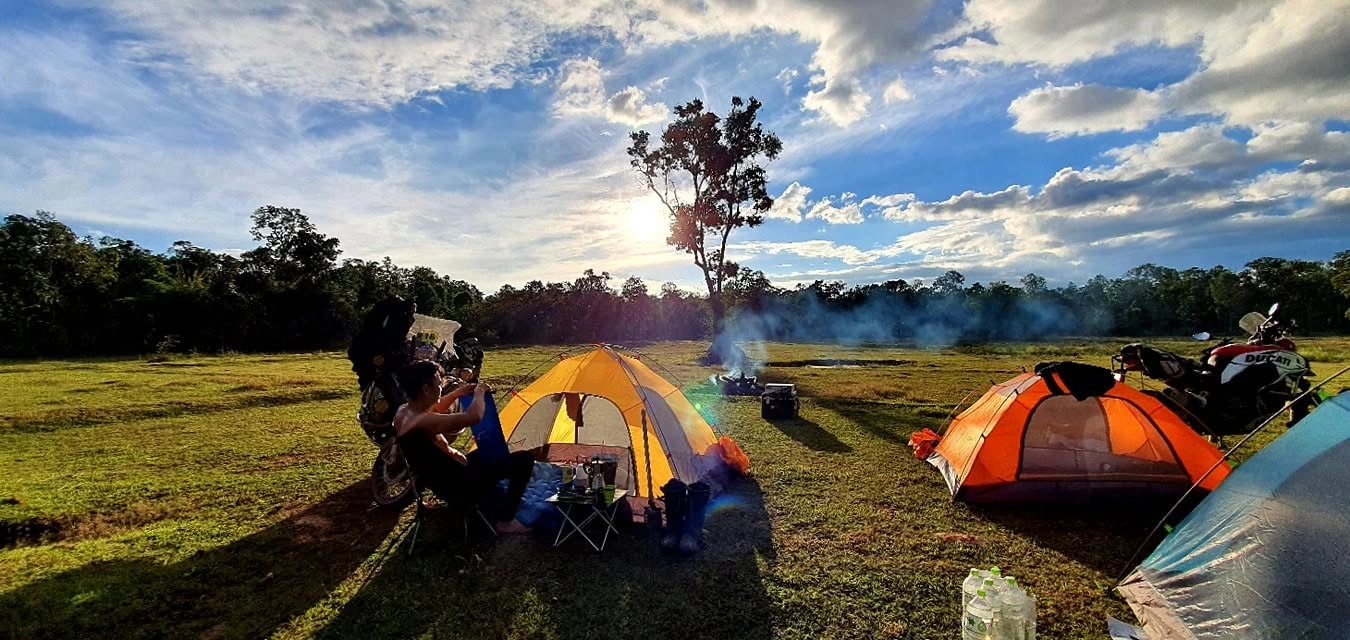
Sleeping inside the park is genuinely possible, in three tiers, and the official park site is admirably upfront about where: you will stay near headquarters, not deep in the forest, specifically for safety reasons.
A guesthouse room, ensuite with air conditioning and wifi, runs around 350,000 VND a night with breakfast included, plus 50,000 VND for each additional guest ⛺. Tent camping costs roughly 150,000 VND a night for two people, and a hammock, military-style, comes in around 50,000 VND per person per day for anyone travelling lighter still.
Vani Tips: Guides are effectively required for any trek, and overnight options exist near park headquarters rather than deep in the forest, a guesthouse room for around 350,000 VND, or a tent for about 150,000 VND for two people.
Need Help Planning Your Trip?
Booking treks, arranging local transport, and securing ethical encounters can be tricky. Let Truly Voyage organize every detail for you seamlessly.
Frequently Asked Questions About Yok Don National Park
Is Yok Don really Vietnam’s largest national park?
Quick Answer: By core protected area, at 115,545 hectares, yes, larger than Phong Nha-Kẻ Bàng, Pù Mát, and Cát Tiên.
The safer claim to hang your trip on is the fully uncontested one: Vietnam’s most expansive national park protecting dry deciduous dipterocarp forest.
How to get to Yok Don National Park?
Quick Answer: By road from Buôn Ma Thuột, roughly 38 to 40 kilometres, about 1 to 1.5 hours.
A local shuttle bus runs 6:00 AM to 5:00 PM for around 40,000 VND, or a taxi costs roughly 600,000 VND from the city centre.
Are Yok Don National Park elephants easy to spot?
Quick Answer: Only the managed ones.
Technically yes, an estimated 28 to 60 genuinely wild elephants live in the park, but sightings of them are rare since they actively avoid people. Your far more reliable elephant encounter is the managed, mahout-tracked programme covered separately below.
What is the Yok Don National Park elephant experience?
Quick Answer: A no-riding, observation-only programme where a guide takes you to where mahouts have tracked that day’s elephants, letting you watch them forage and bathe from a respectful distance.
Our full ethical elephants guide covers pricing and booking.
When is the best time to visit Yok Don National Park?
Quick Answer: Roughly November through April, the dry season, when the dipterocarp forest turns gold and red before dropping its leaves.
Outside that window the forest stays green and the visual drama that makes this park distinctive is largely gone.
Does Yok Don National Park have a map for planning a trek?
Quick Answer: The official park site publishes headquarters and trail maps for its trekking and camping bookings.
Though guides are effectively required for any route here, so treat a map as orientation rather than something you will navigate solo.
Are there tigers in Yok Don National Park?
Quick Answer: No, not in any realistic sense.
Vietnam’s last confirmed wild tiger sighting was in 1999, and nationwide camera-trap surveys between 2019 and 2023 found none across 21 reserves, Yok Don included.
Can you sleep inside Yok Don National Park?
Quick Answer: Yes, in a guesthouse room near headquarters for around 350,000 VND a night, a tent for about 150,000 VND, or a hammock for roughly 50,000 VND.
All clustered near the park entrance rather than deep in the forest.
Conclusion
Skip the absolute largest national park in Vietnam headline you will see everywhere else and book this park for what it actually, uncontestedly is: a major stretch of dry deciduous forest, a real wild elephant population you likely will not see, and a managed elephant encounter you almost certainly will. Trek with a guide, book the elephant experience specifically rather than treating it as an afterthought, and time your visit for the dry season if the gold-and-red canopy is the photograph you actually came for. Truly Voyage builds Yok Don into Central Highlands itineraries as the honest wildlife stop, not the tiger safari some brochures still quietly imply it is.
Further Reading & Resources
- Yok Đôn National Park, Wikipedia — core hectare figure and comparative national park ranking. Direct Link
- Phong Nha Ke Bang National Park, National Biodiversity Conservation Agency — Phong Nha-Kẻ Bàng’s core protected area figure. Direct Link
- Phong Nha-Ke Bang and Hin Nam No National Parks, UNESCO World Heritage Centre — the transboundary heritage designation behind the size confusion. Direct Link
- Yok Don National Park: Admire Vietnam’s largest dipterocarp forest, Vietnam.vn — the dry deciduous forest’s seasonal leaf cycle. Direct Link
- Yok Don National Park, IUCN A.P.E.S. Portal — ecosystem uniqueness and gibbon-habitat unsuitability. Direct Link
- Vietnam’s last wild elephants on the brink of survival, Mekong Eye — wild elephant population estimate. Direct Link
- The last roar: Vietnam’s wild tigers disappear without a trace, VietnamPlus — national camera-trap survey results on tigers. Direct Link
- Yok Don National Park Travel Guide, Origin Vietnam — entrance fee figures. Direct Link
- How to get there, Yok Don National Park official tourism site — transport options, shuttle hours, and pricing. Direct Link
- Accommodation, Yok Don National Park official tourism site — guesthouse, tent, and hammock pricing. Direct Link
Experience the True Beauty of Vietnam
Your adventure begins here. Connect with Truly Voyage for an expertly curated journey through Yok Don and beyond.

Vani is the Founder and Lead Travel Designer at Truly Voyage. With over a decade of experience and a deep passion for her Vietnamese heritage, she specializes in crafting bespoke, unhurried itineraries. Vani is dedicated to helping travellers experience the authentic soul of Southeast Asia with absolute financial security and 24/7 on-ground support.
0 Comment