

 By Vani
Binh Lieu is a mountain destination in northeastern Quang Ninh, known for the stepped ridge trek to border marker 1305, seasonal reed grass and Tay, Dao and San Chi communities. Plan an overnight stay rather than a rushed visit; choose the steep trek only if its sustained stair climbing suits your walking preferences.

Binh Lieu is the mountainous border area in northeastern Quang Ninh where around 96 percent of residents belong to ethnic minority communities, and where a border patrol road turned trekking trail offers a different landscape from the beaches and cruises further south in the province.
This guide covers the dragon’s spine ridge trek to border marker 1305, the white reed grass and golden rice seasons, San Chi women’s football and other festivals, and travelling from Hanoi, including by motorbike. Learn more about Truly Voyage; our travel guides also cover the Tay, Dao and San Chi communities in more depth.
Binh Lieu Vietnam: Mountain Landscapes and Ethnic Communities
Binh Lieu Vietnam covers 471 square kilometres along the China border and is home to roughly 33,000 residents, with ethnic minority communities making up 96 percent of the district’s population, a large share of the local population. 🌾
The District’s Ethnic Makeup, Briefly
Among these communities, the Tay form the largest single community at 51.27 percent of the district’s population, followed by the Dao at 28.21 percent and the San Chi at 15.25 percent, alongside smaller Kinh and Hoa communities. Each community maintains distinct dress, dialect and craft traditions, from the Dao’s colourful embroidered thread work to the indigo and blue dyeing techniques shared by Tay and San Chi textiles, and readers wanting the full cultural picture beyond this trekking-focused overview should continue to our dedicated guides to the Tay, Dao and San Chi peoples of Quang Ninh, each covered in its own depth elsewhere in this cluster.

Geography and Why Binh Lieu Feels Different from the Coast
Sitting roughly 270 kilometres from Hanoi and more than 100 kilometres northeast of Ha Long City, Binh Lieu occupies different terrain from the rest of Quang Ninh, mountainous rather than coastal, with an average elevation between 500 and 800 metres and a climate noticeably milder and cooler than the humid lowland heat travellers experience around Halong Bay. 🌲 These northeast Vietnam mountain landscapes remain off-the-beaten-path Vietnam highlands territory compared with the more commercialised trekking circuits further west, which is exactly why the district has picked up nicknames like the mini Sapa or new Sapa of Quang Ninh among Vietnamese trekkers, offering a comparably scenic Sapa alternative in Quang Ninh without needing to travel all the way to Lao Cai province, with a different setting from Sapa town.
The Dragon’s Spine and Milestone 1305 Trek
The dragon’s spine, sometimes described by trekkers as the dinosaur backbone, refers to the narrow ridge trail leading to border marker 1305, a stepped path of roughly 2 kilometres and more than 2,000 concrete steps that has become Binh Lieu’s highly recognisable trekking route. 🚶♂️
Trekking Milestone 1305 Dinosaur Backbone

Trekking milestone 1305 dinosaur backbone takes most hikers around 1.5 to 2 hours each way along a path of approximately 2,000 concrete steps built directly on the district’s former border guard patrol route, replacing the slippery dirt track that existed here previously. The trail includes three rest stops along the way and climbs through consistently steep, narrow sections between mountain peaks, a silhouette that gave rise to both its dinosaur spine nickname and, among some visitors, comparisons to a miniature Great Wall of Vietnam. Milestone 1305 itself sits on the western edge of Hoanh Mo commune, and reaching it rewards the climb with a genuine panorama stretching across both Vietnamese and Chinese territory from the same vantage point.
Other Border Markers and the Wider Patrol Road
Binh Lieu’s border patrol road runs for roughly 40 to 50 kilometres at an elevation around 700 metres, studded with 64 numbered markers in total, though four in particular, 1300, 1302, 1305 and 1327, draw the vast majority of trekkers, alongside marker 1297, known locally for the tall grass surrounding it during the right season. Travellers with more time and a serious appetite for elevation can extend beyond the standard trek to Cao Xiem Peak, also known as Khau Khoang or Flagpole Peak, the district’s peak elevation at 1,429 metres, reached via a trail of more than 7 kilometres that many hikers combine with an overnight camp given the distance involved. Ask your guide which route is suitable for your group before choosing a longer walk.

A JOURNEY SHAPED AROUND YOU
Meet the people behind
your Vietnam plans.
Tell us what you enjoy, how you like to travel and where you would like more time. We can discuss a private itinerary around your interests and preferred pace.
Best Time to See White Pampas Grass in Binh Lieu
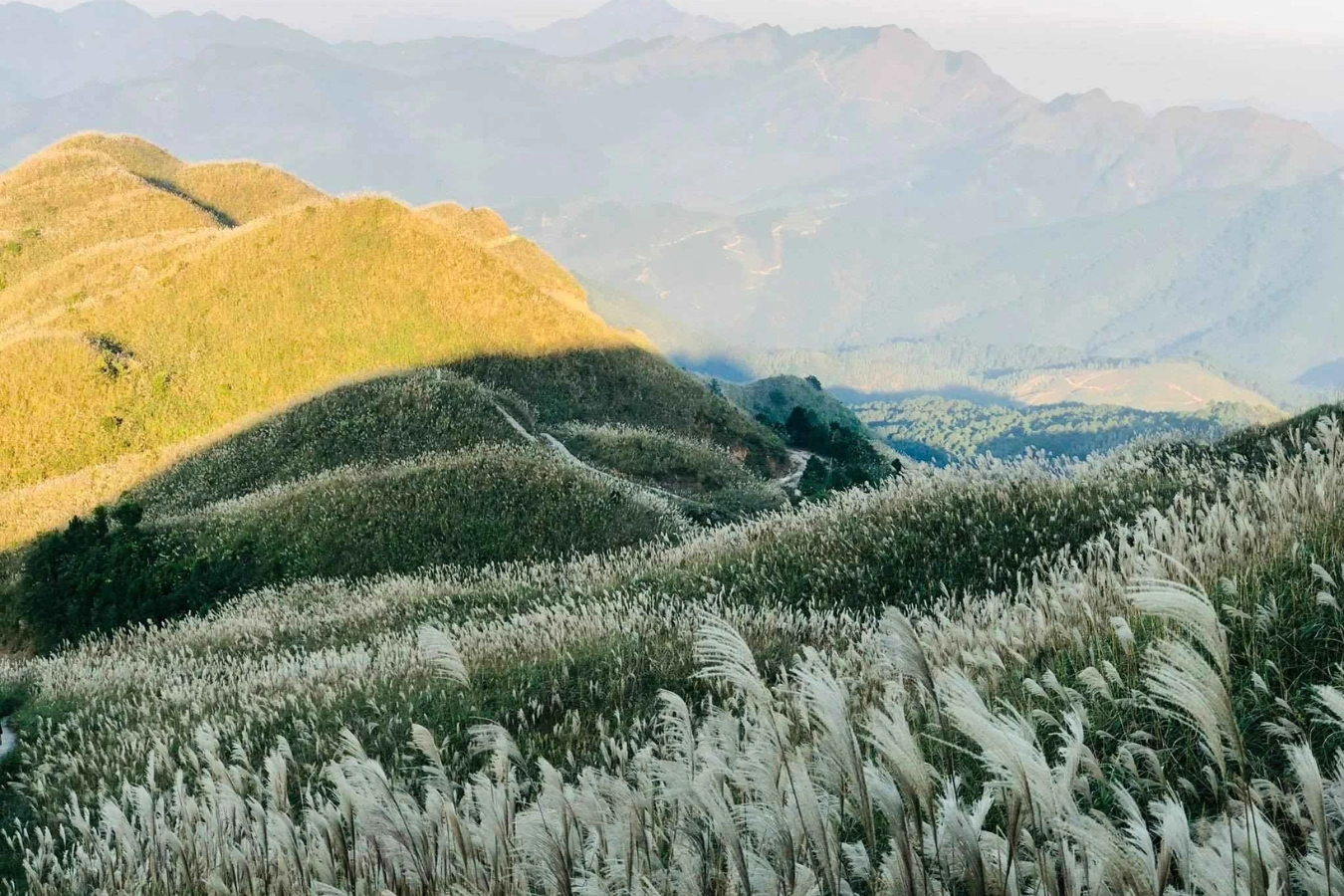
The clearest answer to best time to see white pampas grass in Binh Lieu is November into early December, when the district’s hillsides and border road turn silver-white with blooming reed grass.

| Season | Key Highlight | Main Locations/Details |
|---|---|---|
| Mid-October | Golden terraced rice fields | Luc Na, Dong Van, Hoanh Mo |
| Nov – Early Dec | White pampas (reed) grass bloom | Border patrol road, hillsides |
| Winter Months | So flower festival | District-wide (Dao community) |
| Early Spring | Luc Na & Soong Co festivals | Khe Van waterfall, communal house |
The Reed Grass Season and What Else Blooms
Reed grass, often called pampas grass in English-language travel content, peaks specifically in November, though the wider autumn and winter period from roughly October through December brings a fuller seasonal picture: the reed grass bloom overlaps with harvest season and the So flower festival, celebrating a distinctive flower that blooms only during Binh Lieu’s winter months and holds particular significance for the district’s Dao community. Accommodation in Binh Lieu town fills up well ahead of late November weekends specifically, since the reed grass season draws a genuine seasonal surge against the district’s still-limited guesthouse capacity, making early booking a practical necessity rather than just sensible caution.
Binh Lieu Quang Ninh Terraced Rice Fields Golden Season
For Binh Lieu Quang Ninh terraced rice fields golden season, mid-October is the most consistently recommended window, when the district’s terraces turn a deep amber under autumn sunlight, an alternative for travellers who want the classic golden rice terrace scene without travelling as far as Mu Cang Chai or Sapa. The most photogenic terraces sit in Luc Na commune, alongside Khe O, Cao Thang and Ngan Pat villages on the western slope of Cao Xiem mountain, with further scenic terraces around Song Mooc and Khe Tien villages in Dong Van commune and the communes of Ngan Cam, Cao Son and Hoanh Mo. 📸 Spring, by contrast, suits travellers more interested in the district’s festival calendar than its landscape photography, since the Luc Na communal house festival and the Soong Co singing festival both fall during the early months of the year.
San Chi Women Playing Football and Binh Lieu’s Festivals
San Chi women playing football is one of Binh Lieu’s distinctive cultural sights, a tradition renowned in Huc Dong commune where local women’s teams compete in full traditional dress rather than standard football kit. ⚽
San Chi Women Playing Football Binh Lieu Festival
Huc Dong commune fields four women’s football clubs, based in the villages of Na Ech, Po Dan, Luc Ngu and Khe Mo, whose strongest players go on to represent the commune in wider tournaments against other parts of the district. Matches are played seven-a-side in a round-robin format, with rival teams distinguished by different shades of blue rather than conventional kit numbers, since players compete in their traditional San Chi outfits throughout, and the tournaments draw large crowds of both locals and visitors, particularly around public holidays when the friendly matches between commune teams take on a festival atmosphere of their own.

Soong Co, Luc Na and the Binh Lieu Sunday Market

The Soong Co festival celebrates the San Chi community’s distinctive antiphonal singing tradition, typically featuring an opening ceremony staged near Khe Van waterfall alongside folk games including stick pushing, tug of war and spinning top competitions, plus food demonstrations such as pounding rice cakes and preparing cooc mo, a traditional San Chi delicacy. 🥢 The Luc Na communal house festival, honouring the district’s spiritual traditions in early spring, and Binh Lieu’s own Sunday market, traditionally the week’s main gathering point for Tay, Dao and San Chi traders and still a lively day to visit even as improved roads have brought some daily trading to the district in recent years, round out the calendar of cultural touchpoints worth timing a visit around.
How to Get from Hanoi to Binh Lieu by Motorbike
The realistic answer for how to get from Hanoi to Binh Lieu by motorbike is a full day’s ride of roughly 270 kilometres, best split with an overnight stop rather than attempted as a single exhausting push in either direction. 🏍️
The Motorbike and Car Route
Most riders follow National Highway 18 through Bac Ninh and onward through Quang Ninh province before turning north toward Binh Lieu town, a route that mixes fast highway sections with slower, more winding mountain roads as the district approaches, meaning the final stretch takes considerably longer per kilometre than the initial highway portion. Travelling by car avoids the physical demands of riding but still benefits from an overnight stop given the total journey length, and travellers coming from Ha Long City rather than Hanoi directly face a shorter but still substantial drive of more than 100 kilometres along mountain roads that are considerably less developed than the coastal routes most Halong Bay visitors are used to.

Homestays and Basing Yourself in Binh Lieu Town
Given the distance involved from either Hanoi or Ha Long City, basing yourself in Binh Lieu town for at least one night, rather than attempting a same-day round trip, makes the visit considerably more rewarding and less exhausting, particularly if the dragon’s spine trek is part of your plan. 🛏️ Homestays run by local Tay, Dao and San Chi families offer a highly immersive option and are increasingly easy to arrange directly or through a local guide, while a small number of standard guesthouses in Binh Lieu town suit travellers who prefer more conventional accommodation. Whichever you choose, booking ahead specifically during the November reed grass season and around major festival dates is worth doing, since the district’s total accommodation capacity remains limited compared with more developed trekking destinations like Sapa.
Is Binh Lieu a Good Fit for Your Travel Pace?
An overnight stay gives you time to choose between a demanding ridge walk and a visit focused on mountain scenery, markets and cultural interests. You do not need to include milestone 1305 to make Binh Lieu part of a wider Quang Ninh journey.
Before you go
- Separate travel and trekking: The roughly 270-kilometre journey from Hanoi and a steep walk are different demands. Leave time to rest rather than making a late-afternoon summit the goal after a long ride.
- Discuss the stairs: Ask about the approach, sustained climbing and a turnaround option before committing to the roughly 2,000-step route.
- Choose your priority: Mid-October rice terraces and November into early December reed grass are different seasonal targets. Ask locally about conditions and festival dates before fixing your itinerary.
- Choose your base: Discuss room facilities and meals before choosing a family homestay or a town guesthouse; the accommodation label alone does not tell you whether it suits your needs.
Who it suits: Travellers who welcome an overnight mountain detour and can choose activities around their preferred pace.
Who may prefer something else: Travellers wanting a short coastal outing, or who would not enjoy sustained stair climbing, may prefer other Quang Ninh sights or a Binh Lieu visit without the ridge trek.
Frequently Asked Questions
What is the dragon’s spine in Binh Lieu?
A narrow ridge trail of roughly 2,000 concrete steps leading to border marker 1305, nicknamed for its undulating silhouette and built on a former border patrol path.
When is the best time to see the reed grass season in Binh Lieu?
November into early December.
During this period, the district’s hillsides turn silver-white with blooming reed grass.
How difficult is the Binh Lieu ridge trek?
Moderately challenging rather than technical.
Allow roughly 1.5 to 2 hours each way on steep concrete steps, with three rest stops described along the route. Fitness, heat and your pace affect the time needed; discuss a turnaround option rather than treating this estimate as a target.
Which ethnic groups live in Binh Lieu?
Primarily Tay, Dao and San Chi.
The figures given here are Tay (51.27 percent), Dao (28.21 percent) and San Chi (15.25 percent). The broader ethnic minority share is given as roughly 96 percent, rather than an exact total for these three groups alone.
How do you get from Hanoi to Binh Lieu?
By motorbike or car along National Highway 18 through Bac Ninh and Quang Ninh.
This journey of roughly 270 kilometres is best split with an overnight stop rather than attempted in one day.
Is Binh Lieu worth visiting outside the reed grass season?
Yes, if the other seasonal activities interest you.
Spring brings the Luc Na and Soong Co festivals, summer offers waterfalls and lush green terraces, and mid-October brings the golden rice harvest, giving the district a different character across the year rather than a single peak season.
Conclusion
Binh Lieu combines mountain scenery and cultural interests: 96 percent of the district’s population belonging to ethnic minority communities, a border patrol road turned into one of northern Vietnam’s more distinctive treks, and a seasonal calendar running from spring festivals through golden October rice terraces to the silver reed grass fields of November. Getting the practical details right, a realistic view of the roughly 270-kilometre journey from Hanoi, an overnight stay rather than a rushed day trip, and timing your visit around whichever season matters most to you, turns a Binh Lieu trip from an ambitious detour into one of the more rewarding additions to a wider Vietnam holiday. You can discuss adding Binh Lieu to a private journey, including whether a local guide, suitable accommodation and your preferred activities can be arranged for your dates.
Discuss Your Quang Ninh Journey
Tell us your preferred pace, walking interests and accommodation needs when discussing Halong Bay and Binh Lieu.
Further Reading & Resources
Related guides
A JOURNEY SHAPED AROUND YOU
Meet the people behind
your Vietnam plans.
Tell us what you enjoy, how you like to travel and where you would like more time. We can discuss a private itinerary around your interests and preferred pace.

Vani is the Founder and Lead Travel Designer at Truly Voyage. With over a decade of experience and a deep passion for her Vietnamese heritage, she specializes in crafting bespoke, unhurried itineraries. Vani is dedicated to helping travellers experience the authentic soul of Southeast Asia with absolute financial security and 24/7 on-ground support.
0 Comment