


Planning a Cholon walking tour but worried about timing or tourist traps? 🚶♂️ Most self-guided routes miss crucial details. Arrive late, and markets are closed; walk in blind, and you might overpay. This guide gives you a real, tested route, the best starting times, and exactly how to navigate Saigon’s historic temples and herb shops confidently. 🏮
A Cholon walking tour does not need a guide to work, but it does need a plan, and most self-guided routes online skip the two details that actually decide whether your day goes well. I am Vani, founder of Truly Voyage. Arrive at the wrong time and you will watch Binh Tay Market pack up around you instead of browsing it properly. Walk in blind on pricing and a documented pattern of overcharging will find you at both the market and the cyclo stand outside it. This guide lays out a real route, the right time to start it, and exactly which scams to actually watch for. 💡
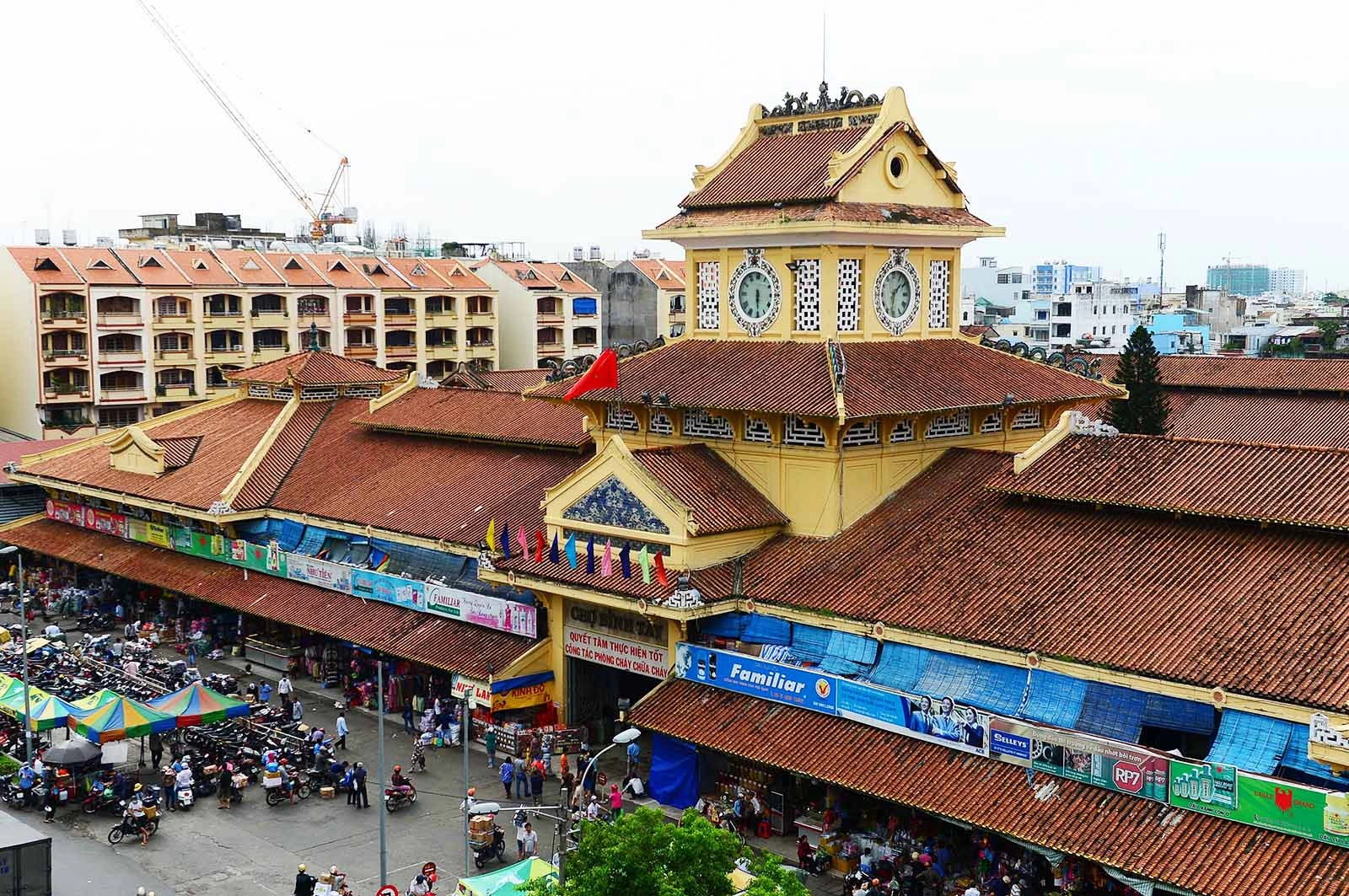
Table of Contents
ToggleWhat Should the Route Actually Include?
Four stops, in a natural west-to-east flow: Thien Hau Temple, Nghia An Hoi Quan, Hai Thuong Lan Ong medicine street, then Binh Tay Market.
The Core Route, Stop by Stop
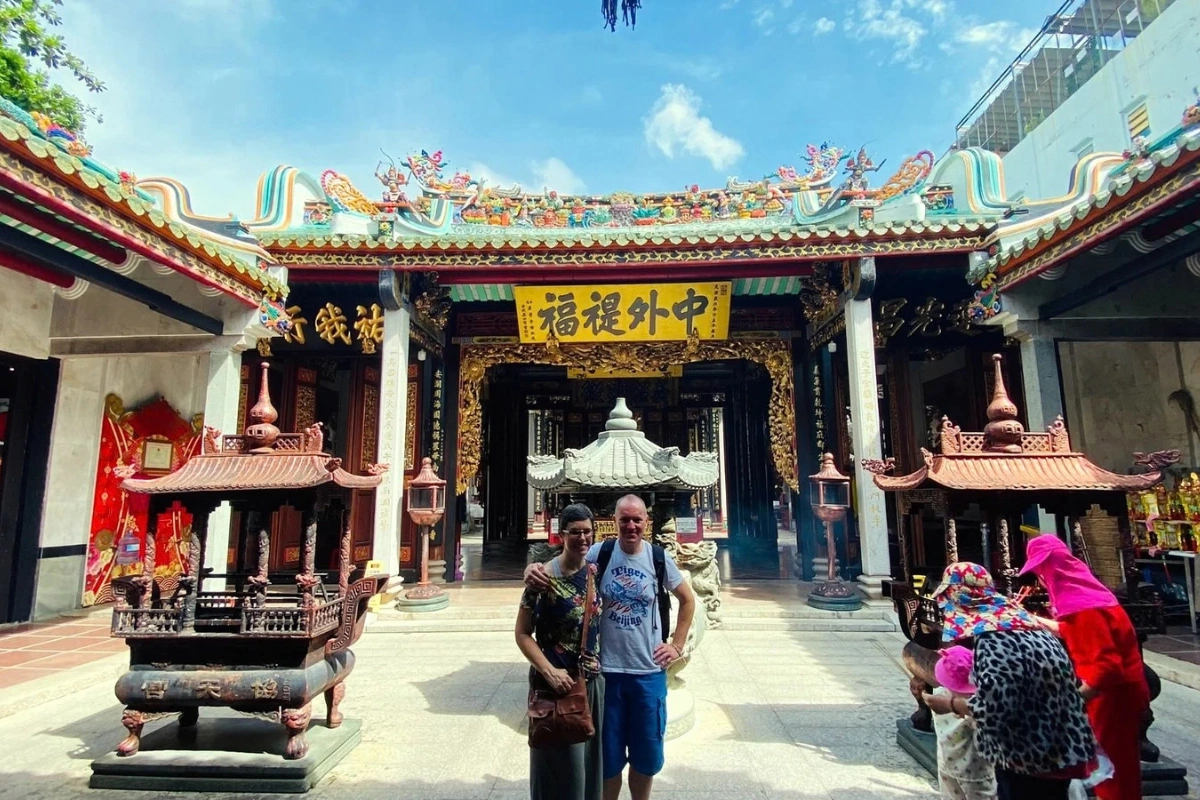
Build the route around four stops that most self-guided routes follow in the same order, a natural west-to-east flow through the district. 🗺️ Start at Thien Hau Temple, built around 1760 and still hosting an annual parade for the goddess Mazu’s birthday, the district’s oldest and most famous temple (Source: Wikipedia, Thien Hau Temple (Cholon)). From there, walk to Nghia An Hoi Quan, a Teochew assembly hall built around its own Quan Cong shrine, dedicated to the God of War, Loyalty and Commerce (Source: Chinatownology, Nghia An Hoi Quan).
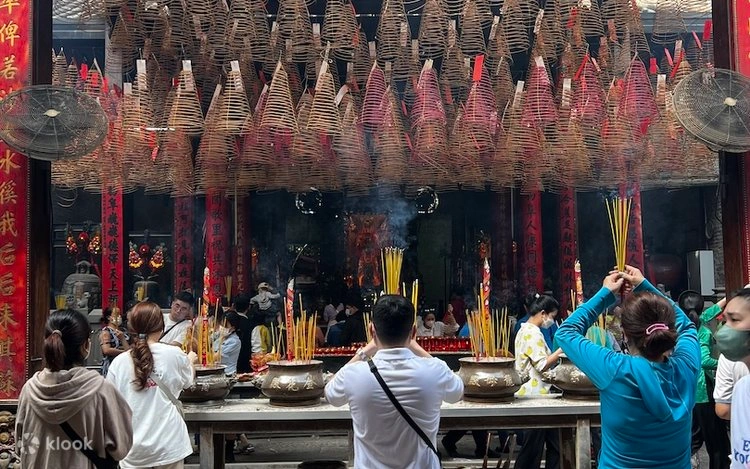
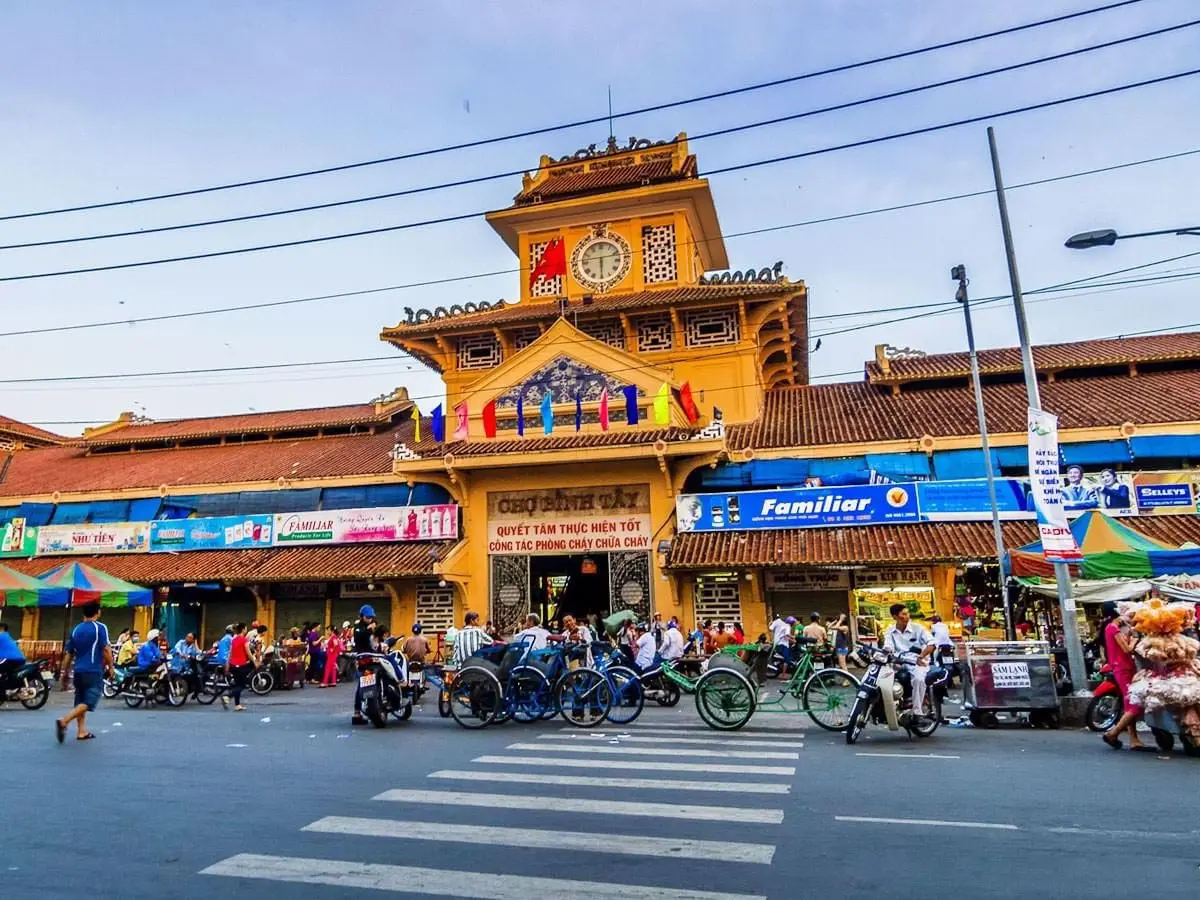
Next comes Hai Thuong Lan Ong street, home to roughly 100 traditional medicine shops trading in herbal remedies, a working street rather than a museum piece. 🍵 Finish at Binh Tay Market, the district’s largest and most recognisable landmark, timed so you arrive while it is still properly open rather than already winding down (Source: Catch Our Travel Bug, Cho Lon Saigon).
Our Cholon Chinatown guide covers the deeper history behind each of these stops, if you want the full story before or after you walk it.
Vani Tips: do not try to cram in every guildhall and shrine Cholon has to offer. Quan Am Pagoda and several smaller community halls sit within easy reach of this core route. Adding one or two if you have the energy beats trying to fit them all in and rushing through the four stops that actually anchor the day.
Do You Actually Need a Guide for This?
No. Multiple independent self-guided resources confirm Cholon is navigable with just a phone map, though a guide does add real value in language and context you will otherwise miss.
What You Gain and Lose Going Solo
Multiple independent self-guided walking-tour resources confirm Cholon is navigable with just a phone map. No source found in researching this piece suggests a guide is required for safety at any point along the route (Source: Catch Our Travel Bug, Cho Lon Saigon). You can genuinely do this yourself, on foot, without booking anything in advance.
What a guide adds is real, though: specifically language bridging and context at the temples and guildhalls, which a solo walk will miss entirely. 🗣️ English availability at these community halls is inconsistent. Even a detailed self-guided account notes needing to rely on whichever member happened to speak English on the day, not a given at every stop. Signage explaining what you are actually looking at is limited or absent at several of the smaller sites. If understanding the specific history and symbolism at each stop matters more to you than simply seeing the buildings, a guide closes that gap. If seeing the buildings and getting a general sense of the district is enough, going solo works fine.
Vani Tips: split the difference if you are genuinely unsure. Hire a guide just for the temple-and-guildhall portion of the route. Continue on your own to Hai Thuong Lan Ong and Binh Tay Market, where a phone map and a bit of patience get you just as far.
Case Study: A Real Customer’s Step-by-Step Experience
To show how this works in practice, here is a real timeline from Sarah, a solo traveler who recently followed our suggested self-guided route. She started early to avoid the midday heat and the afternoon closures.
| Stop | Time | Experience Notes |
|---|---|---|
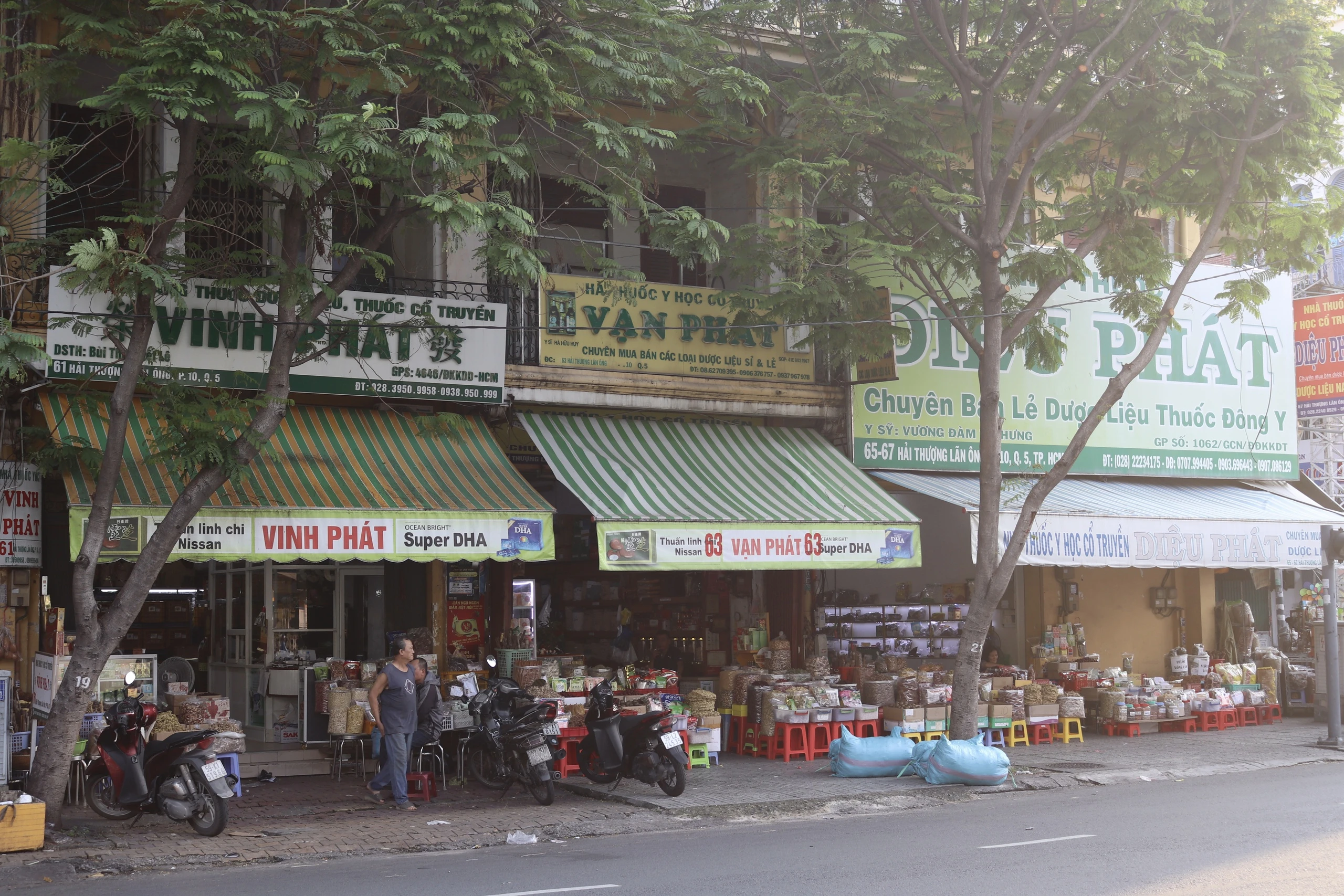
| Thien Hau Temple | 07:45 AM | Quiet and atmospheric. Perfect for taking photos of the incense coils without crowds. |
| Nghia An Hoi Quan | 08:30 AM | A short, easy walk over. The morning light highlighted the intricate woodwork. |
| Hai Thuong Lan Ong | 09:15 AM | Shops were fully open, busy sorting herbs. Strong, pleasant aromas filled the street. |
| Binh Tay Market | 10:15 AM | Bustling wholesale activity. Bought local dried snacks after some mild bargaining. |
Table 1: Step-by-step timeline of Sarah’s morning walking route through Cholon.
Sarah noted that her early start made all the difference, especially arriving at Binh Tay Market while it was in full swing rather than watching stalls close down. 🕒

Looking for a Seamless Travel Experience?
Avoid the hassle of planning and let our local experts guide your Ho Chi Minh City itinerary safely and authentically.
What Time of Day Should You Start?
Before 8am, ideally. That gets you to Ho Thi Ky flower market at its most active and to Binh Tay Market well before it starts winding down.
Timing the Route Around Two Closing Windows
Start before 8am if you want to combine the route with Ho Thi Ky flower market, which is most active pre-dawn and in the early morning, well before the day heats up (Source: Catch Our Travel Bug, Cho Lon Saigon). An early start also gets you to Binh Tay Market while it is genuinely open, rather than already closing. ⏰
Despite an official closing time often posted well into the evening, real visitor reports describe stalls packing up from around 5:30pm, with the market functionally a ghost town by 6:00pm.

Arriving in late afternoon means watching vendors fold up their tables rather than browsing anything properly, one of the most common timing mistakes visitors make on this specific route. Build your day around a morning start, and treat anything after roughly 2:00 or 3:00pm as too late to comfortably fit the whole route in before Binh Tay effectively closes.
Vani Tips: if an early start genuinely is not realistic for you, drop Ho Thi Ky and Binh Tay Market from a late-afternoon version of the route rather than rushing to force both in. The temples and Hai Thuong Lan Ong street do not share the same closing pressure and work fine later in the day.
What Are the Real Scams to Watch For?
Two specific things: inflated single-item pricing at Binh Tay Market, and a documented cyclo overcharging pattern in the wider district.
Binh Tay’s Pricing, and the Cyclo Trap
Tripadvisor reviewers document real, specific price gaps at Binh Tay Market for individual buyers. Cashews run roughly 340,000 VND per kilo at the market against around 200,000 VND outside it. A 1.5 litre Coca-Cola runs about 28,000 VND at the market against roughly 16,500 VND at a supermarket (Source: Tripadvisor, Binh Tay Market reviews). 💰 This is not really a scam in the deceptive sense. Binh Tay is a wholesale market first, built for traders buying in bulk, not individual tourists buying one item. Bargain accordingly if you do buy something small, or plan to shop elsewhere for individual purchases.
The second real risk sits outside the market rather than inside it. A documented cyclo, or pedicab, overcharging pattern exists across the wider Cholon area, flagged specifically by at least one detailed self-guided tour source as a genuine risk rather than a generic warning. Book an organised cyclo tour in advance, or use a ride-hailing bike app such as Grab, instead of flagging down an independent cyclo driver on the street. 🚲 Agreeing a price with an unaffiliated driver before you get in rarely goes the way you expect it to.
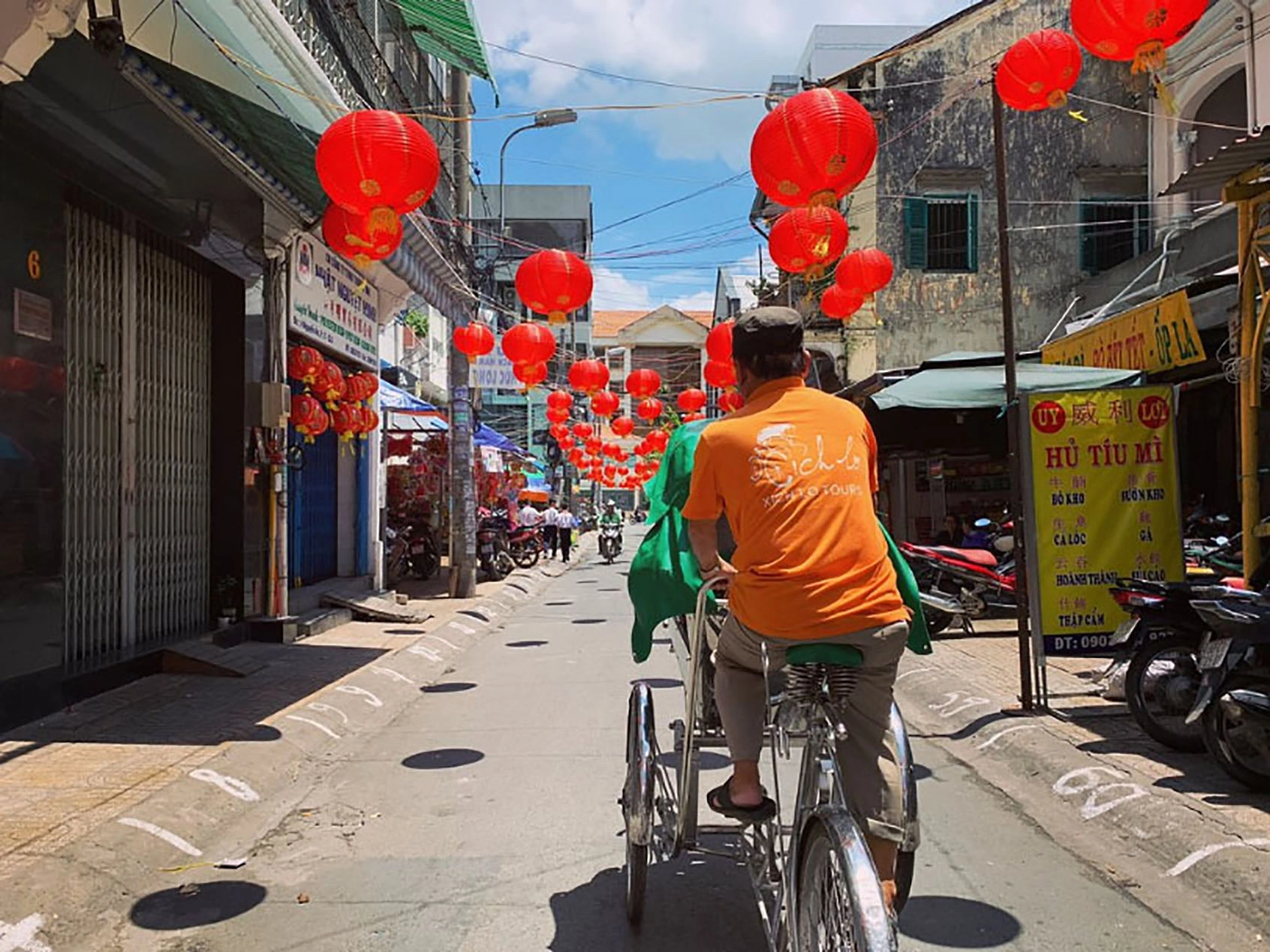
Vani Tips: if you specifically want the cyclo experience for the novelty of it, book it as its own separate activity through a hotel concierge or a listed tour operator. Do not treat it as casual transport between stops on this route. Treat the price gap between that and simply walking or grabbing a bike as the actual cost of the experience, not a rip-off to avoid entirely.
How Long Does the Whole Route Actually Take?
Roughly half a day on foot for the core loop, closer to a full day if you add the flower market and a stop at the Fito Museum on either end.
Sizing the Day Realistically
A commonly cited version of this route, bookended by Ho Thi Ky flower market at the start and the Fito Museum at the end, runs roughly 10 kilometres end to end. It can take anywhere from a few hours to a full day depending on how long you linger at each stop (Source: Catch Our Travel Bug, Cho Lon Saigon). That specific 10 kilometre figure comes from one detailed source and was not independently matched by a second, so treat it as a reasonable estimate rather than an exact measurement.
A shorter version, just the core temple-and-market loop without the flower market or museum bookends, cuts that distance meaningfully and comfortably fits into a morning. ⏳ If you are short on time, drop the bookends first rather than rushing the four core stops. The temples and the market are where the actual substance of the walk lives.
Is Cholon Actually Harder to Navigate Than the Rest of Saigon?
Not really. It looks chaotic to a first-time visitor, but no source suggests Cholon’s traffic or navigation is objectively worse than central Saigon generally.
Traffic and Language, Honestly Assessed
One detailed self-guided-tour account describes Cholon’s traffic as looking completely nuts to a newcomer. It does, in the way most of central Saigon does to anyone who has not crossed a Vietnamese street before. No source found in this research claims Cholon specifically is more dangerous or more chaotic than the rest of the city.
Once you understand the local rhythm of crossing steadily rather than stopping and starting, it becomes manageable the same way it does everywhere else in Saigon. 🚦
Language is a more genuine, if moderate, barrier here than in the central District 1 tourist areas. English is inconsistent at the temples and guildhalls, and vendors at Binh Tay Market are used to dealing with English-speaking bulk buyers rather than small talk or detailed negotiation. None of this should stop you from doing the walk. It just means a translation app is more useful here than it would be on Nguyen Hue Walking Street, and patience goes further than fluency.
Vani Tips: download an offline translation app before you set out, rather than relying on data coverage staying strong inside older buildings and narrow lanes. 📱 A photo-translate feature specifically earns its keep on menus and shop signage along Hai Thuong Lan Ong.
Ready to Explore Vietnam Beyond the Guidebooks?
Whether it’s walking through Cholon or cruising Ha Long Bay, our curated packages ensure a stress-free journey tailored just for you.
Frequently Asked Questions About Walking Cholon
Do you need a guide to walk Cholon?
Quick Answer: No. Multiple independent self-guided resources confirm Cholon is navigable with just a phone map.
A guide adds language bridging and context at the temples that a solo walk will miss, but is not required for safety.
What time should you start a Cholon walking tour?
Quick Answer: Before 8am, ideally.
This allows you to catch Ho Thi Ky flower market at its most active and reach Binh Tay Market before it starts winding down around 5:30 to 6pm.
What scams should you watch for in Cholon?
Quick Answer: Inflated single-item pricing at Binh Tay Market and a documented cyclo overcharging pattern in the wider district.
Binh Tay is a wholesale market first. Always negotiate reasonably or opt to buy individual snacks elsewhere.
Is it safe to take a cyclo in Cholon?
Quick Answer: Yes, but book an organised cyclo tour in advance or use a ride-hailing bike app.
Avoid flagging down an independent driver on the street, where overcharging is a documented pattern.
What stops should the walking route include?
Quick Answer: Thien Hau Temple, Nghia An Hoi Quan’s Quan Cong shrine, Hai Thuong Lan Ong medicine street, then Binh Tay Market.
This offers a natural west-to-east flow and ensures you see the most historically significant spots without being overwhelmed.
How long does the Cholon walking route take?
Quick Answer: Roughly half a day for the core loop.
It is closer to a full day, around 10 kilometres, if you add Ho Thi Ky flower market and the Fito Museum as bookends.
Is Cholon’s traffic dangerous for pedestrians?
Quick Answer: Not more than the rest of central Saigon.
It looks chaotic to first-time visitors, but no source suggests it is objectively worse than elsewhere in the city.
Is there a language barrier in Cholon?
Quick Answer: A moderate one, more noticeable than in District 1.
English is inconsistent at temples and guildhalls, so a translation app is genuinely useful here.
Conclusion
Set an alarm and start before 8am, earlier than feels necessary on holiday. Every real problem with this route, the closing market, the flower stalls past their best, the rushed final stop, traces back to a late start rather than a wrong turn or a bad scam. Get the timing right. The rest of the day, the temples, the medicine street, the market, the language gaps, all of it, sorts itself out far more easily than any single piece of advice in this guide. 🎒
Further Reading & Resources
- Catch Our Travel Bug, Cho Lon Saigon: A Free Self-Guided Walking Tour — the core self-guided route, timing, and total distance. Direct Link
- Wikipedia, Thien Hau Temple (Cholon) — Thien Hau Temple’s construction date and Mazu’s birthday parade. Direct Link
- Chinatownology, Nghia An Hoi Quan — the Quan Cong shrine at Nghia An Hoi Quan. Direct Link
- Tripadvisor, Binh Tay Market reviews — documented individual-buyer price gaps at Binh Tay Market. Direct Link

Vani is the Founder and Lead Travel Designer at Truly Voyage. With over a decade of experience and a deep passion for her Vietnamese heritage, she specializes in crafting bespoke, unhurried itineraries. Vani is dedicated to helping travellers experience the authentic soul of Southeast Asia with absolute financial security and 24/7 on-ground support.
0 Comment