


Confused by conflicting recommendations on what to eat in this highland city? Many lists mistakenly highlight dishes that actually belong elsewhere. This guide reveals authentic local specialties like bánh ướt lòng gà, alongside genuinely adopted favorites and halal options. Discover the true culinary identity of the city!

This guide starts by fixing a mistake I’ve made myself, in our own earlier research on a different province, no less.
Grilled pork with wet rice paper keeps getting listed across Vietnam food content as a defining Da Lat specialty. It isn’t, at least not by any documentation I can find, and I’d rather correct that here than let it quietly propagate further. I’m Vani, founder of Truly Voyage, and once you’re standing on a cold evening with steam rising off a bowl of something and vendors calling out over the night market noise 🧥, you deserve a list of dishes that actually belong to this specific city, not ones borrowed from somewhere else and relabeled along the way.
Pull the collar of your jacket up a little tighter, follow the smell of charcoal smoke down toward the market steps, and let your stomach lead for the next few paragraphs. The food identity here was built for exactly this kind of evening, cold enough that a hot bowl in your hands actually matters, and dense enough with genuine local history that getting the details right feels worth the extra effort.
Table of Contents
ToggleThe Chicken Dish That Actually Belongs to Da Lat
Here’s the dish that should be highlighted in many local culinary lists instead: bánh ướt lòng gà, wet rice paper served with shredded chicken and chicken offal, eaten alongside fresh crisp lettuce and a bright dipping sauce. 🍜
This is the version with the official paper trail behind it. Bánh ướt lòng gà was named among Vietnam’s Top 100 Specialty Dishes, a national culinary honor tracked between 2011 and 2016 by the country’s own culture and heritage authorities, receiving its formal record certification in 2016 (Source: Vietnam’s Cultural Heritage Department). The rice batter itself takes real technique: soaked rice ground fine, blended with tapioca and cassava starch to keep the sheets pliable enough to steam without tearing, then paired with herbs and lettuce grown in the same cool highland soil that makes the produce here famous 🥬.

Vani Tips: Bánh ướt lòng gà, wet rice paper served with chicken and chicken offal, is the dish officially recognized as a local specialty, listed among Vietnam’s Top 100 Specialty Dishes by the country’s own culture ministry between 2011 and 2016. Do not confuse it with bánh ướt thịt nướng, the grilled pork version, which is documented instead in Hue, Hoi An, and under its own Ban Me branding in Buon Ma Thuot, not here.
That grilled pork version, bánh ướt thịt nướng, traces to Kim Long in Hue, where it’s served with a distinctive sweet-sour-spicy sesame-peanut sauce rather than the usual fish-sauce dip. Hoi An has its own self-rolled take, and Buon Ma Thuot’s “Ban Me” version, itself an adaptation of the Hue original, asks diners to roll each wrap themselves at the table. None of those documented lineages run through this city. If a listing hands you grilled pork rice paper as a signature dish here, it’s repeating a mix-up, not a fact.
Grilled Rice Paper and the Vietnamese Pizza Nickname
Here’s a dish that genuinely does belong here, and it earns its nickname honestly.

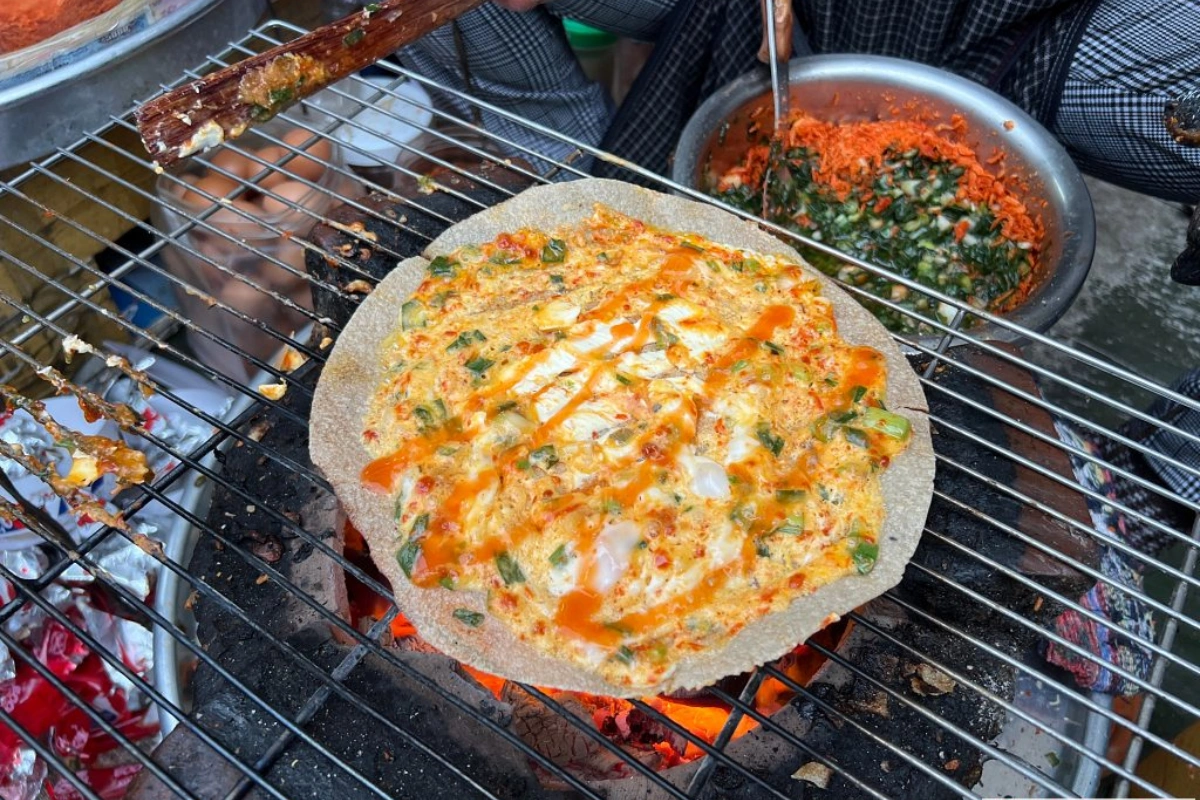
Bánh tráng nướng — grilled rice paper crisped directly over charcoal, then topped with quail egg, dried shredded pork or beef, scallion oil, and a scattering of dried shrimp before a final swipe of chili sauce and mayonnaise — is specifically and repeatedly credited to the night market street-food scene here 🍕. The “Vietnamese pizza” nickname isn’t an invented marketing line dreamed up for foreign visitors. It’s a genuine, externally applied description that food writers and travelers reached for independently because the visual comparison, a round, crisp base loaded edge to edge with toppings, is simply accurate (Source: The World of Street Food).
Vani Tips: Bánh tráng nướng, grilled rice paper topped with egg, dried meat, and scallion, is genuinely and specifically associated with the city, and the Vietnamese pizza nickname is a real, externally used description, not an invented marketing line.
Watch it made once and you’ll understand why it is a popular street food. The vendor works the rice paper directly over open coals with bare fingertips and a practiced flip, cracking a quail egg onto the crackling surface without breaking the paper beneath it, building layers of texture, crisp, chewy, creamy, in under two minutes flat. Find it near any of the night market stalls after dark, and you’re eating the same dish locals grew up with, not a version staged for tourists.
Craving a Genuine Culinary Adventure?
Let us build an unforgettable itinerary filled with authentic local flavors. Discover the real Vietnam with our expert guidance.
A Traveler’s Real Experience: Step-by-Step Evening Food Tour
To show you how this actually looks in practice, here is a step-by-step evening from Sarah, a recent traveler who built her full evening’s plans with us around genuine culinary experiences:
- Step 1: Start with Warmth. At 6:00 PM, as the temperature dropped to 16°C, Sarah began with a hearty bowl of bánh ướt lòng gà near Tang Bat Ho street. The hot chicken and tangy sauce immediately fought off the highland chill.
- Step 2: The Charcoal Snack. Walking down toward the market steps, she grabbed a freshly grilled bánh tráng nướng 🚶♀️. She ate the crispy “pizza” layer by layer while browsing local artisan stalls nearby.
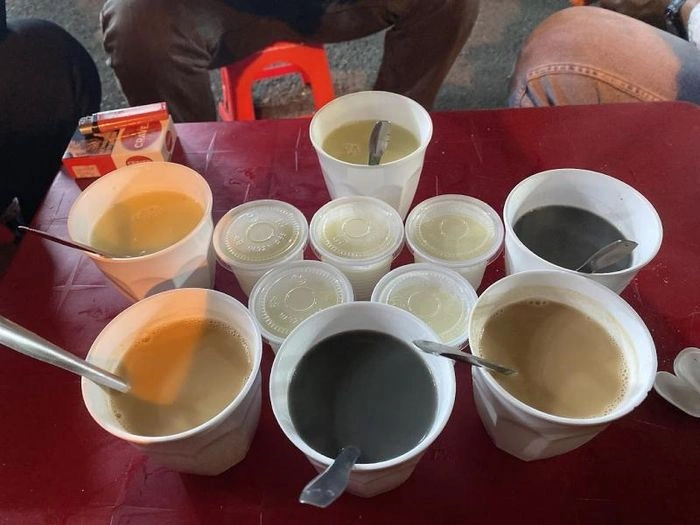
- Step 3: Sweet Ending. By 8:30 PM, she concluded the night sitting on a small plastic stool, clutching a steaming cup of hot soy milk and dipping a local sweet pastry into it, simply watching the vibrant crowds pass by.
This simple, three-step journey is exactly how locals navigate a chilly night.
Artichoke Tea and Strawberry Jam, the Genuinely Local Souvenirs
Some of the most authentic flavors don’t come on a plate at all. They come in a jar or a cup, and they’re worth packing home.
Trà atiso, artichoke tea brewed from the dried flowers and leaves of artichokes grown in the cool highland fields here, is a highly documented genuine product this city produces ☕, slightly bitter up front with a smooth, sweet aftertaste that locals credit with everything from liver support to simple diuretic relief. Alongside it sits a whole shelf of candied and jarred goods, strawberry jam a popular choice among them 🍓, along with cherry tomato jam and other candied fruit, all grown and processed regionally rather than shipped in from elsewhere (Source: dacsandalat.com.vn).
Vani Tips: Artichoke tea, tra atiso, is grown locally and is a highly documented genuine product, alongside strawberry jam and other candied fruit, and hot soy milk sold by street vendors is a real part of how locals handle the cold evenings here, not just a tourist ritual.
Hot soy milk deserves that same credit for authenticity, not just the jams. Small stands near the night market keep pots steaming through the evening, and in air that regularly drops to 15 to 17 degrees Celsius after dark, a cup of hot soy milk, sometimes stirred with fresh milk or condensed milk for richness, held in both hands while you people-watch the market crowd, is exactly how locals actually get through a cold night, not a ritual staged for visitors’ cameras. If you buy one souvenir bag of anything here, let it be artichoke tea. If you drink one thing standing on a street corner after dark, let it be the soy milk.
Dishes Borrowed From Elsewhere, Not Invented Here
Two more dishes get marketed as local originals often enough that I want to correct the record honestly, without telling you to skip either one.

Bánh căn, small savory rice cakes cooked in clay molds over charcoal, actually originates with the Cham people of Phan Rang, in Ninh Thuan province along the south-central coast, where it’s traditionally roasted rather than fried, distinguishing it from the oil-cooked bánh xèo and bánh khọt of the south (Source: Hello Phan Rang Travel). The city adopted the dish and now serves it widely and well, but it was never invented here.
Lẩu gà lá é, chicken hotpot flavored with a specific white é leaf, tells an even more honest story about its own borrowed status: that particular leaf variety only grows properly in Phu Yen’s sun and wind, so restaurants here actually import it from Phu Yen to make the dish, and many signs around the city advertise it outright as “lẩu gà lá é Phú Yên,” naming the real origin on their own storefronts (Source: Người Lao Động).
| Dish Name | Status in Da Lat | True Origin (if adopted) |
|---|---|---|
| Bánh Ướt Lòng Gà | Authentic Local | Da Lat |
| Bánh Tráng Nướng | Authentic Local | Da Lat |
| Bánh Căn | Adopted | Phan Rang (Ninh Thuan) |
| Lẩu Gà Lá É | Adopted | Phu Yen |
Vani Tips: Be honest that bánh căn and a chicken hotpot with é leaf both get marketed as local originals in some articles. Bánh căn actually originates on the south-central coast and was adopted here, while the é leaf hotpot is well-documented as a Phú Yên dish. Both are worth trying, but not worth calling local inventions.
I’d argue that borrowed status doesn’t diminish either dish one bit. A city built on migration, coffee and tea growers from the south, Chăm traders from the coast, French colonists layering their own habits on top of everyone else’s, was never going to have a food culture invented from nothing inside its own borders. Eat both dishes without hesitation. Just don’t repeat the wrong origin story while you do.
Halal Options Worth Knowing About
If you’re searching for halal food in this area wondering whether it’s worth the effort, the honest answer is yes, and the options are more established than a quick glance suggests 🧕.

At least three named restaurants show up consistently, cross-confirmed across multiple independent travel and halal-dining directories rather than a single unverified listing: Kampung Pandan, near the Pedagogical College on Yersin street, serving broad Southeast Asian halal cuisine; Jajah Hawa, bringing Malaysian and Indonesian flavors to the city; and Fatimah Restaurant on Nguyen Du street, known particularly for its seafood and stir-fried vegetable dishes (Source: HalalTrip).
Vani Tips: Halal dining options are genuinely findable here, not just a low-relevance search term. At least three named restaurants, Kampung Pandan, Jajah Hawa, and Fatimah, are cross-confirmed across multiple travel directories.
That’s a real, workable list for Muslim travelers rather than a hopeful mention buried in a broader city guide. Confirm current addresses and hours directly before you go, since restaurant locations in a fast-growing tourist city shift more often than guidebooks update, but don’t assume you’ll be stuck improvising vegetarian workarounds for your whole trip.
Beyond the three named restaurants, look for the halal-certification signage that’s become more common across the central dining strip in recent years, a byproduct of the city’s growing popularity with Malaysian and Indonesian tour groups drawn by the same cool climate that first attracted French colonists a century earlier. It’s a genuinely functioning scene, not an afterthought.
Need Help Navigating Vietnam?
Reach out to our local travel experts for personalized advice, tailored itineraries, and a hassle-free holiday experience.
Frequently Asked Questions
What food is Da Lat famous for?
Quick Answer: Bánh ướt lòng gà, wet rice paper with chicken and chicken offal, is the officially recognized specialty.
Bánh tráng nướng, the grilled “Vietnamese pizza,” artichoke tea, and strawberry jam are also genuinely local.
What is bánh uot long ga?
Quick Answer: Wet rice paper served with shredded chicken and chicken offal, paired with local herbs and lettuce.
It’s an officially recognized Top 100 Specialty Dish in Vietnam, credited specifically to this city.
Is there halal food in Da Lat?
Quick Answer: Yes.
Kampung Pandan, Jajah Hawa, and Fatimah Restaurant are three named, cross-confirmed halal dining options in the city.
What should I eat at night?
Quick Answer: Bánh tráng nướng fresh off the charcoal at a night market stall.
Follow it up by a hot cup of soy milk to handle the evening chill, which is a genuinely local combination, not a tourist-only ritual.
Is grilled pork rice paper a local dish?
Quick Answer: Not by documented origin.
Bánh ướt thịt nướng traces to Hue’s Kim Long area, with its own distinct versions in Hoi An and Buon Ma Thuot. It’s a mix-up that circulates in online food content.
Are bánh căn and lẩu gà lá é worth trying?
Quick Answer: Yes, both are genuinely enjoyable and widely available here.
Just know they originated elsewhere, bánh căn on the south-central coast and lẩu gà lá é in Phú Yên, before being adopted into the local food scene.
Conclusion
Read this before your first night out. This guide exists to fix a mix-up that’s spread further than it should have: bánh ướt lòng gà, not the grilled pork version, is the officially recognized local specialty, alongside genuine classics like bánh tráng nướng, artichoke tea, and hot soy milk on a cold evening. Bánh căn and lẩu gà lá é are worth eating without being worth calling local inventions, and halal dining is a real, workable option here, not a footnote. Start with the chicken rice paper and a cup of artichoke tea specifically. Both are the real, correctly attributed local classics.
Further Reading & Resources
- “Dẻo Thơm Bánh Ướt Lòng Gà Đà Lạt,” Cục Di sản Văn hóa (Vietnam’s Cultural Heritage Department), scov.gov.vn — official Top 100 Specialty Dishes recognition for bánh ướt lòng gà. Direct Link
- “Hai Món Ăn Của Đà Lạt Lọt Top 100 Ẩm Thực Đặc Sản Việt Nam,” VietnamNet — national recognition context for specialty dishes. Direct Link
- “Bánh Ướt Thịt Nướng Ban Mê: Khám Phá Ẩm Thực Đặc Trưng Của Xứ Đắk Lắk,” Bún Đậu Mắm Tôm Tiến Hải — documents the Hue-to-Buon Ma Thuot lineage of grilled pork rice paper. Direct Link
- “Bánh Tráng Nướng, or Da Lat Pizza,” The World of Street Food — the Vietnamese pizza nickname and its genuine origin. Direct Link
- Regional specialty product coverage, dacsandalat.com.vn — artichoke tea, jams, and soy milk as documented local products. Direct Link
- “Bánh Căn Phan Rang – Đặc Sản Nức Tiếng Của Ninh Thuận,” Hello Phan Rang Travel — bánh căn’s Cham and Ninh Thuan origins. Direct Link
- “Thưởng Thức Lẩu Gà Lá É Chính Gốc Phú Yên,” Người Lao Động — lẩu gà lá é’s documented Phu Yen origin. Direct Link
- HalalTrip restaurant directory listings for Kampung Pandan, Jajah Hawa, and Fatimah Restaurant — cross-confirmed halal dining options. Direct Link

Vani is the Founder and Lead Travel Designer at Truly Voyage. With over a decade of experience and a deep passion for her Vietnamese heritage, she specializes in crafting bespoke, unhurried itineraries. Vani is dedicated to helping travellers experience the authentic soul of Southeast Asia with absolute financial security and 24/7 on-ground support.
0 Comment