
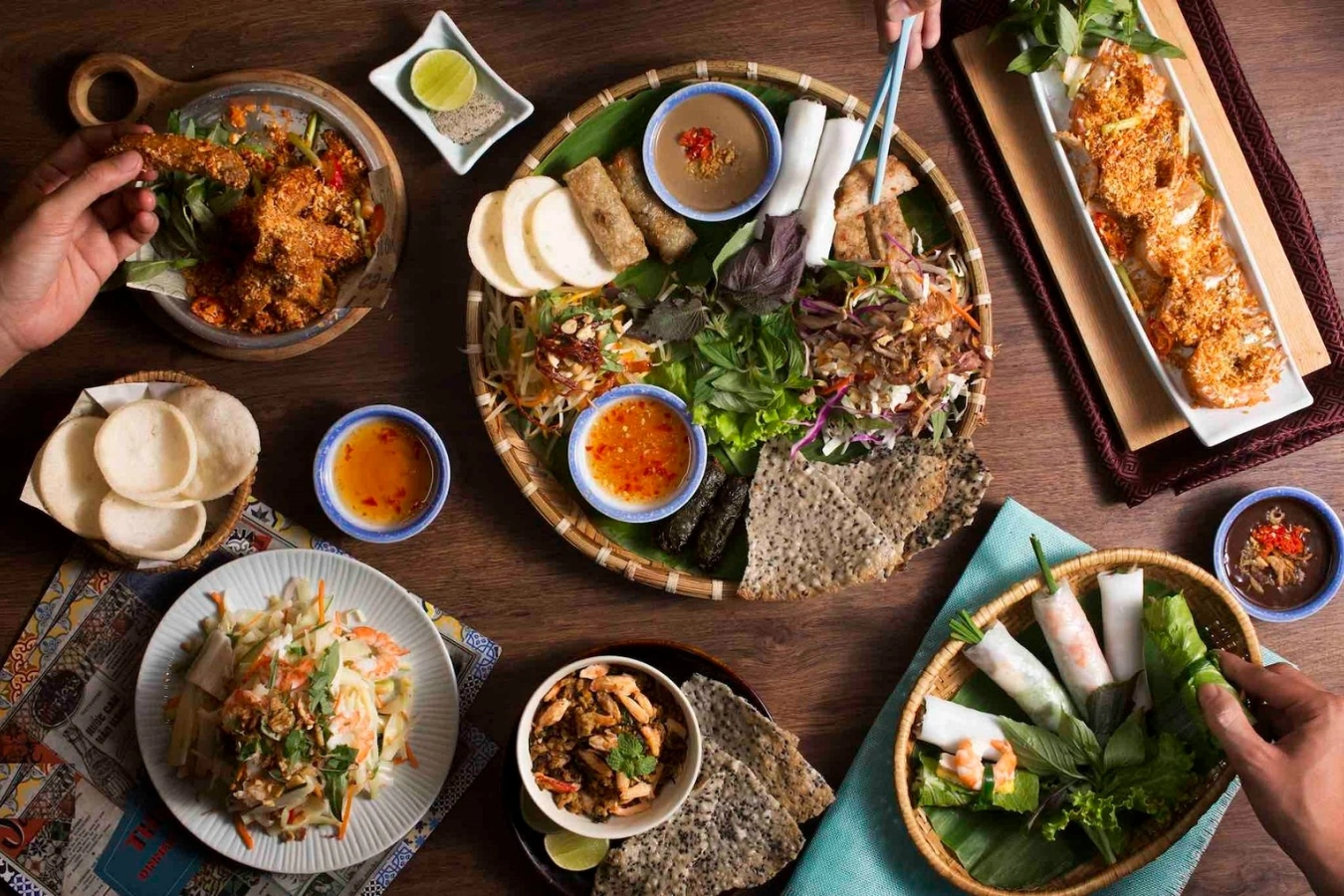


Quang Binh food guide: Uncover central Vietnam’s culinary soul! Tired of generic meals? This guide reveals highly authentic dishes like muoi cheo grilled chicken, Quang Hoa banh xeo, and chao canh noodle soup. Discover exactly what to eat, where to find it, and how to order like a local for an unforgettable, mouth-watering journey.

The charcoal catches first, then the batter hits the hot iron mould with a sound somewhere between a hiss and applause, red-brown rice batter spreading, bubbling, crisping at the edges in under thirty seconds 🥞. Somewhere else in the same town, a pot of bone broth has been quietly simmering since before dawn, filling a misty morning kitchen with something warm and unhurried, the kind of smell that makes you forgive yourself for ordering a second bowl. And on a grilling rack over open coals, a whole free-range chicken turns gold beside a small mound of roasted salt, chilli and crushed herbs that many English-language guides get wrong before you have even tasted it 🍗.
This is your Quang Binh food guide, and I am Vani, founder of Truly Voyage. Get one detail right before anything else. The dip served with this province’s grilled chicken is not peanut salt, whatever you may have read online. It is muoi cheo, a distinctly different thing, and the difference matters enough that I want to correct it here before we go any further. This guide names five dishes precisely, corrects that confusion properly, and sources what makes each one specific to Quang Binh rather than generic central Vietnamese food you could find in many provinces along this coast.
Table of Contents
ToggleWhat Is Muoi Cheo, and Why Is It Not Peanut Salt?
A roasted dip of salt, chilli, garlic, lemongrass, lime leaf, herbs and either mac khen or a wild forest pepper, served with free-range hill chicken, and correctly named muoi cheo rather than peanut salt 🌿.
Ga nuong cham muoi cheo, grilled chicken with muoi cheo, is Quang Binh’s highly recognisable dish, and its dipping salt is the main reason the dish works. Muoi cheo blends roasted salt with chilli, garlic, lemongrass, lime leaf, Vietnamese basil, saw-leaf herb and either mac khen or a wild forest pepper, hand-pounded together rather than simply mixed. It is described specifically as a dish of the Phong Nha-Ke Bang people rather than something found this way elsewhere in Vietnam (Source: Quang Binh Tourism Portal).
The chicken itself matters too, free-range hill birds rather than anything farmed intensively, grilled whole over charcoal until the skin turns a deep gold and the meat stays genuinely juicy underneath. Restaurants across Phong Nha town serve their own version, and the salt blend varies slightly from kitchen to kitchen, but the name remains consistent, and it is not accurately called peanut salt.

💡 Vani Tips: ask for muoi cheo by name rather than describing it as peanut salt. Kitchens will know exactly what you mean, and you will get the real dip rather than a confused substitute.
What Makes Quang Binh’s Banh Xeo Different?
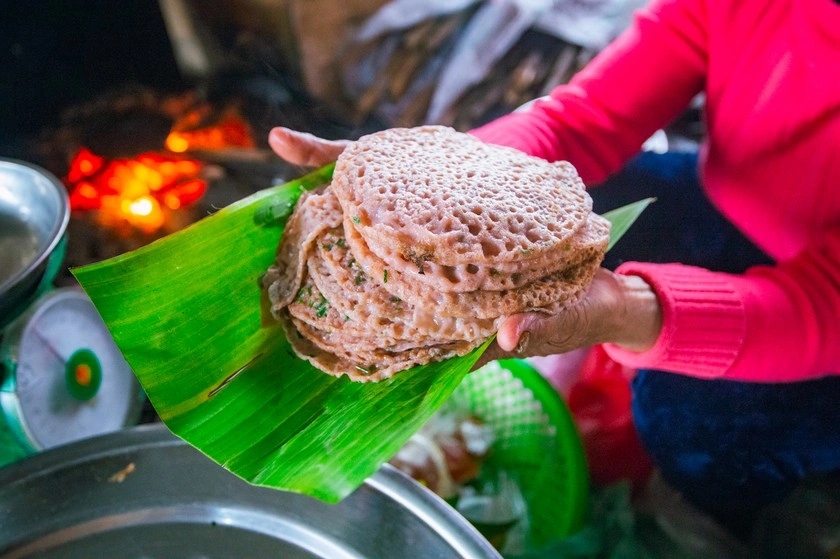
The Quang Hoa version uses a red-brown rice flour batter poured into small charcoal-fired cast iron moulds, producing a crisp base and soft centre, rather than the coconut milk batter found further south.
Most banh xeo across Vietnam shares a common shape, a large, thin, turmeric-yellow crepe folded around shrimp and pork. Quang Binh’s version, strongly associated with Quang Hoa commune on the banks of the Gianh River, does almost none of that. The batter is red-brown rice, soaked for three to five hours and ground fine, mixed with salt and finely chopped chives, poured a ladle at a time into small round cast iron or steel moulds (Source: Phongnha Discovery Tours), roughly 15 centimetres across (Source: Quang Binh Travel), set directly over a charcoal stove 🔥.
In under thirty seconds, the batter sets into a small, thick pancake, crisp on the base that touched the hot iron, soft and slightly chewy on top, served with a sweet and sour dipping sauce rather than the fish sauce and herb bundles typical elsewhere. The craft itself runs deep in Quang Hoa, passed down through generations of families who have made little else for a living.
💡 Vani Tips: look specifically for a Quang Hoa style listing on a menu if you want the red-brown rice flour version rather than a generic central Vietnamese banh xeo. The two dishes share a name and very little else.
Craving the Authentic Tastes of Central Vietnam?
Stop guessing what to eat. Let our local experts take you on a culinary journey through Vietnam’s hidden gems and vibrant street food scenes.
What Exactly Is Chao Canh?
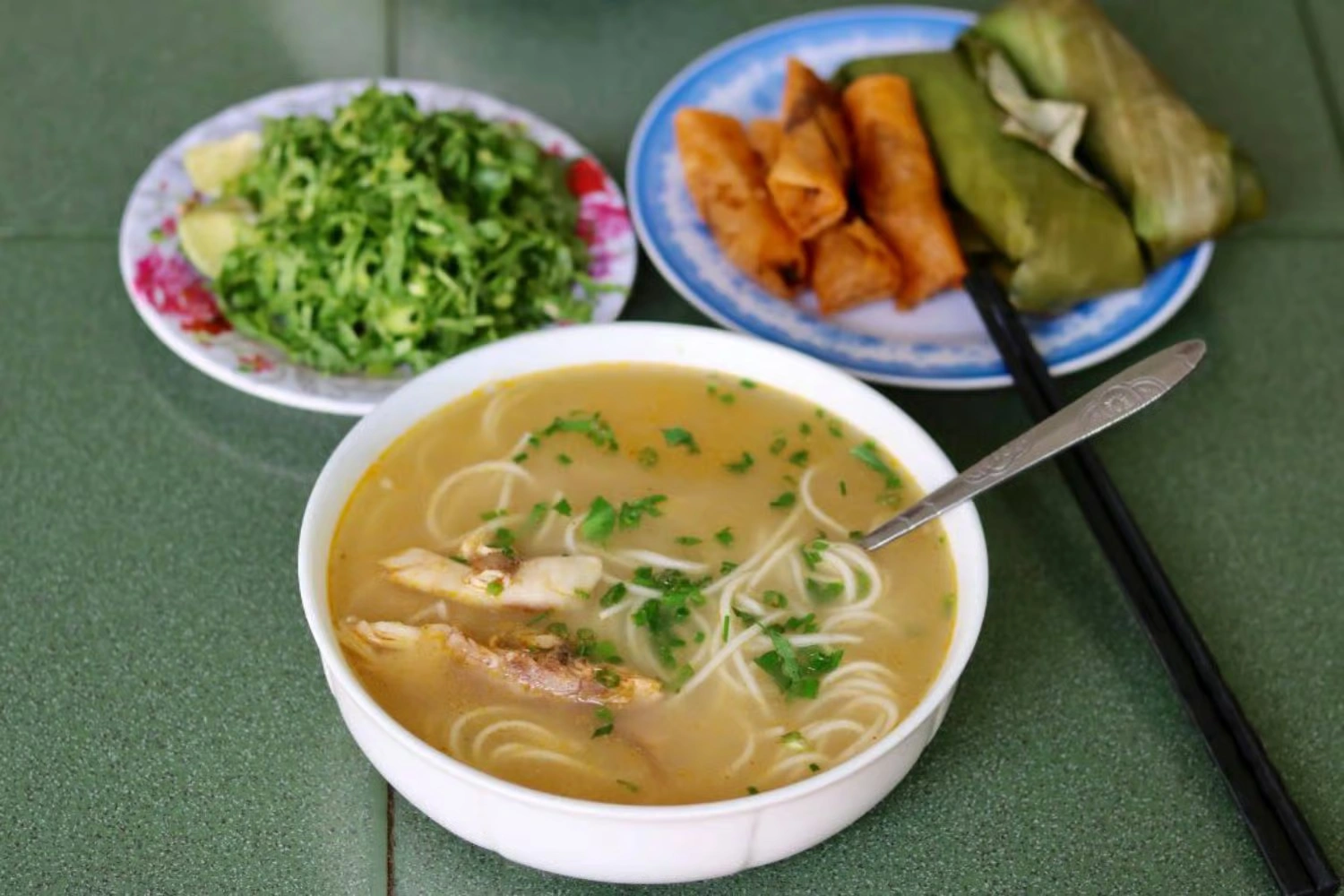
A genuine hybrid of porridge, noodle and soup, hand-made rice or tapioca flour noodles simmered for one to two hours in pork bone broth, topped with fried spring rolls and herbs 🍜.
Despite the name, chao canh is not porridge. It is a thick noodle soup built around hand-made noodles, cut from rice flour or a rice-tapioca blend into soft, chewy strands, simmered in a pork bone broth for one to two hours, sometimes with shrimp or fish added toward the end (Source: PhongNhaInfo). The result is topped with hot, crisp fried spring rolls, locally called ram, and a scattering of fresh herbs, sweet broth against chewy noodles against crunchy pastry in a single bowl.
No source we could find can date exactly when chao canh originated in the province, which is, in its own way, part of the point. This is not a dish invented for tourism or dated to a single origin story. It is simply what people in Quang Binh have been eating for breakfast for longer than anyone has bothered to write down.
💡 Vani Tips: order it for breakfast rather than dinner. Most kitchens serve their freshest version early in the day, when the broth is flavourful and the noodles have not sat waiting.
What Is Banh Loc, and Where Does It Fit In?
A translucent, chewy tapioca flour dumpling wrapped around shrimp and pork, steamed in banana leaf, part of a wider central Vietnamese family but a fixture of any serious Quang Binh food list.
Banh loc belongs to a dumpling family found across central Vietnam, but no Quang Binh food guide is truly comprehensive without it. Tapioca flour, kneaded until properly elastic, wraps around a simple filling of shrimp and pork, then the whole parcel is folded into banana leaf and steamed until the skin turns glassy and translucent, letting the pink shrimp and pork show faintly through 🥟. The texture is the main appeal, genuinely chewy in a way rice flour dumplings rarely achieve, dipped into a simple sauce of fish sauce, lime juice and chilli. It earns its place on this list by sheer consistency, present on nearly every food stall and restaurant menu across the province.

What Should You Eat at Nhat Le Beach?
Fresh catch cooked to order, squid, shrimp, oysters and fish chosen straight from the counter, plus one specialty worth seeking out deliberately, ram den, deep-fried spring rolls made with sliced sea snake 🦑.
Nhat Le Beach in Dong Hoi sits on a continental shelf more than twice the size of Quang Binh’s land area, holding an estimated 100,000 tonnes of seafood reserves across some 1,650 species (Source: Phongnha Discovery Tours). Walk along Truong Phap Street and the draw is simple, tanks and iceboxes of squid, shrimp, oysters and whole fish, priced by weight and cooked however you ask, steamed, grilled or stir-fried, within minutes of ordering.

The Daily Catch
What is actually on offer changes with the tide and the season far more than any printed menu suggests, jumping squid one week, particular shellfish the next. Prices are almost always set by weight rather than by dish, so pointing at a tank or an icebox and asking for a specific portion works wonderfully here. Treat any fixed seafood menu as a rough guide rather than a firm promise, and treat the staff’s own recommendation based on what actually arrived at the dock that morning.
Ram Den: The Specialty Worth Trying
Sea snake, locally called den bien, is a specialty that separates Nhat Le from a generic beach seafood strip. Sliced, seasoned and rolled into a crisp deep-fried spring roll called ram den, it is nicknamed locally as something close to the ginseng of the sea, and served with a sweet and sour dipping sauce that cuts through the richness (Source: Oxalis Adventure) & (Source: inboundvietnam.com). It is a genuinely distinctive regional specialty rather than a novelty dish dreamed up for adventurous tourists.
💡 Vani Tips: ask what came in that morning rather than ordering strictly from a fixed menu. Nhat Le’s seafood stalls vary their finest dishes with the daily catch.
💡 Vani Tips: try ram den once, even if sea snake sounds unfamiliar. Skipping it means missing a dish here you cannot easily order anywhere else in Vietnam.
Need Personalized Recommendations?
Our travel specialists know exactly which street corners and hidden restaurants serve the best local flavors. Let’s plan your dream itinerary.
Case Study: A Traveler’s Step-by-Step Food Journey in Dong Hoi
To show you exactly how accessible this culinary scene is, let’s look at the experience of Sarah, a client from the UK, who spent 24 hours eating her way through Dong Hoi using our recommendations:
- Step 1: Early Morning Broth (7:00 AM) – Sarah walked to a local stall on Hai Ba Trung Street. By pointing at the steaming pot, she secured a bowl of chao canh. She noted the crispy ram (spring roll) dipped into the rich bone broth was the perfect wake-up meal.
- Step 2: Mid-day Crunch (12:30 PM) – Seeking refuge from the midday sun, she found a small eatery in Quang Hoa. She watched the vendor pour the red-brown batter into small iron moulds. Eating the banh xeo with fresh herbs and sweet-sour sauce, she realised how different it was from the giant yellow crepes she had in the South.
- Step 3: Evening Seafood by the Sea (6:30 PM) – Strolling down Truong Phap Street, Sarah chose a lively spot. Instead of looking at the menu, she asked the owner: “What is fresh today?” She ended up with grilled jumping squid and a plate of the famous ram den (sea snake rolls), concluding her day with ocean-fresh flavors.
| Feature | Generic Central Vietnam Food | Authentic Quang Binh Specialties |
|---|---|---|
| Dipping Salt | Simple chili salt or peanut sauce | Muoi cheo (wild pepper, local herbs, roasted salt) |
| Banh Xeo Batter | Turmeric-yellow rice & coconut milk | Red-brown rice flour, no coconut milk |
| Noodle Soup | Bun bo (clear or spicy beef broth) | Chao canh (thick bone broth, eaten with fried spring rolls) |
| Coastal Spring Rolls | Standard pork and shrimp filling | Ram den (made with nutritious sea snake) |

Frequently Asked Questions About Quang Binh Food
What is muoi cheo?
Quick Answer: A roasted salt dip of chilli, garlic, lemongrass, lime leaf, herbs and mac khen or wild pepper, the traditional accompaniment to Quang Binh’s grilled chicken, not a peanut-based salt.
What makes Quang Binh banh xeo different?
Quick Answer: The Quang Hoa version uses a red-brown rice flour batter and small charcoal-fired cast iron moulds, rather than the coconut milk batter common elsewhere.
What should I try at Nhat Le Beach?
Quick Answer: Fresh seafood cooked to order, plus the more adventurous ram den, sea snake spring rolls, as the area’s highly distinctive specialty.
What is chao canh in Quang Binh?
Quick Answer: A hybrid of porridge, noodle and soup, hand-made rice or tapioca flour noodles simmered in pork bone broth for one to two hours, topped with fried spring rolls.
Where can you eat seafood near Nhat Le Beach?
Quick Answer: Along Truong Phap Street, where a run of seafood restaurants and stalls sell fresh catch by weight, cooked to order within minutes.
What are the ideal areas for local restaurants in Dong Hoi?
Quick Answer: Truong Phap Street for seafood, and Phong Nha town itself, roughly an hour inland, for muoi cheo chicken and chao canh.
Is a Phong Nha-Ke Bang food tour worth doing?
Quick Answer: Yes, particularly for muoi cheo chicken and chao canh, since both taste noticeably better hot from a local kitchen.
Pair a food-focused day with our Best Time to Visit Phong Nha guide to plan it around drier weather.
Conclusion
This Quang Binh food guide exists because the province’s food rewards exactly the kind of attention its caves already earn.
You will find dishes that are genuinely regional: muoi cheo instead of peanut salt, red-brown rice batter instead of coconut milk, hand-made noodles, chewy tapioca dumplings, and sea snake rolls that exist rarely anywhere else on a Vietnamese menu quite like they do on Truong Phap Street.
It requires showing up hungry, asking for dishes by their correct names, and trusting a plastic stool and a charcoal grill. Use this list on your first night in Dong Hoi or Phong Nha, pair it with our Phong Nha Ke Bang National Park overview for where to base yourself, and ask Truly Voyage for restaurant recommendations matched to each dish before you go.
Further Reading & Resources
- Quang Binh Tourism Portal — the muoi cheo recipe and its Phong Nha-Ke Bang origin. Direct Link
- Phongnha Discovery Tours — the Quang Hoa red-brown rice batter method. Direct Link
- Quang Binh Travel — banh xeo mould dimensions and technique. Direct Link
- PhongNhaInfo — chao canh’s ingredients and undated origin. Direct Link
- Oxalis Adventure — banh loc, muoi cheo restaurant names, and ram den. Direct Link
- Phongnha Discovery Tours — Nhat Le’s fishing grounds and seafood reserves. Direct Link
- inboundvietnam.com — the ram den dish and its preparation. Direct Link

Vani is the Founder and Lead Travel Designer at Truly Voyage. With over a decade of experience and a deep passion for her Vietnamese heritage, she specializes in crafting bespoke, unhurried itineraries. Vani is dedicated to helping travellers experience the authentic soul of Southeast Asia with absolute financial security and 24/7 on-ground support.
0 Comment