


 By Vani
Quy Nhon culture and people can be understood through Cham religious architecture, Binh Dinh’s traditional martial arts and fishing villages with whale-worship traditions. Visit the towers with their Hindu context in mind, arrange a school visit in advance, and check each village’s festival dates before planning around them.
Binh Dinh is often called the Land of Martial Arts, and stories about Quy Nhon culture and people sometimes suggest that visitors can find locals practising with bamboo sticks in public parks at dusk. A more useful starting point is the network of named schools and villages where the tradition is taught. At the end of 2020, Binh Dinh had 177 regularly active martial arts clubs and schools and more than 12,000 students, according to the provincial federation’s chairman. These are dated figures, rather than a current visitor timetable. (Source: Báo Tin tức)
We at Truly Voyage use the towers, martial arts schools and coastal villages as three starting points for understanding the region. Their histories overlap geographically, but each deserves its own context. Read the Cham towers as religious buildings, ask a school about visitor access before arriving, and approach fishing villages as working communities. For a museum demonstration, ask the Quang Trung Museum to confirm availability before making it the centre of your day.

What Are the Champa Spiritual Roots Behind Quy Nhon’s Culture?
The brick towers around Quy Nhon were religious buildings. Understanding their Hindu context helps explain the figures and symbols you see, rather than treating every carving as decoration.
A Hindu Legacy, Not an Islamic One
Banh It was built in the late 11th and early 12th centuries and was a place of worship for Hindu deities including Shiva, Vishnu and Ganesha. These names give you a useful starting point when reading the site’s sculpture and religious layout. (Source: VietnamPlus)
Do not use a single religious label for every Cham community or every period of Champa history. The Hindu context of Banh It tells you about this monument; it should not become a sweeping description of all Cham people today. For a visit, the most helpful question is which deity or symbol belongs to the building in front of you. A guide can keep that explanation tied to the site, rather than folding several regional histories into one.

What the Towers Still Tell You
Walk through the towers with their religious purpose in mind, and details that otherwise read as decoration start to make sense: deity figures, stone sculpture and the relationship between the buildings. At Banh It, Hindu deities including Shiva, Vishnu and Ganesha were worshipped. Knowing their names helps you ask more specific questions about what survives, what has been restored and what once stood inside the sanctuary. (Source: VietnamPlus)
Our Banh It Cham Towers guide and Cham Tower Circuit ride both cover the architecture and logistics of visiting these sites in full, so treat this section as the religious context underneath what those two guides describe rather than a repeat of it. The towers are not relics of a vaguely ancient past; they are the surviving religious architecture of a specific kingdom at a specific moment in its history.
What Is the Real Story Behind Tay Son Martial Arts Heritage?
Binh Dinh’s Dat Vo, or Land of Martial Arts, identity rests on living schools and family teaching traditions. Distinguish that local heritage from claims about where all Vietnamese martial arts began.
Dat Vo and the UNESCO Nomination
Binh Dinh’s traditional martial arts entered Vietnam’s national intangible cultural heritage list in 2012. On 28 March 2025, the government authorised submitting a dossier to UNESCO for consideration. That decision concerns a nomination; it should not be described as a UNESCO inscription. (Source: Báo Chính Phủ)
The Tay Son Brothers and Where This Actually Began
The Tay Son brothers are part of the story, but local martial arts did not begin with their uprising. Báo Tin tức describes an existing foundation of village training that helped the Tay Son movement gather skilled fighters. It identifies martial arts villages and family lineages along the Con River, including Phan Tho and Long Phuoc. That makes the tradition more than a royal biography: it is also a history of teachers, families and communities passing on their skills. (Source: Báo Tin tức)

Forget the Park at Dusk, Here Is Where to Actually Look
For a planned visit, start with a named school rather than expecting a performance in a park. Phan Tho Martial Arts School in Tay Son has welcomed visitors since 2012; a February 2026 report says it receives around 50 international groups each year. The date refers to welcoming visitors, not the foundation of the martial arts lineage. Contact the school ahead of time to ask whether your visit can fit around its training. (Source: Báo Gia Lai)
Alternatively, ask about arranging a demonstration at the Quang Trung Museum. Before booking, confirm the current programme, whether battle drumming and weapon forms are included, and the total charge for your group. Ask whether you will be watching or taking part, and explain if you would prefer to remain seated. Treat the programme and quote supplied for your date as the basis for planning.
What Is the Life of a Fisherman Actually Like Here?
Fishing along this coast is not a backdrop for photographs; it is a trade passed down through families, bound together by a spiritual tradition that predates modern tourism.
A Trade Passed Through Families
Fishing knowledge can pass through families: boats, knowledge of the water and a rhythm of work learned from parents. Early starts and selling the catch are part of the life visitors may see, but no single timetable describes every household. It is physically hard, weather-dependent work. Treat a harbour visit as a chance to observe daily life, rather than assuming that a fisherman will be available to explain it or pose for photographs.

The Festival Behind the Fishing Tradition
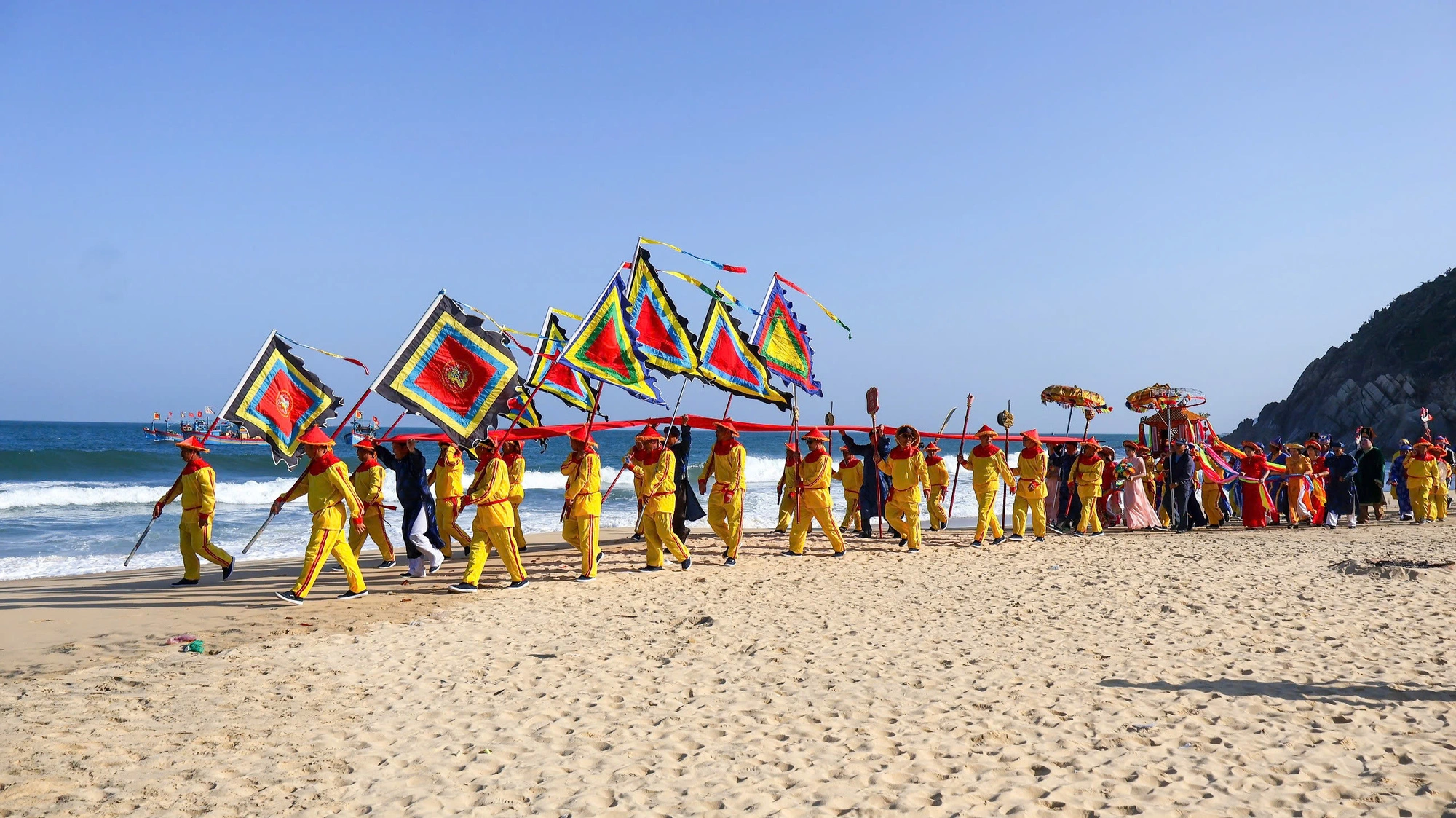
Whale worship, the veneration of Ca Ong, is closely associated with the Cau Ngu, or Praying for Fish, festival. For fishing communities, the ceremonies express gratitude and hopes for a safe, abundant season at sea. Nhon Ly’s Van Dam Xuong Ly Cau Ngu festival was added to Vietnam’s national intangible cultural heritage list on 10 December 2024. The listing recognises a community tradition, rather than turning every ceremony into a visitor performance. (Source: Nhân Dân)
Neighbouring Nhon Hai has its own festival. An account published by the Vietnam Traditional Fish Sauce Association describes four days of ceremonies, hat cheo ba trao boat-rowing chants and lion dances; confirm the programme for the year you travel. (Source: Vietnam Traditional Fish Sauce Association) Our Nhon Ly Fishing Village guide covers everyday village life, while these festivals offer a different view of the beliefs surrounding the fishing trade.
| Cultural Pillar | Key Focus | Location & Sites |
|---|---|---|
| Champa Heritage | Hindu religious architecture and sculpture | Banh It, Duong Long Towers |
| Martial Arts (Đất Võ) | Tay Son heritage, family lineages and weapon forms | Quang Trung Museum, Phan Tho School |
| Coastal Traditions | Whale worship, Cau Ngu Festival | Nhon Ly, Nhon Hai fishing villages |
How Do You Actually Connect With Locals in Quy Nhon?
An arranged visit helps you understand what you are seeing and gives the school or community time to prepare. Leave room for ordinary village life as well as organised performances.
Long Phuoc Pagoda in Tuy Phuoc launched its “Journey of Martial Arts and Meditation” tourism programme at the end of December 2025. Ask the pagoda what the current visit includes and whether a demonstration or participation is available on your date. (Source: Báo Gia Lai)

How Can You Explore Quy Nhon Culture and People at Your Own Pace?
Use the towers, an arranged martial arts visit and a fishing village as options for your day. Choose the stops that interest you rather than treating all three as compulsory.
Before you go
- Towers: Visit Banh It with time to understand the Hindu context, rather than making it a brief photograph stop. Confirm opening hours before choosing an early start.
- Martial arts: Arrange the museum or school visit first, then plan the other stops around its confirmed time. Ask about battle drums, weapon forms and the price when booking.
- Village life: Leave time for Nhon Ly’s alleyways and fishing activity without expecting a private family encounter. Ask before photographing people or entering a shrine.
Who it suits
Travellers interested in religious architecture, family traditions and working coastal communities, who enjoy asking questions and allowing time for explanations.
Who may prefer something else
Travellers seeking an entirely spontaneous day may prefer a village walk without a scheduled performance. If a packed day feels tiring, choose fewer stops and discuss the pace before arranging transport.

A JOURNEY SHAPED AROUND YOU
Meet the people behind
your Vietnam plans.
Tell us what you enjoy, how you like to travel and where you would like more time. We can discuss a private itinerary around your interests and preferred pace.
Timing Your Visit Around the Festivals
If festival timing matters to your trip, Nhân Dân describes the region’s Cau Ngu celebrations as commonly taking place in the first lunar month. Individual villages have their own dates, so this is a seasonal pointer rather than a fixed schedule. (Source: Nhân Dân) Ask the village organisers or the museum about the exact event you hope to see before building a full trip around it.
Frequently Asked Questions About Quy Nhon Culture and People
What is Binh Dinh famous for?
Its Champa-era brick towers, its branding as Dat Vo (Land of Martial Arts), and its coastal fishing communities built around whale-worship traditions that predate modern tourism.
Is Binh Dinh’s martial arts tradition UNESCO recognised?
National recognition and a UNESCO nomination are different. The government’s 28 March 2025 decision authorised submission of a nomination dossier; that decision is not a UNESCO inscription. (Source: Báo Chính Phủ)
Can I watch martial arts practice in a Quy Nhon park?
Plan around an arranged visit rather than expecting a park performance. Contact the Quang Trung Museum or a named school such as Phan Tho to confirm what is available on your date.
Were the Cham towers here Hindu or Muslim?
Banh It’s religious context is Hindu. Use that context when exploring the towers, without assuming that every Cham community today shares the same beliefs.
What is the Cau Ngu festival?
An annual fishing-community festival honouring Ca Ong, the whale believed to protect fishermen, held to give thanks and pray for a safe, abundant season at sea.
How do I arrange a martial arts demonstration in Quy Nhon?
Contact the Quang Trung Museum or a martial arts school in advance. Confirm the programme, date, participation options and total group price before arranging your transport.
Conclusion
Start with the cultural thread that interests you most: the towers’ religious architecture, the teaching traditions of a martial arts school, or the everyday work of a fishing village. An arranged demonstration can give structure to the day, while a village walk leaves room for observation. Neither requires promising a chance encounter or trying to fit every stop into one outing.
Read the towers in their Hindu context, make appointments before visiting schools, and check festival dates with the community holding the event. Quy Nhon’s cultural places become easier to understand when you take time for the people and traditions connected to them. Choose a pace that lets you listen as well as look.
Further Reading & Resources
Where the figures in this guide come from, plus related guides for planning your trip.
Sources
- Government authorises the martial arts UNESCO nomination (28 March 2025) Báo Chính Phủ · in Vietnamese
- Martial arts villages beside the Con River (9 November 2021) Báo Tin tức · in Vietnamese
- Banh It’s Champa history and religious architecture VietnamPlus · in Vietnamese
- Martial arts schools welcome visitors (15 February 2026) Báo Gia Lai · in Vietnamese
- Cau Ngu festivals and Nhon Ly’s heritage listing (15 February 2025) Nhân Dân · in Vietnamese
- Nhon Hai fishermen honour Ca Ong at Cau Ngu Vietnam Traditional Fish Sauce Association · in Vietnamese
Related guides
A JOURNEY SHAPED AROUND YOU
Meet the people behind
your Vietnam plans.
Tell us what you enjoy, how you like to travel and where you would like more time. We can discuss a private itinerary around your interests and preferred pace.

Vani is the Founder and Lead Travel Designer at Truly Voyage. With over a decade of experience and a deep passion for her Vietnamese heritage, she specializes in crafting bespoke, unhurried itineraries. Vani is dedicated to helping travellers experience the authentic soul of Southeast Asia with absolute financial security and 24/7 on-ground support.
0 Comment