


 By Vani
Red Dzao Sapa can refer to Red Dao culture, a herbal bath near Ta Phin, or the Red Dzao House restaurant in town. These are different experiences. Learn about local dress and bathing traditions, ask who prepares your bath, and check the restaurant’s current menu and booking arrangements before combining them in a day.
A Red Dao village visit, a herbal bath and dinner at Red Dzao House need different kinds of planning. For a bath, you may want to understand who prepares it, which ingredients are used and whether the room and tub suit you. For dinner, the useful questions are where the restaurant is, what is on its current menu and whether your group should reserve a table. At Truly Voyage, we suggest keeping those decisions separate before combining them. This guide introduces the cultural context, explains what to ask a bath provider and describes the restaurant without treating one business as a stand-in for an entire community.

Who Are the Red Dao People of Sapa?
The Red Dao, also written Red Dzao or Dao Đỏ, are a Dao subgroup associated with communities such as Ta Phin near Sapa. Their dress and traditions differ from those of the Black Hmong; neither name describes everyone living in the area.
Travelers researching Red Dzao Vietnam culture should distinguish the Red Dao subgroup from the wider Dao ethnic group. Nhan Dan reports 891,151 Dao people nationwide in a 2019 survey and lists several Dao branches (Source: Nhan Dan). Keep that national total separate from any description of Red Dao communities in Sapa. You may encounter several spellings in English, including Dao and Dzao; use the name your host prefers rather than assuming every label is interchangeable in every context. Ta Phin is a useful place to learn about Red Dao bathing and craft traditions, but a visit is still an encounter with individual households, not a complete picture of all Dao communities.
What Makes the Red Dao Headscarf and Silver Jewelry Significant?
Red head coverings, embroidery and silver jewelry can carry cultural and ceremonial meaning. Styles vary by place and occasion; ask the wearer about a garment rather than using it to guess her age, status or family wealth.
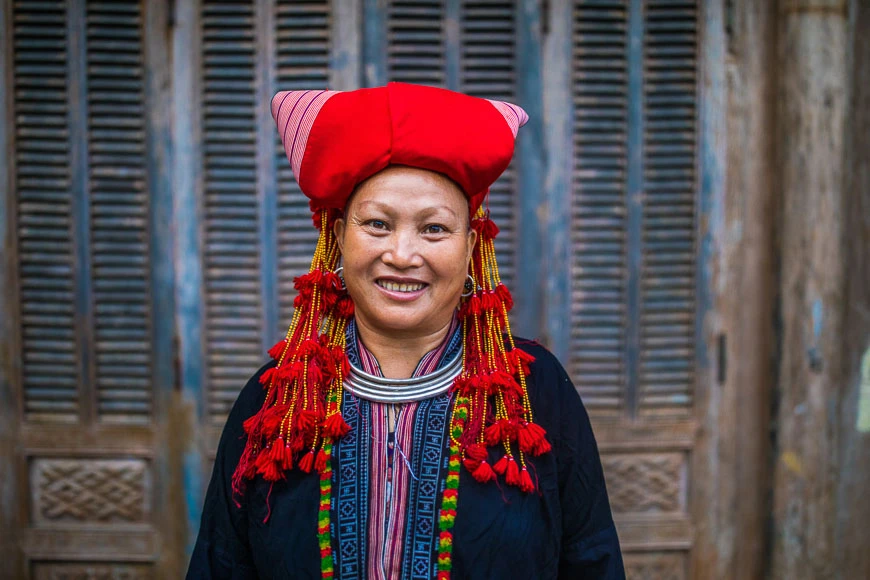
Nhan Dan describes a bridal head covering called Trùm Phả, made with indigo-dyed cloth and coloured tassels, and explains red as a symbol of happiness and good fortune. Its account also describes how making an embroidered outfit can take one to two years, with examples and variations from places including Tuyen Quang (Source: Nhan Dan). These are cultural descriptions, not a fixed timetable or dress code for every woman in Sapa. Looking closely at the embroidery can help you appreciate the work involved; asking about the maker and occasion gives more meaning than assuming a single detail identifies a person’s age.
Silver has a role in wedding gifts, bridal dowry and ceremonial dress. The culture ministry describes wedding outfits and silver sets worth approximately several hundred to tens of thousands of US dollars (tens to hundreds of millions of VND, using an illustrative US$1 = 25,000 VND); this describes family assets, not a souvenir price list or the value of every outfit (Source: Ministry of Culture, Sports and Tourism). Traditional silverwork used old silver coins, clay or ceramic melting vessels and buffalo-horn molds. Red Dao silver carving in Sa Pa entered the national intangible cultural heritage list in 2018 (Source: Ministry of Science and Technology). That recognition concerns a craft and its practitioners; it does not certify every item sold to visitors.
Ask before taking someone’s photograph, whether or not they are wearing ceremonial clothing. If you would like a close-up of embroidery or silverwork, explain that too, and respect a refusal without pressing.
What Is a Red Dao Herbal Bath, and What’s Actually in It?
A Red Dao herbal bath uses a prepared plant infusion diluted with warm water in a wooden tub. It is a traditional bathing practice associated with Red Dao households; ingredients and preparation vary by family (Source: Vietnam Tourism).

Vietnam Tourism describes recipes with 10 or more ingredients, naming plants such as Vietnamese balm, fig leaves, wild pepper leaves and cinnamon. Stems and leaves are chopped, dried and boiled before the mixture is diluted in a Pơ mu wood tub (Source: Vietnam Tourism). These are examples from a tourism overview, not a guaranteed ingredient list for the bath you book. Ask the host what is in that day’s mixture and explain any ingredients you need to avoid before deciding whether to use it.
The tradition includes bathing after physical work and, within the community, after childbirth. That cultural use should not be read as proof that a visitor’s bath treats joint problems, improves digestion or is suitable after childbirth. Choose the experience for its cultural setting and the kind of soak you enjoy, rather than expecting a treatment outcome. A provider should explain the experience in terms you can understand before you decide.
The tourism guide describes around 35°C water and a 15–25-minute soak (Source: Vietnam Tourism). Treat those as a description of the practice, not a temperature or duration guaranteed to suit everyone. Ask the provider how it checks the water and helps guests enter or leave the tub. You can decline or shorten the experience rather than feel obliged to finish a set session.

A JOURNEY SHAPED AROUND YOU
Start with what matters.
We can plan from there.
Tell us what you enjoy, how you like to travel and where you would like more time. We can discuss a private itinerary around your interests and preferred pace.
How Do You Book an Authentic Red Dao Herbal Bath Near Ta Phin?
For a Red Dao herbal bath with a connection to the tradition, ask who owns the business, who prepares the infusion and how the recipe is shared. A Ta Phin family-run bath house or homestay can offer that context, but a town address alone tells you nothing about the people preparing the bath or the quality of the service.
| Question | At a Ta Phin bath house | At a town spa |
|---|---|---|
| Who prepares it? | Ask the household about its recipe and preparation | Ask who supplies the herbs and prepares the infusion |
| Water and cleaning | Ask how the tub is cleaned and fresh bath water prepared | Ask the same cleaning and water-preparation questions |
| Tub and access | Ask about the wood, entry step and help getting in or out | Ask about the tub type, room privacy and access |
| Who benefits? | Ask who is paid for the herbs and the bath service | Ask about sourcing and any work with Red Dao producers |
Table 1: Questions to compare bath providers without assuming that location proves quality.
You can ask about a bath as a standalone visit or as part of a homestay, depending on the provider. Confirm the room type, price, preparation time and any transport separately; a bath booking need not include an overnight stay. Our Ta Phin vs Ta Van guide helps you compare the village outing with another valley visit. Leave a gap between trekking, the bath and dinner so a slow journey does not turn the evening into a rush. Book ahead when you want a particular time, and ask what happens if you arrive late.
Ask directly how the tub and water are prepared for each guest. The strength of an herbal smell is not a reliable way to decide whether water is fresh or a tub has been cleaned.

Where Can You Eat at Red Dzao House in Sapa?
Red Dzao House is listed at 4B Thac Bac Street in Sapa, with regional dishes including sturgeon hot pot, grilled chicken and mountain pork (Source: Visit Sapa). Check the current menu and table availability directly before visiting.

If you searched for Red Dzao House Sapa, the practical next step is to confirm the venue and request its current menu rather than rely on a review score or an old menu photograph. Ask which dishes are available, how many people a hot pot serves and whether the quoted price is per dish or per person. For a group booking, discuss seating and the time you expect to arrive. Restaurant reviews can help you judge atmosphere and service on a particular visit, but their dates matter; one reviewer’s meal or table availability is not a promise for your evening.
The Sturgeon Hot Pot at Red Dzao House, and Why Sapa Grows Sturgeon at All
A Viet Nam News restaurant review published on 23 May 2021 singled out the sturgeon hot pot at approximately US$20 (500,000 VND), using the illustrative exchange rate above (Source: Viet Nam News). That is a historical meal price, not a current quote or a fixed serving size. Ask the restaurant for today’s portion and price before ordering. The review describes one meal, not a complete current menu, and it should not be read as proof that every visitor will prefer the same dish.
The same review explains that sturgeon and salmon are farmed in the hills around Sapa, where naturally low water temperatures provide a suitable environment (Source: Viet Nam News). That is the useful connection between a mountain destination and a cold-water fish dish. If local sourcing matters to you, ask the staff where that day’s fish comes from and how the dish is prepared.
For the Red Dzao House menu, think in terms of choices rather than a single compulsory dish. A shared hot pot may suit diners who want a leisurely meal, while grilled chicken, pork or vegetable dishes may better match another group’s preferences. Ask about the broth, sauces and any ingredients you avoid, and agree the order and price before the food is prepared. Do not assume that a dish’s regional name tells you everything in it.
Call or message ahead if you want a particular dinner time, especially for a group of four or more or during busy travel periods. Confirm the table and any dishes that need advance preparation; booking is a planning choice, not proof that walk-ins are always unavailable.

How Can You Combine a Red Dzao Sapa Bath Visit and Dinner?
Keep the bath, transfer and meal as separate bookings with enough time between them. The plan should follow your interests and energy, rather than a fixed promise of recovery or queue-free dining.
Before you go
- For the village visit: ask who will host you and what interaction or craft demonstration is actually included.
- For the bath: confirm preparation, ingredients, tub access, privacy and the price before paying.
- For the transfer: leave time to change and return to town without rushing after a walk.
- For dinner: confirm the restaurant, table time and current menu separately.
Who it suits
Travelers interested in craft traditions, a warm soak and regional food, with time for a flexible village-and-town day.
Who may prefer something else
Travelers who do not want a hot soak, need a different level of tub access or prefer to focus on one activity may choose a shorter cultural visit or dinner alone.
What Should You Know Before Visiting or Photographing a Red Dao Home?
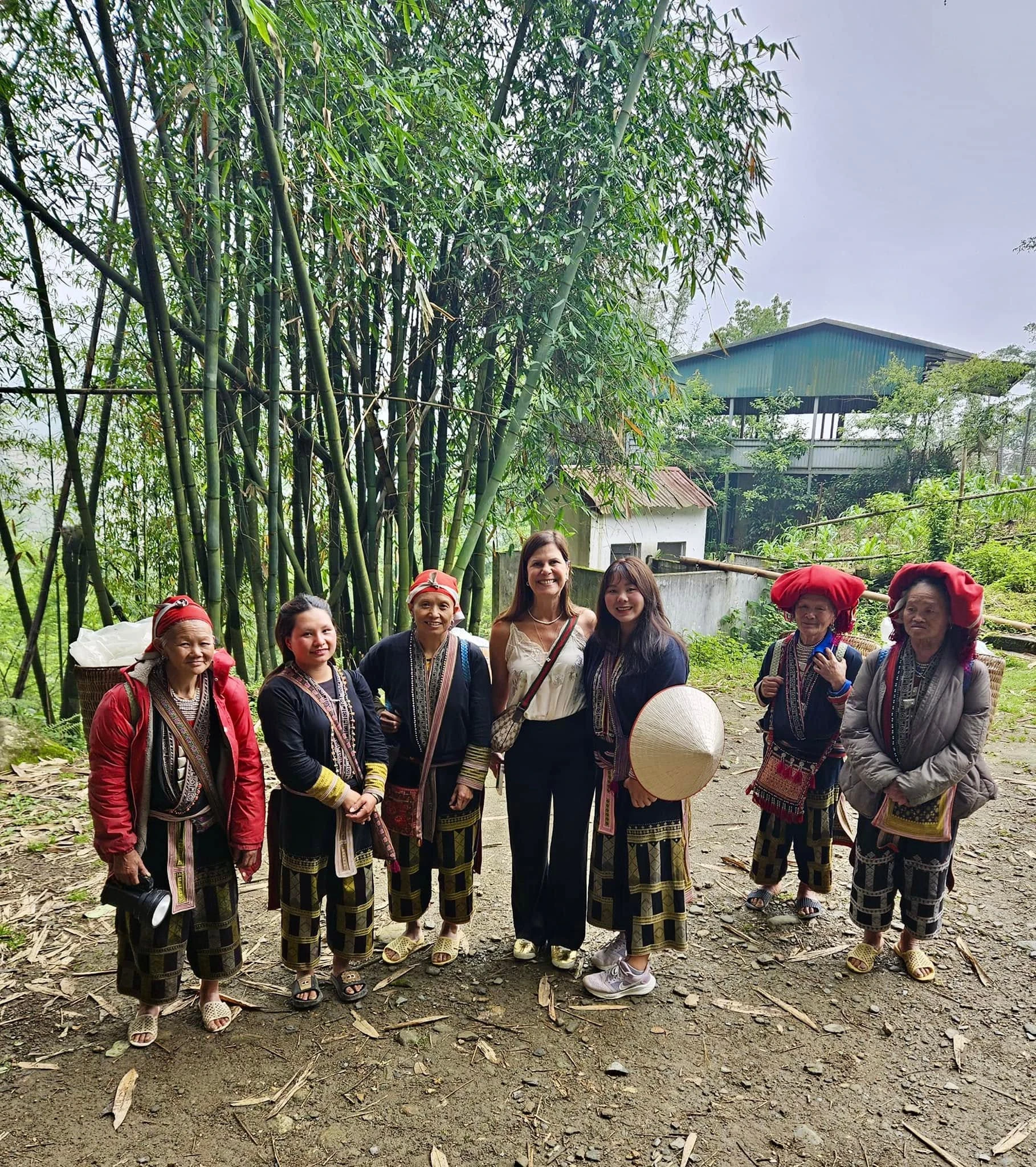
Ask before photographing people, follow your host’s lead inside the house and treat a homestay as a family home rather than an open visitor attraction.
Vietnam Tourism advises asking before raising a camera, removing shoes when entering a home and not stepping over ground-level family altars (Source: Vietnam Tourism). Your host can explain the household’s arrangements, including where you may sit or take photographs. A smile is a friendly start, but it is not a substitute for permission; if someone declines, put the camera away and continue the conversation without pressing for a picture.
Avoid offering money or sweets directly to children as part of an interaction, and do not treat a child as a photo opportunity. If you want to support the household or community, ask adults how to do so without assuming that one gift suits everyone. The tourism etiquette guide suggests gifts such as fruit or biscuits for a family visit (Source: Vietnam Tourism); check with your host first. Let people guide any physical greeting, keep private rooms and family objects private, and ask before touching clothing, silverwork or anything used in a ceremony.
Frequently Asked Questions About Red Dao Sapa
Are Red Dao and Dao the same population group?
Red Dao is a subgroup within the wider Dao ethnic group.
The nationwide 2019 Dao population figure is not a count of Red Dao people in Sapa. When reading a demographic claim, check whether it refers to a subgroup, the town, a wider district or the whole country.
What is actually in a Red Dao herbal bath?
A prepared plant infusion diluted with warm water, with recipes varying by household.
Vietnam Tourism describes 10 or more ingredients, with examples including Vietnamese balm, fig leaves and cinnamon (Source: Vietnam Tourism). Ask your provider for the ingredients used in your bath; do not assume every recipe or tub is the same.
Where do I book a genuine Red Dao herbal bath rather than a generic spa version?
A Ta Phin family-run bath house or homestay is one option; ask who prepares the bath.
Confirm the recipe, water preparation, cleaning, tub access, room privacy and price. A village or town location alone does not prove quality or tell you who benefits from the booking.
Is Red Dzao House worth booking ahead for?
Reserve if you want a particular time, a group table or a dish needing preparation.
Ask for the current menu, portion sizes and prices when booking. An older newspaper review is useful background, but its meal price and experience are not a current quotation or guarantee.
Why does Sapa have sturgeon farms at all?
The surrounding hills provide naturally cold water suitable for farming sturgeon and salmon.
That explains the connection with local menus. Ask the restaurant about the day’s sourcing if that matters to you.
What should I avoid doing when visiting a Red Dao village or home?
Do not photograph people without permission or assume a home is open to visitors.
Follow your host’s directions about shoes, altars and private spaces. Avoid giving money or sweets directly to children; ask adults about an appropriate way to support the household or community instead.
Conclusion
Red Dzao Sapa can bring together cultural learning, a bath visit and regional food when each part matches your interests and is planned with care.
Ask about the people and craft behind what you see, discuss bath preparation before booking and use the restaurant’s current menu to plan dinner. A visit can be worthwhile without treating it as a medical treatment or expecting every household and business to work in the same way. If you would like to include Ta Phin in a Vietnam holiday, ask the team about arrangements that fit your pace. Confirm the actual hosts, transfers and meal bookings rather than assuming a fixed add-on is already included.
Further Reading & Resources
Where the figures in this guide come from, plus related guides for planning your trip.
Sources
- Dao ethnic group and the nationwide 2019 population Nhan Dan
- Red Dao clothing, bridal head coverings and regional variation Nhan Dan · in Vietnamese
- Silver jewelry and its role in ceremonial dress Ministry of Culture, Sports and Tourism · in Vietnamese
- Sa Pa’s Red Dao silver-carving heritage Ministry of Science and Technology · in Vietnamese
- Herbal bath traditions, ingredients and preparation Vietnam Tourism
- Red Dzao House restaurant review (23 May 2021) Viet Nam News
- Red Dzao House address and regional menu overview Visit Sapa
- Photography and family-home etiquette Vietnam Tourism
Related guides
A JOURNEY SHAPED AROUND YOU
Start with what matters.
We can plan from there.
Tell us what you enjoy, how you like to travel and where you would like more time. We can discuss a private itinerary around your interests and preferred pace.

Vani is the Founder and Lead Travel Designer at Truly Voyage. With over a decade of experience and a deep passion for her Vietnamese heritage, she specializes in crafting bespoke, unhurried itineraries. Vani is dedicated to helping travellers experience the authentic soul of Southeast Asia with absolute financial security and 24/7 on-ground support.
0 Comment