


 By Vani
Sa Sung Quang Ninh is an edible peanut worm associated with Quan Lan and Minh Chau. Fresh worms are cleaned for stir-fries and soups; dried ones add savoury sweetness to pho broth. Hand harvesting and drying help explain the price. Compare labelled pack weights and origins before buying, and choose it for its flavour rather than promised health benefits.

Sa Sung Quang Ninh is a sand-dwelling seafood associated with Quan Lan Island and the surrounding Van Don area. Its savoury sweetness can be easier to appreciate in broth than by looking at a fresh worm. This guide explains the ingredient, harvesting, cooking and buying choices, so you can decide whether to taste it locally or take a labelled pack home.
Our Truly Voyage team covers it alongside other Vietnam travel food interests, including Ngan, Tu Hai, Ruou Mo, Ga Tien Yen and Banh Gat Gu. A tasting and a bulk seafood purchase are different decisions: start with the dish you want to try.
What Sa Sung Is
Sa Sung, or sá sùng, is called a peanut worm in English. Quan Lan and Minh Chau are well-known harvesting areas. Ask a seller which area supplied the product. (Source: Quang Ninh Online)
What Sa Sung Looks Like and Where It Lives

Fresh worms are reddish-brown, with fine markings and sand inside the body cavity. They need careful cleaning before cooking. (Source: VietNamNet)
A 2021 report describes usual lengths of 5–10 centimetres, with some reaching 40 centimetres. These are reported sizes, rather than a grading standard for a pack you buy. (Source: VietNamNet / Viet Nam News)
If the appearance is off-putting, ask about a cooked broth preparation before ordering a plate of whole worms. There is no need to try a food you would rather skip.
The scientific name is Sipunculus nudus; NCBI lists the authority as Linnaeus, 1766. This identifies the species name, rather than the beginning of its use as food. (Source: NCBI Taxonomy)
Historical food accounts describe royal tribute, but that association does not tell you the quality or provenance of a modern packet. A seller should still be able to explain what is inside and where it came from. (Source: VietNamNet / Viet Nam News)
What About Nutrition and Claimed Health Benefits?
Choose Sa Sung for its culinary role, rather than as a remedy for asthma, rickets or other conditions. Traditional medicinal descriptions are different from evidence that eating a particular dish treats illness. A nutritional reputation is also no reason to ignore your own dietary restrictions.
If you have a food allergy, tell the restaurant and check packaged ingredients; tasting a small amount is not a safety test. Food-allergy symptoms can include an itchy rash or swelling. Sudden mouth or throat swelling, trouble swallowing, or difficulty breathing needs emergency medical help. (Source: NHS)
Why It Commands Such a High Price
Dried Sa Sung carries the cost of digging, cleaning and drying, as well as the loss of fresh weight. Compare like-for-like pack sizes and preparation, rather than assuming a single kilogram price applies to every product.

Why Is Vietnamese Sa Sung Peanut Worm So Expensive
Why is Vietnamese Sa Sung peanut worm so expensive? Manual harvesting and processing contribute to the cost. VietNamNet reported an average of 10–12 kilograms fresh for 1 kilogram dried in November 2023; the yield is a reported example, not a fixed conversion for every batch. (Source: VietNamNet)
Ask about the harvest area, processing date and net weight. A clear answer helps you compare products, but neither a conversation nor a high price proves origin.
Dried Sa Sung is also sold as a Tet gift. In February 2024, the provincial tourism portal reported fresh worms at about US$16 (VND400,000) per kilogram. This is a historical price, with an approximate USD conversion at the planning rate of VND25,000 per US$1. (Source: Quang Ninh tourism portal)

A JOURNEY SHAPED AROUND YOU
Start with what matters.
We can plan from there.
Tell us what you enjoy, how you like to travel and where you would like more time. We can discuss a private itinerary around your interests and preferred pace.
Price of 1kg Dried Sa Sung Quang Ninh 2026
For the price of 1kg dried Sa Sung Quang Ninh in 2026, ask for a dated quote specifying grade, net weight and packaging. An earlier local benchmark was approximately US$200–240 (VND5–6 million) per kilogram in February 2024. The USD estimate uses a planning rate of VND25,000 per US$1, rather than a live exchange rate. (Source: Quang Ninh tourism portal)
As a current packaged example checked on 16 October 2026, BOSA’s official catalogue lists a 200g box of dried Van Don Sa Sung at approximately US$100 (VND2,500,000), using the same planning rate. This is a particular retail pack, not a province-wide kilogram price. Confirm the exact product, available stock, shipping and final price before paying. (Source: BOSA)
Keep fresh, dried and ready-to-eat products separate when comparing offers. A smaller packet may be more practical for a first purchase; compare its net weight and intended use before deciding whether a larger pack offers value.
How It Is Harvested
Harvesters read surface traces, then dig into exposed sand with specialised tools. Catching the worm intact takes practice; watching from an agreed position is a different activity from attempting to dig yourself. (Source: Quang Ninh tourism portal)
The Harvest Process
VietNamNet’s 2023 account describes March–July collecting. (Source: VietNamNet)
However, the provincial tourism portal documented an afternoon harvest in December 2023. Those months and dawn are not exclusive harvest windows. Ask locally about the tide and current work before planning an observation. (Source: Quang Ninh tourism portal)
Ask whether a harvest can be observed during your stay, how much walking on wet sand is involved, and whether you can return easily if you tire. Keep the timing flexible around local work and tides.
Star-like surface traces help diggers locate burrows. Coordinated foot and hand movements expose the worm while reducing the chance of cutting it. (Source: VietNamNet / Viet Nam News)
A 2023 report describes a 2016 gene-conservation decision and 10 hectares across Van Don, Dam Ha, Hai Ha and Mong Cai. Ask locally about present visitor access. (Source: Quang Ninh Online)

How Sa Sung Is Eaten
Fresh and dried Sa Sung suit different preparations. Ask which form a dish uses, especially if you want to try the flavour in a soup before ordering whole worms.
| Feature | Fresh Sa Sung | Dried Sa Sung |
|---|---|---|
| Appearance | Reddish-brown, plump, sand-filled cavity | Ivory-white to light golden, thin, slightly crisp |
| Preparation Needed | Extensive gutting and washing to remove all sand | Check the pack; roasting and removing residual sand may be needed |
| Popular Dishes | Stir-fried with kohlrabi, garlic sautéed, pan-fried | Pho stock ingredient or roasted snack |
| Price Point | Usually compared by fresh weight | Compare dried net weight and pack size |
Fresh and dried preparations described in the food report. (Source: VietNamNet)
How to Cook Dried Sa Sung Sea Worm for Pho Broth

To use dried Sa Sung for pho broth, a published home-cooking method is to dry-roast it until fragrant, break it up and shake out remaining sand, then add it to the stock. A filter bag can keep the pieces together. It adds a savoury flavour; not every pho recipe or restaurant uses it. (Source: VietNamNet / Viet Nam News)
Ask for a simple soup or porridge if you want a gentler introduction to the texture. Check the full dish ingredients rather than assuming a plain-looking broth contains nothing else.
Fresh worms need gutting and washing to remove sand before cooking. Local preparations include stir-fries with kohlrabi, soups and porridge. Dried worms can also be roasted as a snack. Ask a cook to prepare them if you are unfamiliar with cleaning this seafood. (Source: VietNamNet)
How Should You Plan a First Sa Sung Quang Ninh Tasting?
A cooked dish is a practical introduction before deciding whether to buy dried Sa Sung. Choose a preparation whose ingredients and texture you are comfortable with.
Before you go
- Ask whether the dish uses fresh or dried worms, and tell the restaurant about dietary restrictions.
- Try a soup or porridge if whole worms are less appealing; a tasting does not commit you to buying a packet.
- If you want to cook at home, ask about cleaning, preparation and the instructions for that product.
Who it suits: Curious seafood eaters interested in regional ingredients and savoury broths.
Who may prefer something else: Travellers avoiding seafood, those with unresolved allergy questions, or anyone who dislikes the texture. Another local dish is a reasonable choice.
How to Buy It Authentically
Ask for the harvest origin, producer, net weight and preparation instructions before paying. Packaging and appearance help you compare offers, but they cannot by themselves prove that the contents came from Quan Lan.
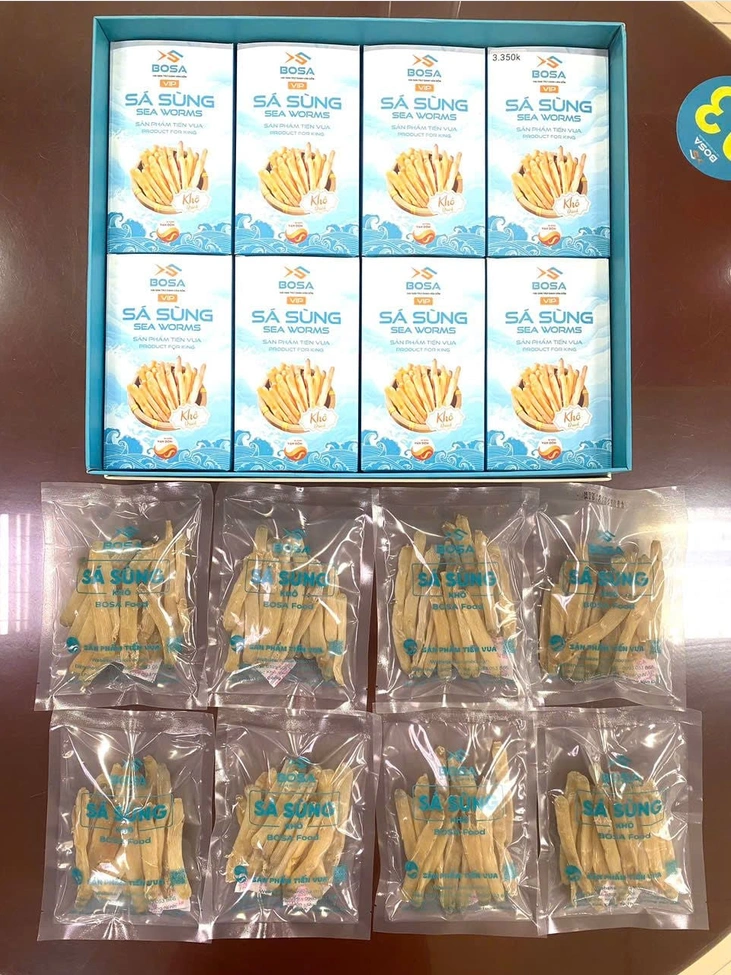
Where to Buy Authentic Dried Sa Sung in Quan Lan Quang Ninh
For buying dried Sa Sung in Quang Ninh, a 2023 report names Cai Rong market, Van Don sellers and OCOP shops. It recommends thick, ivory-coloured worms without sand and with a seafood aroma. These cues cannot prove origin or safety. (Source: Quang Ninh Online)
BOSA is one branded option listed by Thanh Tung Van Don on its official catalogue. Compare its labelled products with other offers and ask the seller to confirm the exact pack before payment. A brand name does not make different weights or preparations interchangeable. (Source: BOSA)
Start with a smaller pack if you are unsure how often you will cook with it. Keep the label and receipt so you can identify the producer and ask questions about that purchase.
A low price is a reason to compare what is included, not proof of fraud. Check whether the quote is for a whole kilogram or a small packet, fresh or dried worms, and plain or ready-to-eat preparation. If the origin matters to you, request product information rather than relying on a market’s location or an OCOP-style logo.
Frequently Asked Questions
What is Sa Sung?
Sa Sung is an edible marine worm commonly called a peanut worm. Quan Lan and Minh Chau are well-known local harvesting areas. (Source: Quang Ninh Online)
Why is Sa Sung highly priced?
Digging and cleaning require labour, and drying reduces the saleable weight. Compare pack size and preparation as well as price. (Source: VietNamNet)
How is Sa Sung harvested?
Experienced diggers use surface traces to locate burrows and collect worms from exposed tidal sand. The timing follows local tides; ask about the day you plan to visit. (Source: Quang Ninh tourism portal)
How is Sa Sung typically eaten or cooked?
Dried worms can flavour broth or be roasted; cleaned fresh worms are used in stir-fries, soups and porridge. Preparation depends on the product, so check its instructions. (Source: VietNamNet)
Conclusion
Sa Sung Quang Ninh offers a distinctive way to explore coastal cooking, whether you try a cooked dish or buy dried worms for broth. Decide first how you want to use it, then compare origin, preparation, pack weight and price.
You can enjoy an island visit without eating every local specialty. If Sa Sung appeals, start with a preparation you understand and ask questions before buying a large quantity. Ask Truly Voyage about fitting a local food stop into your wider Quang Ninh plans.

Further Reading & Resources
Where the figures in this guide come from, plus related guides for planning your trip.
Sources
- Sa Sung harvesting, processing and dishes (2023) VietNamNet
- Van Don Sa Sung: buying cues and conservation (2023) Quang Ninh Online
- Preparing sea worms for broth and other dishes (2021) VietNamNet / Viet Nam News
- Sipunculus nudus taxonomy NCBI Taxonomy
- Food allergy symptoms and emergency signs NHS
- Local harvesting and historical price report (2024) Quang Ninh tourism portal · in Vietnamese
- Official packaged seafood catalogue BOSA · in Vietnamese
Related guides
A JOURNEY SHAPED AROUND YOU
Start with what matters.
We can plan from there.
Tell us what you enjoy, how you like to travel and where you would like more time. We can discuss a private itinerary around your interests and preferred pace.

Vani is the Founder and Lead Travel Designer at Truly Voyage. With over a decade of experience and a deep passion for her Vietnamese heritage, she specializes in crafting bespoke, unhurried itineraries. Vani is dedicated to helping travellers experience the authentic soul of Southeast Asia with absolute financial security and 24/7 on-ground support.
0 Comment