


 By Vani
A Vietnam backpacking trip of one month can link Hanoi and the northern mountains with Phong Nha, Hue, Hoi An and Ho Chi Minh City. Choose fewer stops if you want a slower pace. Use a daily budget worksheet, compare transport options, and check passport-specific entry rules before booking.
Planning a Vietnam backpacking trip means choosing a route, deciding where comfort matters most, and leaving enough time between journeys 🌍. At Truly Voyage, we approach those choices through the places and experiences you want to include; you can read more about the company on our About Truly Voyage page. This guide is for independent travelers who want a month of cultural visits, countryside and coast, with a realistic look at dorms, sleeper buses and the limits of a small daily budget.
You do not need to travel in the cheapest possible way to enjoy the independence of backpacking. A private room between dorm stays, a train instead of a bus, or a guide for a demanding excursion can change the feel of the journey. Start by deciding which compromises you are comfortable with. Street food, rural walks and cave visits can all fit into a month, but their costs and physical demands differ. The route below is a starting point rather than a checklist that every traveler needs to complete.

What Is The Ideal One Month Vietnam Travel Route For Independent Explorers?
A practical 30-day route can start in Hanoi, add the northern mountains, continue through Phong Nha, Hue and Hoi An, then finish in Ho Chi Minh City. The coastal stops are optional; reducing the number of destinations leaves more room for rest and travel days.
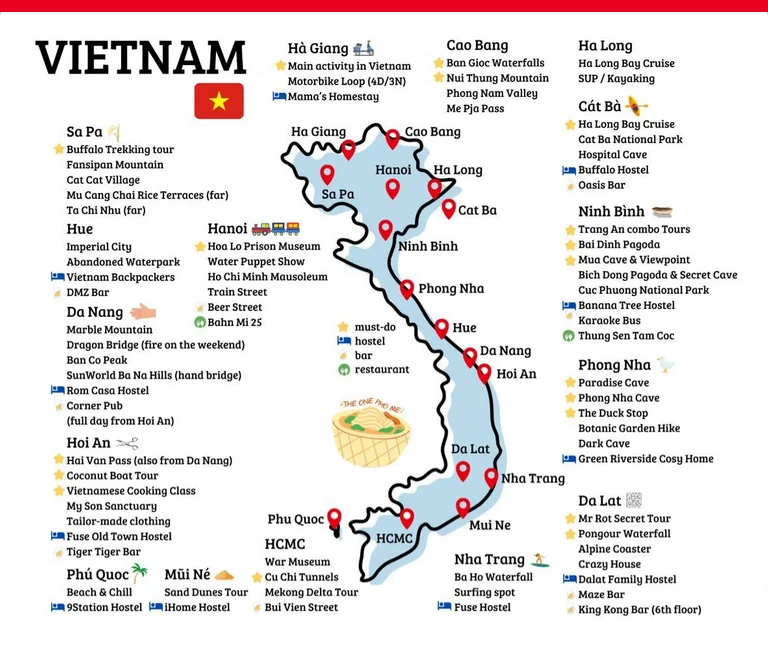
Build your Vietnam travel route around a few priorities rather than the largest possible number of stops 🗺️. A month gives you more flexibility than a short visit, but long transfers still use time and energy. For different routing options, read our Vietnam itinerary guide. If you have a tighter schedule, compare our 2 weeks in Vietnam itinerary and Vietnam 10 day itinerary before deciding which places to leave for another trip.
Hanoi makes a useful starting point for time in the Old Quarter, egg coffee and historic streets. From there, consider the Ha Giang Loop if mountain scenery is a priority. Around 350 kilometers is an indicative circuit length, not a fixed route; allowing three to four days is a planning suggestion that depends on your stops and transport. Limestone peaks, canyons and Hmong and Tay communities give this leg a different character from the cities. Ask about the route, daily riding time and alternatives before committing to a motorbike excursion. We can discuss guided options as part of a trip; our Vietnam Holidays page is a starting point for that conversation.
Continuing southward, consider Phong Nha-Ke Bang National Park. UNESCO describes karst formation dating from some 400 million years ago and says Son Doong is believed to contain the world’s largest cave passage in terms of diameter and continuity (Source: UNESCO World Heritage Centre). This does not mean every cave is accessible on a casual visit. Allowing three days is a suggested stop for choosing cave visits and countryside activities at your pace; confirm the access, fitness demands and price of any trek or water activity before booking.
The journey then moves to the central coast, with the imperial history of Hue, time in Da Nang and the lantern-lit streets of Hoi An. Hoi An’s old town and tailoring shops offer a change from the mountain and cave sections. If you want clothing made, discuss the work and fitting schedule before paying rather than treating it as an activity to squeeze in before your next departure. A quieter day here can also help break up the longer journeys.
For the final part of the route, choose coastal time in Nha Trang or the red and white sand dunes around Mui Ne if those experiences appeal to you 🏖️. Beach plans and kite surfing depend on conditions, so avoid treating the weather as a reason to promise a particular activity. Ho Chi Minh City can be the final base, with an optional Mekong Delta visit. North-to-south and south-to-north both work: choose the direction around your flights, season and priorities, then decide whether you need both coastal stops.
| Region | Key Destinations | Recommended Duration | Core Activities |
|---|---|---|---|
| Northern leg | Hanoi, Ha Giang, Halong Bay | 10 Days | Motorbike circuits, cruising, cultural heritage |
| Central leg | Phong Nha, Hue, Hoi An | 10 Days | Caving expeditions, historical site visits |
| Coastal and southern leg | Nha Trang, Mui Ne, Ho Chi Minh City | 10 Days | Coastal relaxation, urban exploration |
These three blocks are a planning outline. Select among the listed destinations rather than treating every stop as compulsory; transfers and recovery after an overnight journey count toward the time available.

A JOURNEY SHAPED AROUND YOU
Your Vietnam journey.
At your own pace.
Tell us what you enjoy, how you like to travel and where you would like more time. We can discuss a private itinerary around your interests and preferred pace.
Strategic Budgeting And Financial Planning For A Vietnam Backpacking Trip
A Vietnam backpacking trip budget works better as a worksheet than as a promise of one price everywhere. Plan in USD if that helps you compare costs, but keep VND available for small local purchases. The tourism authority notes that cash is used for street vendors and small purchases, while your card provider sets conversion rates and card fees (Source: Vietnam National Authority of Tourism). Check your own card’s withdrawal and foreign transaction terms before leaving; a travel card does not automatically make every ATM withdrawal free.
The illustrative daily worksheet below totals approximately US$43. It is a starting allowance for accommodation, food, local transport, activities and incidentals, rather than a current package quote. For context, the tourism authority’s guide lists a budget hostel at US$13 / VND300,000 per night (Source: Vietnam National Authority of Tourism). Its published USD/VND pairing is indicative, not a live exchange rate. Check the room price for your dates and whether it includes air conditioning, a locker or breakfast; those features should not be assumed.
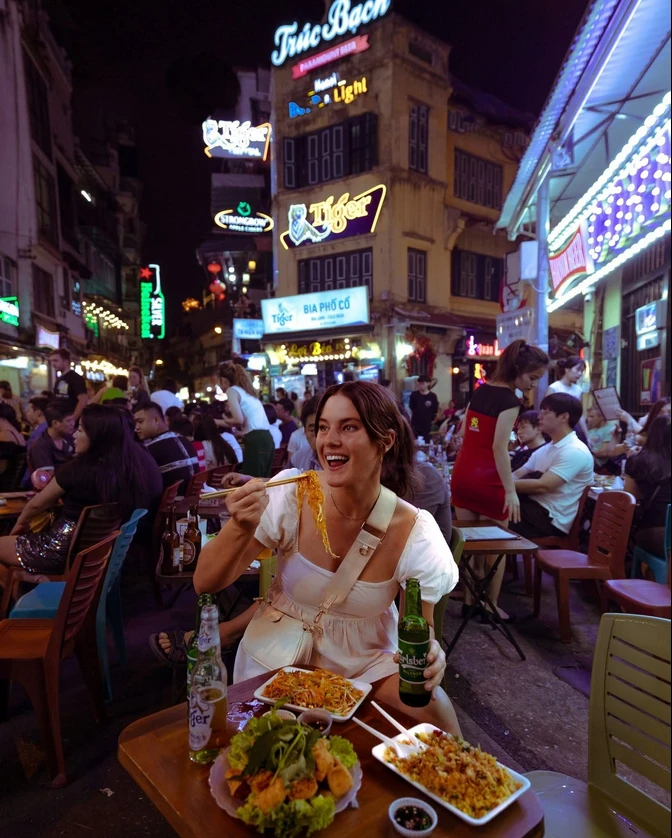
Street food can keep meal spending modest while introducing dishes such as Pho, Bun Cha and Banh Mi 🍜. The tourism authority gives an indicative street food meal with iced tea at US$2 / VND45,000 (Source: Vietnam National Authority of Tourism). That is a reference point rather than a price for every dish or stall. Leave room for drinking water, coffee and meals away from street stalls, and choose food with care instead of assuming that low cost says anything about hygiene or nutritional balance.
| Expense Category | Illustrative Daily Allowance (USD) | Basis | Planning Note |
|---|---|---|---|
| Accommodation (Dorm room) | 13.00 | Tourism guide: VND300,000 / US$13 | Indicative budget hostel reference; check current room rates |
| Food and Beverage | 10.00 | Suggested allowance | Adjust for meals, drinks and dietary preferences |
| Transportation (Local) | 6.25 | Suggested allowance | Local journeys; intercity fares budgeted separately |
| Activities and Entrance Fees | 10.00 | Suggested allowance | Save across days for outings; major excursions cost extra |
| Miscellaneous (Sim card, laundry) | 3.75 | Suggested allowance | Adjust for SIM card, laundry and other incidentals |
| Total Daily Budget | 43.00 | Sum of the allowances above | Illustration, not a tour price or an all-inclusive cap |
The hostel reference comes from the tourism authority’s guide (Source: Vietnam National Authority of Tourism); the other rows are suggested allocations. Add international flights, entry documents, insurance, intercity travel and major excursions separately. Private rooms or a guided mountain circuit can change the total substantially, so price those choices before using this worksheet for a whole month.
How Can Travelers Optimize Transportation Logistics On A Vietnam Travel Route?
Compare separate bus tickets, any available open-ticket product and railway services for the legs you actually need. Check departure points, bed or seat type, luggage rules and change terms before paying; a pass is useful only if its stops and schedule suit your route.

For a Vietnam travel route, an open bus ticket may be worth comparing with individual bookings 🚌. Ask which operator runs each leg, how you reserve a departure, how changes work and whether the fare includes all the services you expect. Do not assume that “open” means unlimited departures or that every pass covers the same route. If you would like help discussing transport options, contact Truly Voyage; confirm what can be arranged and the actual terms before committing.
On a sleeper bus, you may prefer a lower-deck berth because it avoids climbing into an upper bed. Ask for the layout before choosing a middle or window position, and check the usable berth length if you are tall. Air conditioning and the quality of sleep vary, so keep a light layer within reach. Seat selection cannot promise a journey without motion sickness; if this is a recurring problem, discuss suitable travel advice with a healthcare professional rather than relying on one particular berth.
Pack clean socks and keep essential belongings in an accessible daypack. Some operators ask passengers to remove shoes; follow the instructions on your service and keep footwear together. A berth described as comfortable may still feel cramped if you are tall or need to move frequently. Comparing a railway berth or daytime transfer can be worthwhile when sleep, ease of boarding or the ability to sit upright matters more than the lowest fare.
If considering a motorbike in Ha Giang, discuss the vehicle, route and your experience with the provider before booking. The CDC advises travelers to get any driving permits and insurance they may need (Source: CDC). A guide or local rider does not remove the risks of mountain travel. If riding does not suit you, ask whether a car-based option can cover the scenery you want to see, and compare its cost and daily travel time.
Does This Vietnam Backpacking Trip Suit Your Travel Style?
Independent travel gives you room to change plans, but dorms, overnight journeys and mountain outings need to suit your comfort and energy. Decide which parts you want to arrange yourself and where help would be useful.
Before you go
- Choose your sleeping arrangements: compare dorms with private rooms and leave recovery time after an overnight journey.
- Price demanding excursions separately: do not assume a guided mountain circuit fits inside an ordinary daily allowance.
- Keep transport optional: a bus, train, private transfer or guided outing can serve different parts of the same trip.

Who it suits
Travelers happy to compare bookings, adjust their route and choose modest accommodation while spending time on local food and scenery.
Who may prefer something else
Travelers who need consistent room facilities, predictable rest or less riding can keep the same destinations but choose private rooms, fewer stops and arranged transfers.
Health Preparations, Visa Requirements And Travel Insurance Policies
Entry rules for a Vietnam backpacking trip depend on the passport you will use, not simply on where you fly from. The Immigration Department states that an e-visa can be valid for up to 90 days, with single or multiple entry; its notice directs applications to evisa.gov.vn and thithucdientu.gov.vn (Source: Vietnam Immigration Department). Check the approved dates and entry arrangements for your own trip. As one nationality-specific example, full British citizen passport holders can visit for tourism or business without a visa for up to 45 days, with at least six months’ passport validity after arrival (Source: GOV.UK). For US, Canadian, Indian or other passports, consult the official guidance for your nationality.
For health preparation, the CDC recommends visiting a doctor at least a month before travel. Keep routine vaccinations up to date and discuss destination-specific needs: hepatitis A is recommended for unvaccinated travelers aged one year or older, and typhoid for most travelers (Source: CDC). Advice depends on your health and planned activities. Mosquito-bite prevention and care with food and water also matter; use an appropriate repellent as directed, rather than assuming one concentration is required for everyone.
Review your medical cover and consider travel health and medical evacuation insurance (Source: CDC). Before paying for an adventurous outing, check that the policy covers the activity and the way you will take part, including riding a motorbike or traveling as a passenger. For luggage, a 40 to 50 liter backpack is a suggested capacity to try, not an airline allowance 🎒. Fit and packed weight matter, and its volume does not tell you whether the bag meets the carrier’s dimensions. Check the allowance on each booked flight before deciding to travel with cabin baggage alone.
Accommodation Strategies And The Backpacker Hostels Network
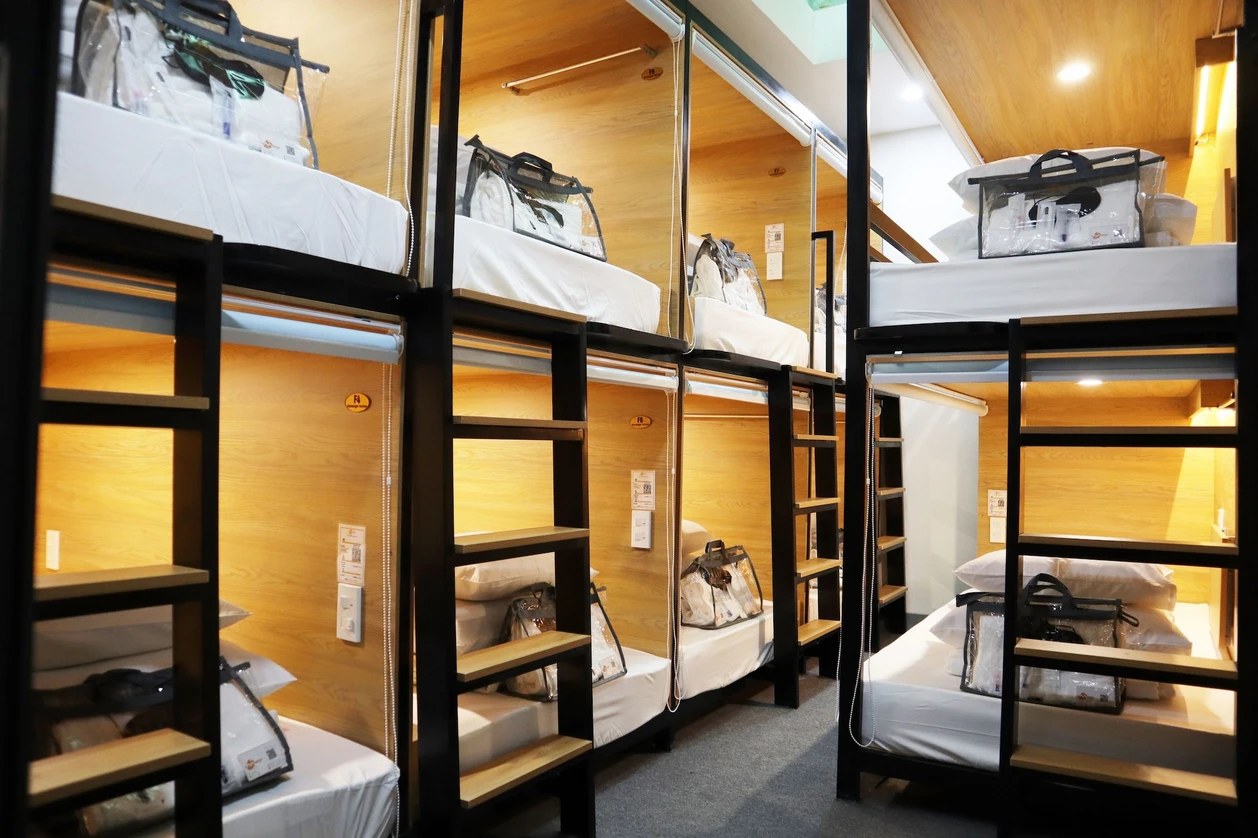
Hostels can provide a modest bed and a social setting, but facilities vary between properties and room categories. A chain name alone does not tell you whether a particular dorm has the privacy, cleanliness or quiet you need. Compare the room description with recent reviews, and check air conditioning, bathroom arrangements and storage before booking. If sleep matters more than meeting fellow travelers, a private room can be worth the extra expense even within an otherwise independent itinerary.
Other travelers and hostel staff may help you compare ideas for your Vietnam travel route. Treat those conversations as starting points, then confirm transport details with the service you book. Wi-Fi, coffee sessions and walking tours are features to ask about, rather than services every hostel provides. If you need reliable internet for work or onward planning, discuss your needs with the property instead of assuming a particular download speed.
When comparing accommodation, look closely at recent comments about cleanliness, noise, locker dimensions and privacy curtains 🛏️. Booking one or two days ahead is an option for a flexible itinerary, not a guarantee of availability. If a particular room type is important, reserve it earlier and read the cancellation terms. Ask about a property’s environmental practices where these matter to you, but do not use a sustainability label as a substitute for checking the practical facilities you need.
Frequently Asked Questions
What is the ideal backpack size for traveling across Southeast Asia?
A 40 to 50 liter bag is a suggested starting point to try for fit and packed weight. Airline acceptance depends on dimensions and weight, not volume alone. Vietjet’s baggage FAQ gives a maximum main-piece size of 56 cm × 36 cm × 23 cm and a total allowance of 7 kg for the main piece and small item (Source: Vietjet Air). Check the allowance for your actual ticket and route before packing.
How much should I budget for a day of backpacking in Vietnam?
The illustrative worksheet in this guide totals approximately US$43 per day. It is a starting allowance, not a current quote: add intercity journeys, international flights, insurance, entry documents and major excursions separately, then adjust for your rooms and activities.
What is the best way to book reliable open bus tickets?
Compare the operator, covered stops, departure reservations and change terms before paying. Ask for the vehicle layout and boarding point; an open ticket or agency booking does not guarantee a particular berth, punctuality or a journey without problems.
Do I need a visa for a 30-day Vietnam backpacking trip?
Check the rules for your passport before booking. A one-month itinerary does not by itself make you visa-exempt; where a visa is needed, review the official application process and the validity dates approved for your stay.
Which seat should I choose on a sleeper bus to avoid motion sickness?
A lower-deck berth may make boarding easier, but no seat guarantees that you will avoid motion sickness. Ask about the layout and bed length, compare a daytime or rail journey if needed, and discuss recurring symptoms with a healthcare professional.
Conclusion
A one-month Vietnam backpacking trip gives you room to combine cities, mountains and coast if you choose your stops carefully. Use the suggested Vietnam travel route as a starting point, then compare real room and transport prices before setting your spending limit. Keep demanding excursions outside the ordinary daily worksheet, check entry and baggage rules, and leave time to rest. Independent travel works best when the pace and comfort choices fit you.
Further Reading & Resources
Where the figures in this guide come from, plus related guides for planning your trip.
Sources
- Phong Nha-Ke Bang statement of outstanding universal value — 2015 UNESCO World Heritage Centre
- Currency and payments in Vietnam Vietnam National Authority of Tourism
- E-visa overview and official application domains Vietnam Immigration Department
- Vietnam entry requirements for British citizens GOV.UK
- Vietnam traveler health guidance CDC
- Carry-on dimensions and weight Vietjet Air
Related guides
A JOURNEY SHAPED AROUND YOU
Your Vietnam journey.
At your own pace.
Tell us what you enjoy, how you like to travel and where you would like more time. We can discuss a private itinerary around your interests and preferred pace.

Vani is the Founder and Lead Travel Designer at Truly Voyage. With over a decade of experience and a deep passion for her Vietnamese heritage, she specializes in crafting bespoke, unhurried itineraries. Vani is dedicated to helping travellers experience the authentic soul of Southeast Asia with absolute financial security and 24/7 on-ground support.
0 Comment