


 By Vani
Vung Vieng floating village is a former fishing settlement and visitor area associated with Bai Tu Long Bay, on Ha Long’s VHL4 sightseeing route. Rowed boats, limestone scenery and pearl-cultivation activities feature in descriptions of a visit. Its fishing families were relocated ashore from 2014, so plan around cultural heritage and confirmed activities rather than expecting an unchanged residential village.
Our Truly Voyage team explains what to expect at Vung Vieng, how the relocation changed its story, and why the exact cruise itinerary matters. The area is commonly associated with Bai Tu Long Bay, while the official sightseeing system lists it on Ha Long Bay route VHL4. This guide covers the comparison with Cua Van, rowed-boat and kayak options, pearl cultivation and practical questions to ask before booking. It complements our wider bay guide without assuming that every cruise includes the same stops.

What Is the Vung Vieng Floating Fishing Village Today?
Vung Vieng preserves connections with the bay’s fishing culture, but its visitor landscape should not be confused with the residential village that existed before relocation.
From a Fishing Settlement to a Heritage Visit
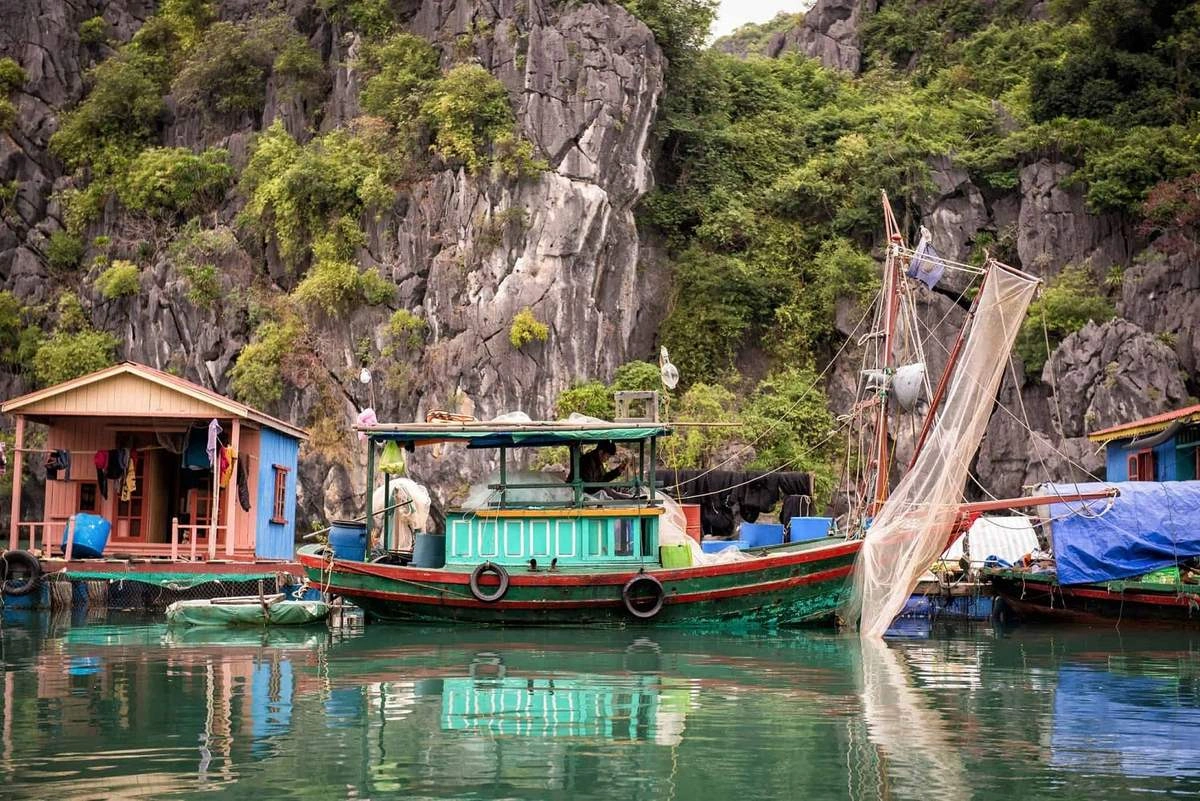
The bay’s Management Board describes Vung Vieng, also written Vong Vieng, as an area where a traditional fishing community once lived. Its place page records relocation to the mainland from 2014. (Source: Ha Long Bay Management Board) Floating structures and activities on the water now form part of a visitor experience. Their presence alone does not tell you who lives there permanently or how a particular platform is used.
The setting remains central to a visit: water, limestone islands, small boats and floating platforms offer a different perspective from the deck of a larger cruise vessel. Ask your guide which structures preserve fishing heritage and which serve current activities. Photographs in travel guides may show earlier stages of the settlement, so avoid using them as a promise of what will be visible on your date.
The 2014 Resettlement and Who Remains on the Water
In a retrospective on heritage management, the Board records the relocation of 354 households, nearly 2,000 people from seven fishing villages, during 2014. It describes the aims as stabilising fishers’ lives and reducing environmental pressure on the bay. (Source: Ha Long Bay Management Board) These are bay-wide figures, not a population count for Vung Vieng alone. The move is part of the wider history of Quang Ninh.
People working at a visitor stop and people permanently living there are different groups. A rower, guide or pearl-farm worker may have a connection with the fishing community without residing on the platform you see. Let the guide explain those connections where appropriate. Avoid presenting staff at work as evidence that the old residential settlement remains unchanged.
Vung Vieng vs Cua Van: What Is the Real Difference?
The clearest planning difference is the official route: Vung Vieng is on VHL4 and Cua Van is on VHL3. Choose by the stops and activities confirmed for your ship, rather than assuming one village is always quieter or easier to reach.
Vung Vieng and Cua Van Side by Side
| Aspect | Vung Vieng | Cua Van |
|---|---|---|
| Bay | Bai Tu Long Bay | Ha Long Bay |
| Departure planning | About 20 km from Tuan Chau; 16 km from Ha Long International Passenger Port. (Source: Ha Long Bay Management Board) | Confirm the departure port and the ship’s route |
| Historical context | Former fishing settlement; relocation changed the visitor landscape | Fishing heritage interpreted through the village area and associated cultural sites |
| What to confirm | Rowing or kayak arrangements and any pearl-farm stop | Activities offered and current access to any cultural-centre interior |
| Visitor focus | Limestone setting, rowed boats and pearl-cultivation interpretation | Fishing culture, rowed boats and the surrounding bay |
| Official cruise route | VHL4 | VHL3. (Source: Ha Long Bay Management Board) |
| Reachable on a day cruise | Check a dated itinerary that explicitly includes Vung Vieng | Check a dated itinerary that explicitly includes Cua Van |
Table 1: Planning differences between the two village areas. Route designations follow the Management Board’s itineraries; listed places do not guarantee every service is operating.

Which Village Suits Your Trip?
If you have one day, ask which complete itinerary fits the available sailing time. If you prefer an overnight cruise, compare the actual time allocated to the village with the rest of the programme. Neither “Ha Long” nor “Bai Tu Long” in a cruise name is enough to identify a particular village stop. Ask for the name in writing, the planned activity and what happens if conditions require a change.
The Board lists Cua Van within VHL3 and Vung Vieng within VHL4. (Source: Ha Long Bay Management Board) A route listing describes the sightseeing system; the ship’s programme determines which stops you are being sold. For a wider Vietnam trip, consider whether your priority is time on the water, cultural explanation, pearl cultivation or a shorter outing with fewer transfers.

A JOURNEY SHAPED AROUND YOU
Meet the people behind
your Vietnam plans.
Tell us what you enjoy, how you like to travel and where you would like more time. We can discuss a private itinerary around your interests and preferred pace.
What Is There to Do at Vung Vieng Floating Village?
Rowed-boat excursions and pearl-cultivation visits appear in official descriptions of Vung Vieng. Confirm which activities your booking includes; they are not interchangeable parts of every cruise.
The Vung Vieng Pearl Farm Tour

A Management Board article dated 8 September 2026 names Pearl Farm 2 at Vung Vieng as a place where visitors are introduced to pearl cultivation and processing. (Source: Ha Long Bay Management Board) Ask whether that introduction is included in your particular sailing, which platform is used and whether there is an additional charge. A stop described simply as “the fishing village” does not necessarily include a farm demonstration.
The Board places the Tung Sau pearl-cultivation area on VHL2 and Vung Vieng on VHL4. (Source: Ha Long Bay Management Board) Check the location as well as the activity: a cruise advertising a pearl-farm stop may be visiting a different part of the bay, without going to Vung Vieng at all.
The Board’s June 2026 account describes nucleus implantation, cultivation and harvesting as parts of the pearl-making process. Its examples give different growth periods: Akoya pearls take two to three years, Tahiti four to six, and Southsea six to eight. (Source: Ha Long Bay Management Board) Those differences matter more than a single generic growth period for every pearl. During a demonstration, ask which type is being discussed and which stage you are watching.
If jewellery is offered for sale, ask for the pearl type, cultivation origin, treatment information, price and return terms. A production demonstration can be informative without proving the origin of every retail item. You can enjoy the explanation without making a purchase; compare the product information rather than assuming that buying on a floating platform is automatically more transparent than another sales channel.
Bamboo Boats, Kayaking and the Village Gateway
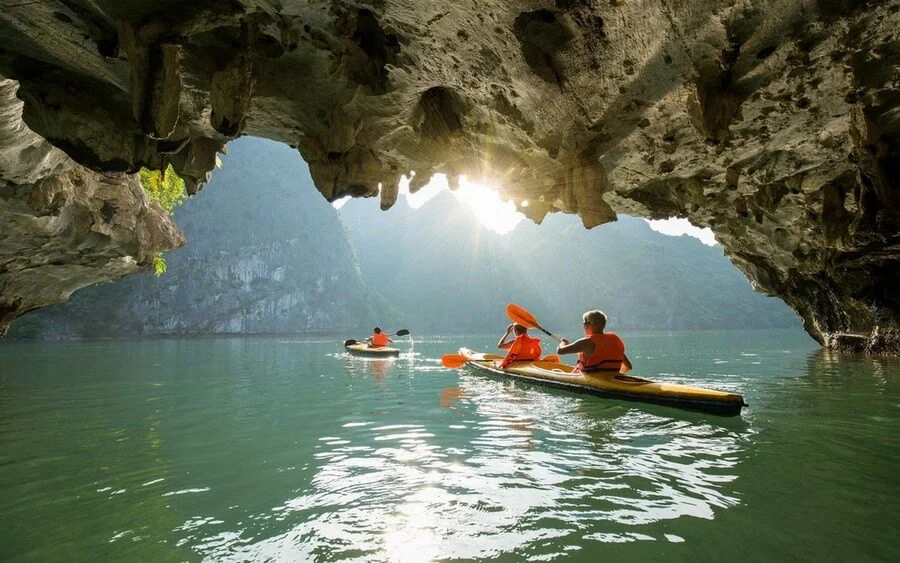
The Board describes a natural limestone arch as Vung Vieng’s “village gate”. A July 2026 article describes visitors exploring the area in small rowed boats before returning to their cruise vessel. (Source: Ha Long Bay Management Board) Ask how your ship manages the transfer, whether you have a rowing or kayak option, and how much time is allocated to it.
A rowed boat may suit someone who prefers not to paddle, but boarding still requires an assessment of the gap, steps, balance and available assistance. Kayaking involves its own physical demands and conditions on the day. Discuss these points before booking, follow the crew’s instructions and use the provided safety equipment. Do not assume sheltered-looking water makes every transfer suitable for every visitor.
The official VHL4 itinerary also lists Co Cave, known as Thien Canh Son Cave. (Source: Ha Long Bay Management Board) Check whether your chosen ship combines it with Vung Vieng, and ask about the cave’s walking requirements separately. Being on the same official route does not mean every cruise visits both places or follows the same sequence.
Would a Vung Vieng Floating Village Visit Suit Your Cruise?
Choose the small-boat experience and amount of activity that suit you, then confirm the specific village and any pearl-farm visit in the cruise programme.

Before you go
- Get Vung Vieng named in your dated itinerary.
- Ask about boarding assistance, rowing and kayaking alternatives.
- Confirm the pearl-farm activity and any separate fees.
- Check the plan if weather or operating conditions change.
Who it suits: Travellers interested in fishing heritage and limestone scenery who are comfortable with the agreed boat transfers.
Who may prefer something else: Visitors expecting a fully step-free outing, a guaranteed crowd-free stop or an unchanged village of resident families.
How Do You Get to Vung Vieng Village in Bai Tu Long Bay?
Vung Vieng is a water-based sightseeing stop. Arrange the sailing and final small-boat activity together rather than treating the village as a destination you can reach by road.
Distance, Access and Why a Cruise Is Required
The Board gives approximate distances of 20 kilometres from Tuan Chau International Marina and 16 kilometres from Ha Long International Passenger Port. (Source: Ha Long Bay Management Board) These are location references, not promised sailing times. A road transfer takes you to the port, where you join the vessel; it does not deliver you to the floating platforms. Confirm the terminal, check-in arrangements and onward sailing before planning a transfer from Hanoi or a local hotel.
The official VHL4 itinerary describes departures from either of those ports and includes the Vung Vieng area. (Source: Ha Long Bay Management Board) Compare the complete programme with your available time. Do not infer an overnight-only rule from a village name, or assume that any day cruise with “Ha Long Bay” in its title reaches this stop. A written itinerary is more useful than a general bay label.
Choosing a Bai Tu Long Bay Cruise to Vung Vieng
Ask the operator to name the ship, departure port, village stop and planned activity. Check whether rowing or kayaking is included, whether a pearl demonstration is a separate stop, and what assistance is available during transfers. The order and duration of stops should fit the whole cruise, including meals, cave visits and the return to port. An overnight stay can give you more time in the bay, but it does not by itself guarantee a longer village visit.
Discuss weather-related changes and the operator’s terms before paying. Avoid relying on a particular month as a promise of calm water, or on “day two morning” as a fixed village schedule. If this stop is your main reason for booking, make that clear when requesting the programme. Use our Bai Tu Long Bay guide for the wider itinerary, then confirm this ship’s details separately.
How Should You Visit Vung Vieng Respectfully?
Respect begins with understanding the relocation and recognising that people working on the water are more than part of the scenery. Follow the guide’s boundaries for platforms, photographs and activities.
Understanding the Context Before You Arrive
Ask how fishing heritage is interpreted and how current activities relate to the former community. Some questions are better put to your guide than to someone trying to complete a task. Keep family histories, employment and residence separate in your understanding of the place. A respectful visit allows for change rather than expecting the village to match an old photograph.
Practical Etiquette on the Water
Agree on the practical details with your guide, then leave space for the people delivering the visit to do their work.
- Ask before photographing people or a demonstration at close range.
- Stay on the platforms and boats your guide has agreed you may use.
- Keep belongings secure, take litter back with you and avoid unnecessary noise.
- Check product details and payment terms before buying jewellery.
- Follow crew instructions during boarding, rowing and kayaking.
Ask Truly Voyage to discuss the itinerary and transfer requirements at your preferred pace. A pearl purchase or paid activity should be assessed on its own terms; do not assume it sends money directly to a particular former fishing family.

Frequently Asked Questions
Is Vung Vieng Floating Village still inhabited?
The Management Board records relocation of the fishing community to the mainland from 2014. (Source: Ha Long Bay Management Board) Today’s visitor activities and floating structures should not be treated as a current census of permanent residents. Ask about the cultural history and activities rather than expecting the old settlement unchanged.
How is Vung Vieng different from Cua Van Floating Village?
Vung Vieng is associated with Bai Tu Long and listed on VHL4; Cua Van is listed on VHL3. Compare the ship’s confirmed village activity and any cultural-centre or farm access. Neither route name guarantees a crowd-free visit or every advertised service.
What is pearl farming’s role in Vung Vieng’s history?
Pearl cultivation is part of the area’s visitor interpretation. A September 2026 Management Board article names Pearl Farm 2 at Vung Vieng as a place for introductions to cultivation and processing. (Source: Ha Long Bay Management Board) Confirm the demonstration on your sailing rather than assuming it accompanies every village stop.
How do you get to Vung Vieng Floating Village?
Join a sailing programme that explicitly includes Vung Vieng and confirm its departure port. Check the small-boat transfer and activity arrangements before booking. A car or bus transfer ends at the port, not at the floating village.
Can you buy pearls at Vung Vieng?
Ask whether your farm visit includes a retail area. Before buying, request information on pearl type, origin, treatments and returns. Watching a cultivation demonstration does not prove the provenance or value of every piece for sale.
Is Vung Vieng worth visiting on a Bai Tu Long Bay cruise?
It may suit you if fishing heritage, a rowed-boat excursion and limestone scenery interest you. Check the boarding requirements and specific activities first. It is less suitable if you expect an unchanged residential village or need a fully step-free excursion.
Conclusion
Vung Vieng Floating Village combines a limestone setting with the history of fishing communities and present-day visitor activities. The relocation belongs in that story, as does the distinction between a village excursion and a pearl-farm demonstration. Choose a cruise with the stop and transfer arrangements confirmed, and leave room for operating conditions to affect the day.
Further Reading & Resources
Where the figures in this guide come from, plus related guides for planning your trip.
Sources
- Vung Vieng: location, relocation and village gateway Ha Long Bay Management Board
- The village setting in the Bai Tu Long area Ha Long Bay Management Board · in Vietnamese
- VHL4: Vung Vieng and Thien Canh Son Cave Ha Long Bay Management Board · in Vietnamese
- VHL3: the route associated with Cua Van Ha Long Bay Management Board · in Vietnamese
- Bay-wide relocation figures and heritage management Ha Long Bay Management Board · in Vietnamese
- Pearl cultivation and growth periods by type Ha Long Bay Management Board · in Vietnamese
- Pearl Farm 2 visitor interpretation: September 2026 Ha Long Bay Management Board · in Vietnamese
- Rowing excursions at Vung Vieng: July 2026 Ha Long Bay Management Board · in Vietnamese
Related guides
A JOURNEY SHAPED AROUND YOU
Meet the people behind
your Vietnam plans.
Tell us what you enjoy, how you like to travel and where you would like more time. We can discuss a private itinerary around your interests and preferred pace.

Vani is the Founder and Lead Travel Designer at Truly Voyage. With over a decade of experience and a deep passion for her Vietnamese heritage, she specializes in crafting bespoke, unhurried itineraries. Vani is dedicated to helping travellers experience the authentic soul of Southeast Asia with absolute financial security and 24/7 on-ground support.
0 Comment