
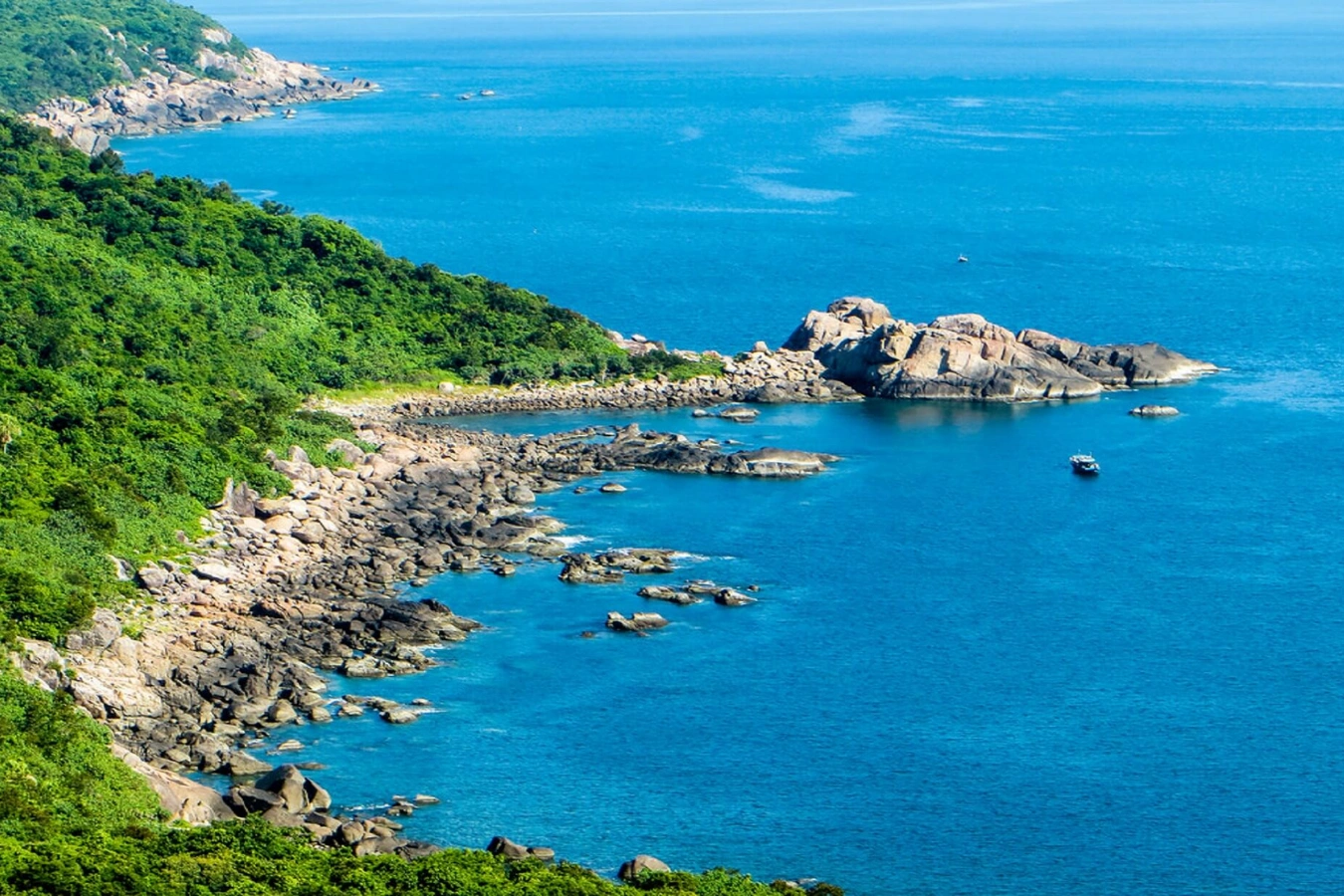


Ghenh Rang Quy Nhon can feel underwhelming if you only expect a quick photo op. Frustrated by superficial travel advice? Discover the deep poetic history of Han Mac Tu, the truth behind Queen’s Beach, and practical coastal camping tips. Read on for a complete guide to experiencing this serene hillside properly.

Table of Contents
ToggleWho Was Han Mac Tu, the Poet Buried at Ghenh Rang Quy Nhon?
Han Mac Tu was the pen name of Nguyen Trong Tri, born in 1912 in Le My village in what is now Quang Binh province, and he remains one of Vietnam’s most widely read tragic literary figures nearly a century after his death.
The Poet Behind the Pen Name
He began writing poetry as a teenager ✍️ under several pen names before settling on Han Mac Tu, studied for two years at a school in Hue, and eventually moved into journalism in Saigon before a diagnosis in the mid-1930s changed the course of his short life. He was diagnosed with leprosy and returned to Quy Nhon for treatment, a decision that placed him at the centre of the story that draws visitors to this hillside today. His poetry from this period, raw, formally inventive, and unusually direct about physical suffering for its era, is what secured his lasting reputation among Vietnamese readers rather than the illness itself.
A Death That Is Still Debated
💡 Vani Tips: the standard version of this story ends with leprosy, and most retellings, even recent ones, stop there. A separate, widely republished account, headlined bluntly as a question, did Han Mac Tu not die from leprosy, traces the story to medical staff connected to the same Quy Hoa leprosarium where he was treated, and argues his actual, direct cause of death was severe dysentery in his final days, not the leprosy diagnosis itself (Source: Công An Nhân Dân). He died at 5:45am on 11 November 1940, at the Quy Hoa leprosarium, at just 28 years old 🥀. I am not going to pretend this detail is fully settled, since most sources still repeat the leprosy narrative without qualification, but it is a documented, credible nuance that the flattened one-line version of his story leaves out entirely.

From Quy Hoa to the Poet’s Hill
💡 Vani Tips: his remains stayed at Quy Hoa for 19 years before being moved to this hillside. Before he died, his wish was to be buried facing the sea 🌊 at Deo Son, a pass at the edge of Quy Nhon, but the area was a military zone at the time, so he was buried instead in the leprosarium’s own cemetery. In 1959, his younger brother and a close friend, the poet Quach Tan, part of the same regional literary circle as poets Yen Lan and Che Lan Vien, arranged to move his remains to this hillside, now called Doi Thi Nhan, the Poet’s Hill, a spot that finally gave him the sea view he had wanted (Source: Nguồn Lực). His poem Day Thon Vi Da has been part of Vietnam’s official high school literature curriculum 📚 since the country’s 1991 to 1992 education reform, which is a large part of why his tomb draws so many Vietnamese visitors who studied his work in school, a detail worth correcting since some older sources place this a couple of years earlier than the actual reform date (Source: Giáo Dục và Thời Đại). Getting up to the grave itself means crossing a small footbridge over what locals call the Fairy Stream, then climbing a tree-lined stone staircase known as Mong Cam Slope 🥾, before reaching a flat, grassy clearing shaded by old trees, facing open sea. It is a genuinely peaceful spot, and it earns that reputation honestly.
Explore the Poetic Soul of Vietnam
Ready to walk the historic paths of Quy Nhon? Let us craft a tailored journey that brings Vietnam’s rich literary and coastal history to life for you.
What Is Egg Beach, or Queen’s Beach, at Ghenh Rang?
Egg Beach sits inside the Ghenh Rang Tien Sa tourist area, a stretch of shoreline covered in thousands of smooth, round stones that really do resemble oversized eggs 🥚 stacked along the waterline.

Two Real Names for One Beach
💡 Vani Tips: both names you will hear are real. Bai Tam Hoang Hau, meaning Empress’s Bathing Beach, is the official name, and Bai Da Trung, or Egg Beach, is the common descriptive one locals and most visitors actually use. The empress connection traces to Nam Phuong, wife of Emperor Bao Dai, who local history says chose this cove as her own private bathing spot during one of the couple’s inspection tours through the central provinces (Source: Vinpearl). That story is genuine local history passed down through generations rather than a documented archival record, which is worth knowing even though it does not make the story any less credible or any less worth repeating.
Should You Really Walk Barefoot on the Stones?
💡 Vani Tips: sources genuinely split on this, and I am not going to pretend otherwise. Several tourism sites market barefoot walking here as the whole point of the visit, cool, round stones underfoot, no shoes needed. An official national airline travel guide, on the other hand, explicitly advises wearing non-slip footwear and avoiding bare feet altogether, since the stones can turn slick, especially once wet (Source: Vietnam Airlines). My honest read, having walked it myself, splits the difference. The dry stones higher up the beach are genuinely pleasant barefoot 👣, but the stones near the waterline pick up a film of moss that turns them properly slick, so keep sandals on there regardless of what the marketing photos suggest, and go slowly either way.

Is Trung Luong Camping Site Near Ghenh Rang Worth the Trip?
Trung Luong is a real, currently operating campsite roughly 40 to 45 minutes from central Quy Nhon, built around a cove of raw rock and open sea that has earned it a Vietnam’s own Jeju Island comparison from local tourism content ⛺.

What Trung Luong Actually Offers
💡 Vani Tips: pricing here genuinely shifts by season, so treat any figure, mine included, as a starting point rather than a locked-in number. Recent listings put gate entry around 40,000 to 45,000 VND per person, which typically includes parking and beach access, with overnight tent rental running roughly 300,000 VND for two people, and a group campfire add-on around 500,000 VND 🔥. Some older listings describe entry as free with camping gear priced separately, which tells you how much this has shifted even over the past couple of years, so call ahead to confirm current amenities and pricing before you commit to a night here (Source: dulichquynhon.blog).
Practical Safety Notes Before You Pitch a Tent
Wind at exposed coastal sites like Trung Luong and nearby Eo Gio can shift intensity suddenly after dark 🌬️, so stake your tent down properly and avoid pitching too close to the waterline. Leave at least one person to watch your gear whenever the rest of your group heads down to swim 🏊♂️, use a waterproof pouch for your phone and wallet, and pack insect repellent, since coastal camping here does attract mosquitoes and occasionally rove beetles, a small local insect whose sting can cause a nasty skin irritation if brushed against bare skin. None of this makes Trung Luong risky exactly, it is simply the honest, unglamorous prep work that separates a good night here from a miserable one.
Need Help Planning Your Coastal Stay?
Avoid the guesswork of transportation and bookings. Reach out to our local experts to secure the best accommodations and camping setups in Quy Nhon.
Where Can You Get a Proper Coastal Coffee at Ghenh Rang Quy Nhon?
Cafe Hoang Hau sits directly inside the Ghenh Rang Tien Sa tourist area, facing both the sea and Poet’s Hill, which makes it the obvious spot to end a slow afternoon here rather than rushing straight back to the city.
Cafe Hoang Hau and the View From Poet’s Hill
A basic Vietnamese coffee ☕ here runs around 30,000 VND, and the seating faces directly out toward the water, with Poet’s Hill visible across the way, close enough that you can sit with your drink and genuinely take in the whole afternoon you just spent (Source: Quy Nhon Trip). If you want a quieter alternative with a different cultural angle, a small cafe inside the same tourist area is themed entirely around the music of songwriter Trinh Cong Son, a different but equally beloved figure in Vietnamese arts, worth a stop if you want to stretch the afternoon a little longer before heading back into the city.
A Real Traveler’s Case Study: Experiencing Ghenh Rang
To give you a practical sense of how to pace this trip, here is a step-by-step real experience from Sarah and Mark, a couple who recently explored this coastline. Instead of rushing, they dedicated a full afternoon to the area to truly soak in the ambiance.
| Time | Location & Activity | Real Experience Highlights |
|---|---|---|
| 2:30 PM | Poet’s Hill (Doi Thi Nhan) | Walked up the shaded Mong Cam Slope and visited Han Mac Tu’s tomb in peace before the late afternoon crowds arrived. |
| 3:45 PM | Egg Beach (Queen’s Beach) | Explored the dry, upper stones barefoot for photos, but smartly kept their sandals on near the mossy waterline to avoid slipping. |
| 5:00 PM | Cafe Hoang Hau | Rested their feet while enjoying traditional drip coffee, watching the golden hour light reflect off the ocean waves. |
Frequently Asked Questions About Ghenh Rang Quy Nhon
Here are the most frequently asked questions about planning a slow afternoon at Ghenh Rang Quy Nhon, addressing the essential historical context and practical tips.
Who was Han Mac Tu?
Quick Answer: A Vietnamese poet, born Nguyen Trong Tri in 1912.
His work is still taught in Vietnam’s national literature curriculum and his tomb sits on Poet’s Hill inside the Ghenh Rang tourist area.
What is Egg Beach’s real name?
Quick Answer: Bai Tam Hoang Hau, Empress’s Bathing Beach, is the official name.
Meanwhile, Bai Da Trung, or Egg Beach, is the common name most people actually use.
Is it safe to walk barefoot at Egg Beach?
Quick Answer: The dry upper stones are generally fine barefoot.
However, the stones near the waterline get slick with moss, so keep sandals on there and move slowly regardless.
How do I get to Trung Luong camping site?
Quick Answer: By motorbike or car, roughly 40 to 45 minutes from central Quy Nhon.
Gate entry and tent rental are available on-site rather than requiring advance equipment.
What is the entrance fee for Ghenh Rang Tien Sa?
Quick Answer: Reported figures vary widely, from around 10,000 VND at the low end to as much as 50,000 VND.
This depends on the specific area and season, so confirm the current price at the gate.
Can I combine Ghenh Rang with other Quy Nhon attractions in one day?
Quick Answer: Yes, its central, in-town location makes it easy.
You can pair it with a half-day covering both the tomb and beach here alongside other nearby city sights, without needing a full separate day.
Conclusion
Do not let anyone sell you the flattened, one-line version of this hillside. Climb to the grave itself rather than reading about it secondhand, correct the beach’s name in your own notes, Bai Tam Hoang Hau if you want to sound like you did your homework, and keep your sandals on once you reach the waterline no matter how tempting the dry stones higher up have made barefoot walking look. Give the afternoon the time it actually deserves, tomb, beach, and a coffee facing the sea, rather than the rushed twenty-minute version most visitors settle for.

Ready to Experience Vietnam’s Hidden Beauty?
Let us take care of all the logistics so you can focus on creating unforgettable memories. Reach out today and start planning your perfect itinerary.
Further Reading & Resources
Here is a list of documented sources and resources to help you dive deeper into the history and details of Ghenh Rang.
- Direct Link — the alternate account of the poet’s direct cause of death.
- Direct Link — the 1959 reburial story and Poet’s Hill setting.
- Direct Link — the poem’s official curriculum inclusion date.
- Direct Link — Egg Beach naming history and the Empress Nam Phuong legend.
- Direct Link — official barefoot-walking safety guidance.
- Direct Link — current Trung Luong pricing and practical camping safety notes.
- Direct Link — Cafe Hoang Hau location and pricing.

Vani is the Founder and Lead Travel Designer at Truly Voyage. With over a decade of experience and a deep passion for her Vietnamese heritage, she specializes in crafting bespoke, unhurried itineraries. Vani is dedicated to helping travellers experience the authentic soul of Southeast Asia with absolute financial security and 24/7 on-ground support.
0 Comment