


Ben Tre workshops are a mix of thriving crafts and fading history. Confused by mixed tour itineraries? Many operators sell dead brick kilns alongside real candy factories. This guide reveals what to expect, genuine costs, and a step-by-step traveler case study to book the right Mekong experience without wasting your time.

Ben Tre workshops get sold as a matched pair: a coconut candy kitchen and a brick kiln yard, both presented as living crafts you can watch on the same canal day. Only one of them is. The candy is real, made by hand in small family kitchens, and it is still in production. The brick kilns are a different story, and until July 2025 they belonged to a different province. The famous Kingdom of Brick Kilns is a Mang Thit and Vinh Long story, and the one kiln remnant Ben Tre can actually point to has stopped working entirely and now serves as a holiday photo backdrop 🧱. I am Vani, founder of Truly Voyage, and this guide sorts out what actually happens at a candy workshop, why the kiln story is misfiled under Ben Tre, which workshops you can genuinely expect to visit, and how much of any of it you should pay extra for.
Table of Contents
ToggleWhat Actually Happens at a Coconut Candy Workshop?
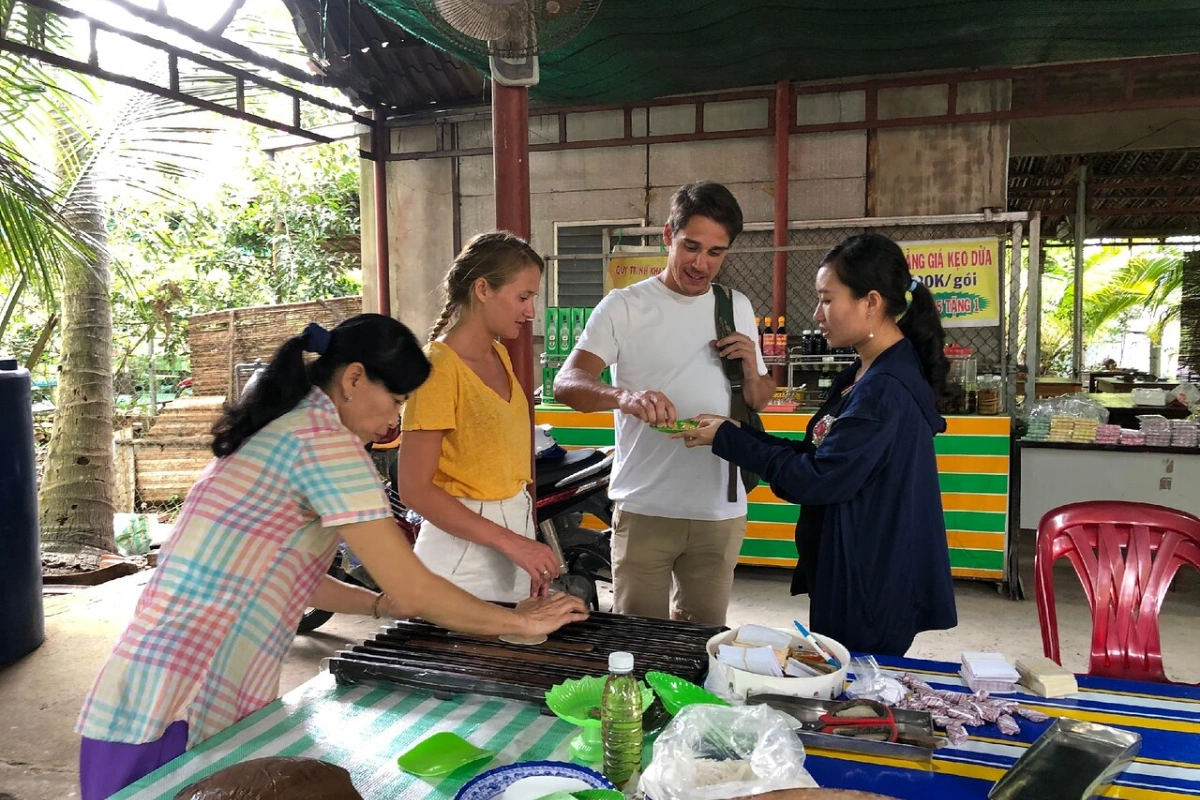
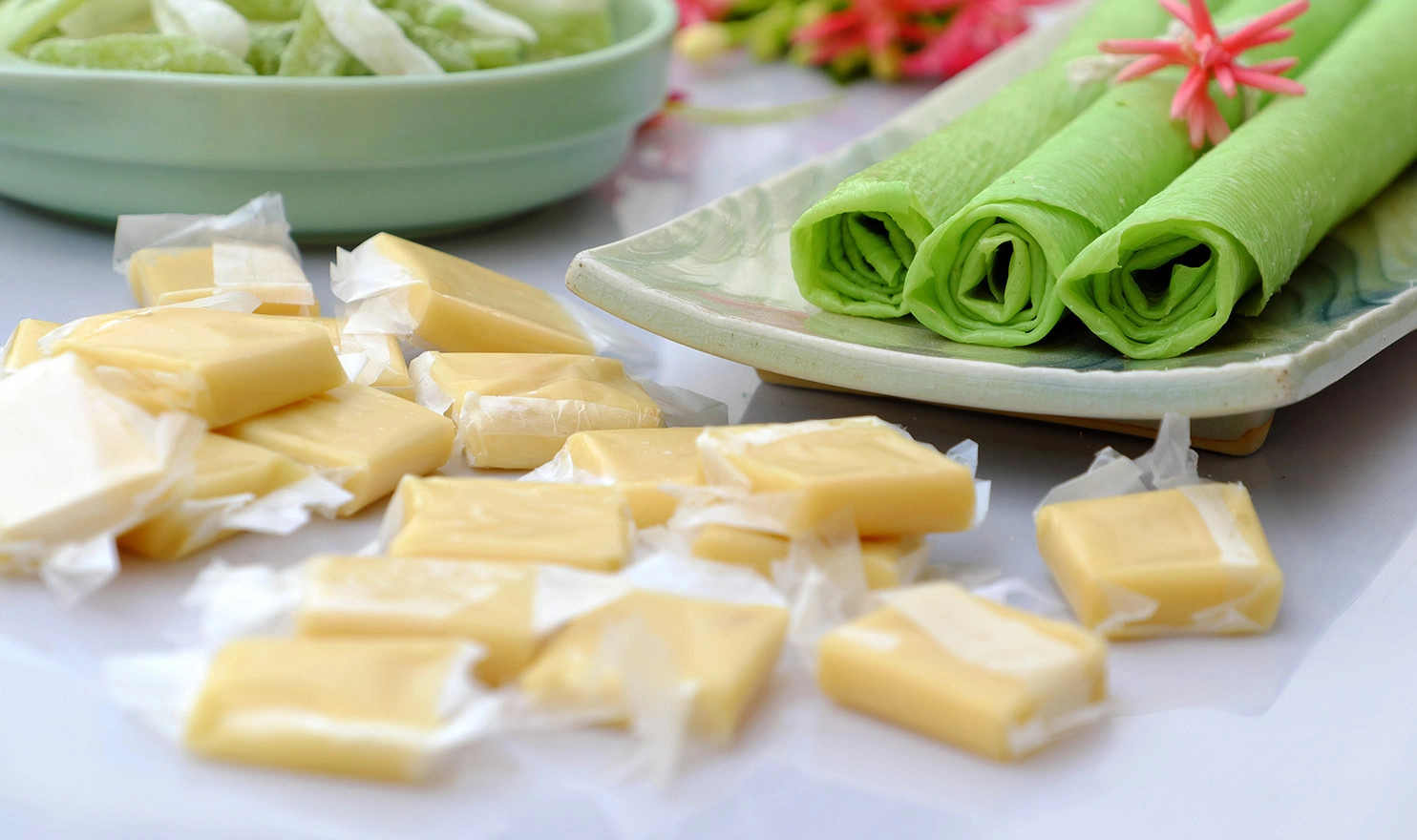
The process is genuinely hands-on at small family workshops: coconut milk is cooked down with sugar and malt, the resulting paste is cut, then each candy is wrapped by hand in rice paper. It is a real craft demonstration rather than a staged show 🍬.
Three ingredients carry the whole product. Fresh coconut cream, granulated sugar and malt, with the malt made from sprouted glutinous rice and the coconuts chosen mature enough to give the richest milk (Source: Mia.vn). The mixture goes into a large wok or vat over direct heat and gets stirred without pause until it thickens into a taffy-like mass.
It is poured out while still hot, cut by hand into small rectangles, then wrapped by hand, traditionally in rice paper first and an outer paper wrapper second, at a bench where visitors can usually watch every stage. Nothing in that sequence is put on for the camera. It is simply how the product is made, and it happens to be visible.

The industry behind it is wide rather than concentrated. One Vietnamese travel guide counts more than 180 candy producers across the province, spread over Mo Cay Nam, Mo Cay Bac, Chau Thanh and Ben Tre city, though it does not date that figure, so read it as an order of magnitude rather than a census (Source: Mia.vn). The workshop on your itinerary is one small kitchen among many, which matters for a later section of this guide.
Observe First, Then Make Your Own Batch
The most detailed dedicated session I found is framed as a hybrid. Visitors first watch resident workers cook, cut and wrap, then make their own batch using provided ingredients and an instructor. It is sold as a paid two to three hour package covering pickup and drop-off, a motorbike with a driver, fresh coconut-milk coffee 🥥, and the candy you make (Source: Tripadvisor). The listing describes a small family cottage industry working from recipes passed down through generations, which is the operator’s own marketing language and worth reading that way, although the underlying process matches independent accounts. The price was not displayed when I checked in September 2026.
The far more common version is shorter. On Con Phung itself, the candy demonstration is a standard stop inside the group package, alongside honey tea and orchard visits, included in the package price rather than sold separately (Source: conphung.vn). Both formats are real. Both are also monetised and curated for visitors. Neither is a factory floor tour.

Real Traveler Case Study: A Morning at the Coconut Canals
To show how this works in practice, here is a step-by-step breakdown of a recent trip by Sarah, a traveler who booked a custom morning route to avoid staged tourist traps.
- Step 1 – Early Arrival (8:00 AM): Arrived at a local family-run coconut candy kitchen just before the larger bus groups. Watched the morning batch of coconut cream being stirred over the fire.
- Step 2 – Hands-on Wrapping (9:00 AM): Sat down at the wooden benches with resident workers to manually wrap the freshly cut malt and sugar paste.
- Step 3 – Skipping the Dead Kilns (10:30 AM): Instead of driving to the abandoned Cho Lach kilns, the guide rerouted to a lively local fruit orchard and an authentic row-boat ride, maximizing active experiences. 🛶
- The Verdict: Focusing on living crafts (candy) and ignoring the misfiled kiln stops saved two hours of unnecessary driving.
Is the Kingdom of Brick Kilns Even a Ben Tre Story?
No. The Kingdom of Brick Kilns, over 1,500 kilns at its 1990s peak per Saigoneer’s own reporting on its decline, is geographically a Mang Thit district and Vinh Long story. It only sits in the same province as Ben Tre because of the July 2025 three-way merger, so do not present it as a Ben Tre craft.
Saigoneer, the source of that 1,500 figure, describes brick-making as a trade that thrived most in Dong Thap, Vinh Long and An Giang, helped by rich clay deposits and a dense network of waterways 🌊. Ben Tre is not on that list (Source: Saigoneer). The kilns themselves cluster along the Thay Cai canal and neighbouring waterways in Mang Thit, a separate area from the coconut canal circuit around Con Phung. On July 1 2025, Ben Tre, Vinh Long and Tra Vinh merged into a single Vinh Long province (Source: Wikipedia), which puts the kilns and the coconut canals under one provincial name. That is a filing change. It is not a shared craft history, and any listing that blends the two into a single Ben Tre tradition is compressing two unrelated stories into one.
What Is Left of the Kingdom Today?
Even the real Kingdom is a shrinking craft zone, not a living showpiece, and three different numbers describe it depending on what is being counted. The craft dates to the late nineteenth century, with records pointing to about 1887, and by the 1990s more than 1,500 kilns were active in the district (Source: LocalVietnam). A conservation assessment published in September 2024, drawing on field surveys in 2022 and 2023, then reports that 195 kilns in the core heritage area were dismantled from June 2019 onward, citing the provincial pre-feasibility study. It surveys 972 kiln systems spread across roughly 3,000 hectares of canal frontage, yet across four communes it counts 425 brick, tile and pottery establishments with 663 kiln mouths, of which only 111 establishments with 115 kiln mouths were still operating. That is roughly one establishment in four and about one kiln mouth in six, my arithmetic from the paper’s own figures (Source: Tạp chí KH&CN Trường ĐHXD Miền Tây).

Peak kilns, standing structures and working kilns are three separate counts, so they do not contradict one another. The paper blames falling demand, high production costs, tightening environmental rules and local clay running short, and provincial authorities have responded with a contemporary heritage project for the area and a nod to conserving a 100-year-old kiln structure (Source: SGGP English). For visitors, LocalVietnam describes a mix of moss-covered abandoned kilns, quiet factory yards and the occasional workshop where craftsmen still fire pottery, scattered over kilometres of riverbank rather than gathered in one village. That is a heritage landscape worth a dedicated visit if bricks interest you. It is not a hands-on workshop, and it is not in Ben Tre.
Want to See the Real Mekong Delta?
Skip the staged tourist traps and discover genuine heritage landscapes and living crafts with our expert guides.
Are Ben Tre’s Own Kilns Still Working?
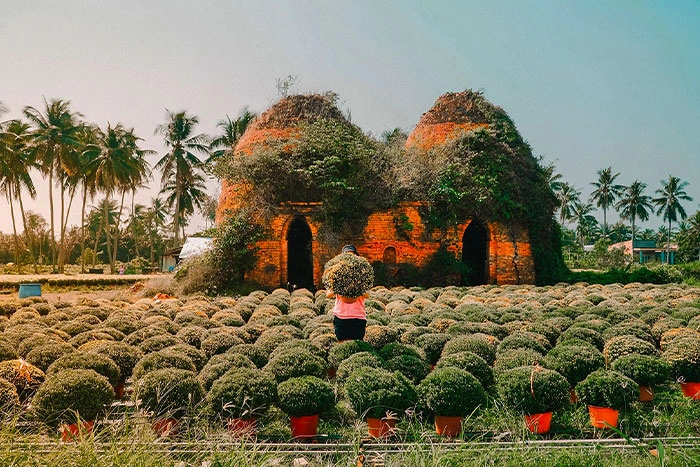
No. Ben Tre’s own kiln remnant, near Cho Lach, is smaller than the Mang Thit complex and already abandoned as working industry. It has been repurposed as a Tet holiday photo and check-in spot, an honestly dead craft site rather than a merely declining one.
Dan Viet reported in January 2025 on crowds arriving at the old kiln in the Cho Lach flower village to take photographs and film clips (Source: Dân Việt). The timing fits the Cho Lach flower festival, which was scheduled to run from January 8 to 12 2025 (Source: VOV). Thanh Nien has also asked, in a headline, whether the kiln has decayed too far to keep serving as a Tet photo spot at all (Source: Thanh Niên). VOA Vietnamese has reported on the same old, disused kiln (Source: VOA Tiếng Việt).
No source I found describes any working production at Ben Tre’s kiln, and no standalone brick-making workshop is sold as a bookable product anywhere. The nearest thing is a line in some day-tour listings. The ten-hour Ho Chi Minh City tour to Ben Tre, from US$62, lists a brick factory tour among its stops (Source: GetYourGuide). I could not verify which kiln such tours visit, and my reading is that it refers to a smaller local operation rather than the heritage complex at Mang Thit. Treat a brick factory line as a drive-by or photo stop, not evidence of a working Ben Tre craft.
| Criteria | Mang Thit, Vinh Long | Ben Tre, near Cho Lach |
|---|---|---|
| Scale | Over 1,500 kilns at the 1990s peak; 972 kiln systems surveyed across roughly 3,000 ha | One smaller kiln remnant |
| Working status | Shrinking but part-operating: 115 working kiln mouths across 111 establishments in four communes | Abandoned as working industry |
| What visitors find | Scattered heritage zone of moss-covered kilns, quiet yards, occasional working workshop | Holiday photo and check-in backdrop |
| Hands-on craft product | None found | None found |
Which Named Workshops Can You Actually Visit?
One real, named historic brand, Keo Dua Thanh Long, founded 1970, is documented, though its founding-story details are self-published by the brand itself with no independent source confirming them. Cite it as the brand’s own account rather than verified history. No source names a single specific workshop that every tour visits, so expect your operator to stop at whichever small family workshop it partners with locally. The general process and product will be consistent even if the exact stop varies.
The dominant pattern across Tripadvisor, GetYourGuide, Klook and the Con Phung site is an unnamed local candy workshop as a bundled stop. Operators rarely brand the workshop in their marketing copy, which fits a fragmented cottage industry of many small producers rather than a single flagship factory receiving every tour. In practice the workshop is a category, not a landmark. That is worth knowing before you spend any effort trying to choose between listings on the strength of a workshop name.
Thanh Long: One Named Brand, One Self-Reported History
The brand’s own website says Keo Dua Thanh Long was founded in 1970 by Nguyen Thi Vinh as the first coconut candy production facility in Ben Tre, that she registered the Thanh Long trademark, and that production began fully handcrafted with basic equipment before machinery was added to scale up (Source: Keo Dua Thanh Long). It is a real, still-operating commercial brand with retail locations, including three in Ho Chi Minh City by its own account. The same story turns up across several travel sites and in a personal family essay on Saigoneer (Source: Saigoneer), but everything I found appears to trace back to the same family and brand narrative, with no independent record such as a registration document or a contemporaneous news report. Repetition is not confirmation. I also could not confirm that any mainstream day tour takes visitors to this specific factory, so do not assume a candy workshop stop means Thanh Long.
How Much Does a Workshop Stop Cost?
Candy is usually a bundled stop rather than a line item. No standalone brick kiln workshop exists to price, and the one dedicated candy session I found did not display a price.
| Format | Price | What it covers |
|---|---|---|
| Candy demonstration on Con Phung group package | Included in the group package, 70,000 to 600,000 VND by group size | Bundled with honey tea and orchard visits |
| Dedicated handmade candy workshop | Not displayed, September 2026 | 2–3 hours: pickup and drop-off, motorbike with driver, coconut-milk coffee, instructor, ingredients, your batch |
| Less-touristy one-day tour from Ho Chi Minh City | From US$62, 10 hours | Coconut farm, village cycling, brick factory tour, local lunch, row-boat canal ride |
| Private non-touristy biking tour | From US$132, 8 hours | Village cycling, coconut handicraft workshops, sampan rides |

Read the table as a warning against comparing prices without the hours. The US$62 and US$132 figures are not candy workshop prices. The workshop is one item inside a longer day, and my cycling Mekong Delta guide breaks down how those operator listings differ 🚲.
The sampan segment inside the private tour is covered in my sampan rowing guide, and Con Phung’s own group package tiers, and what they include, sit in my Ben Tre coconut canals guide.
Is a Workshop Stop Worth Your Time?
The candy stop is. The brick kiln stop depends entirely on which kiln you mean.
Candy earns its place for simple reasons: the craft is real, the stop is short when bundled, and the process is easy to follow even without a shared language. The honest limits are that it is curated for visitors and can feel repetitive if it is one of several similar stops in a single day. Brick kilns split in two. Mang Thit rewards a dedicated visit if heritage landscapes are your thing, though it is scattered, shrinking and not hands-on. Ben Tre’s kiln is a photo stop at best.
Ben Tre’s kiln is the dead craft.
Mang Thit is dying slowly.
Frequently Asked Questions About Ben Tre Workshops
What happens at a Ben Tre coconut candy workshop?
Quick Answer: Coconut milk is cooked down with sugar and malt, the paste is cut by hand and each candy is wrapped by hand in rice paper.
Small family workshops usually let you watch, and some dedicated sessions add a hands-on batch.
Is the Kingdom of Brick Kilns in Ben Tre?
Quick Answer: No. It is a Mang Thit and Vinh Long story.
With over 1,500 kilns at its 1990s peak, it shares a province with Ben Tre only since the July 2025 merger.
Are Ben Tre’s brick kilns still working?
Quick Answer: No. The kiln remnant near Cho Lach is abandoned as working industry and used as a Tet photo spot.
Meanwhile, Mang Thit’s kilns are shrinking but still partly operating.
Which coconut candy workshop do tours visit?
Quick Answer: No single one. Operators stop at whichever small family workshop they partner with.
The general process and product stay consistent regardless of the exact workshop visited.
Who founded Thanh Long coconut candy, and is that verified?
Quick Answer: The brand’s own account credits Nguyen Thi Vinh in 1970, but it is self-published.
No independent source confirms it, so treat it as the brand’s story rather than verified history.
How much does a coconut candy workshop cost?
Quick Answer: Usually it is bundled into a wider package rather than priced alone.
Con Phung’s group package includes a demonstration, while a dedicated two to three hour session showed no price, and day tours from US$62 cover far more than candy.
Can I do a hands-on brick kiln workshop?
Quick Answer: No standalone product exists.
Kiln visits appear only as drive-by or photo stops, and Mang Thit is a heritage landscape rather than a workshop.
Conclusion
Treat the candy stop as a bundled, genuine but generic part of your Con Phung day, and do not pay extra for a named factory that no source confirms tours visit. If brick kilns are the real reason you are coming, give Mang Thit in Vinh Long a half-day of its own instead of counting on a Ben Tre canal tour to deliver it, because the only kiln Ben Tre can offer is a dead one with a holiday photo backdrop. At Truly Voyage, we say plainly which crafts are still working before we plan a workshop stop, so nobody spends a morning driving to a kiln that stopped firing years ago.
Ready to Plan Your Perfect Workshop Stop?
Let us help you design an itinerary with crafts that are actually alive. Connect with our local experts today.
Further Reading & Resources
- Mia.vn — candy ingredients, craft geography and the undated producer count. Direct Link
- Tripadvisor — the observe-then-make workshop format. Direct Link
- conphung.vn — the candy demonstration as a bundled Con Phung stop. Direct Link
- Keo Dua Thanh Long — the brand’s own founding account, self-published. Direct Link
- Saigoneer — a personal family essay repeating the Thanh Long story. Direct Link
- Saigoneer — the 1,500-kiln peak and the craft’s decline. Direct Link
- Tạp chí KH&CN Trường ĐHXD Miền Tây — the September 2024 kiln survey figures. Direct Link
- LocalVietnam — the kilns’ history and what visitors see today. Direct Link
- SGGP English — conservation status of a century-old kiln. Direct Link
- Dân Việt — the Cho Lach kiln as a January 2025 photo spot. Direct Link
- Thanh Niên — questions over the kiln’s derelict condition. Direct Link
- VOA Tiếng Việt — a visit to the abandoned Ben Tre kiln. Direct Link
- VOV — the January 2025 festival dates. Direct Link
- GetYourGuide — bundled brick factory stops and handicraft workshops in day-tour listings. Direct Link
- Wikipedia — the July 2025 merger into Vinh Long province. Direct Link

Vani is the Founder and Lead Travel Designer at Truly Voyage. With over a decade of experience and a deep passion for her Vietnamese heritage, she specializes in crafting bespoke, unhurried itineraries. Vani is dedicated to helping travellers experience the authentic soul of Southeast Asia with absolute financial security and 24/7 on-ground support.
0 Comment