
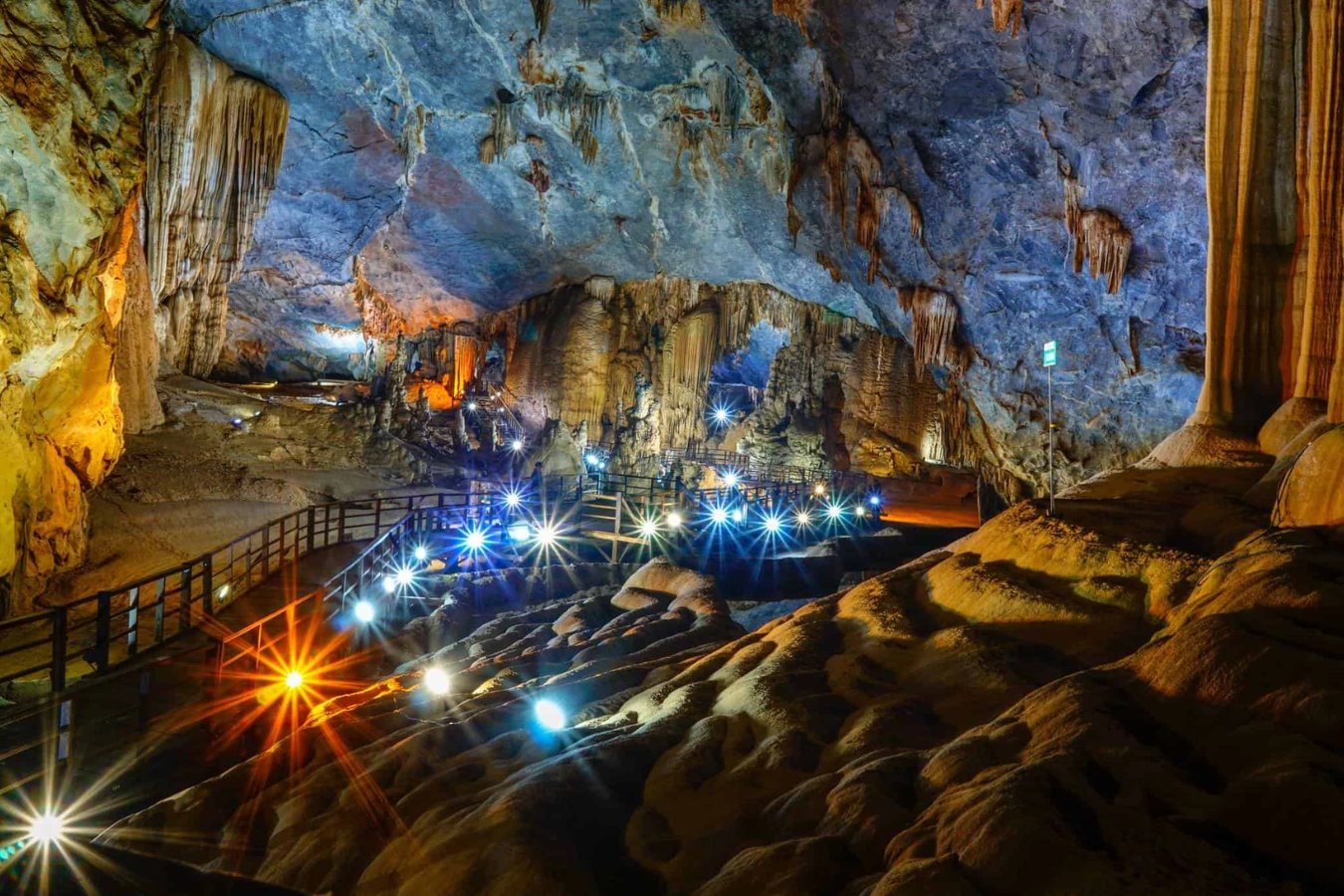


Is Paradise Cave really 31 kilometres long? Yes, but a standard ticket only reveals the first kilometre. Frustrated by unclear marketing? This guide uncovers the honest walkway experience, actual ticket prices, and the hidden 7km adventure route. Discover how to explore this underground cathedral properly and make your Phong Nha trip truly unforgettable.
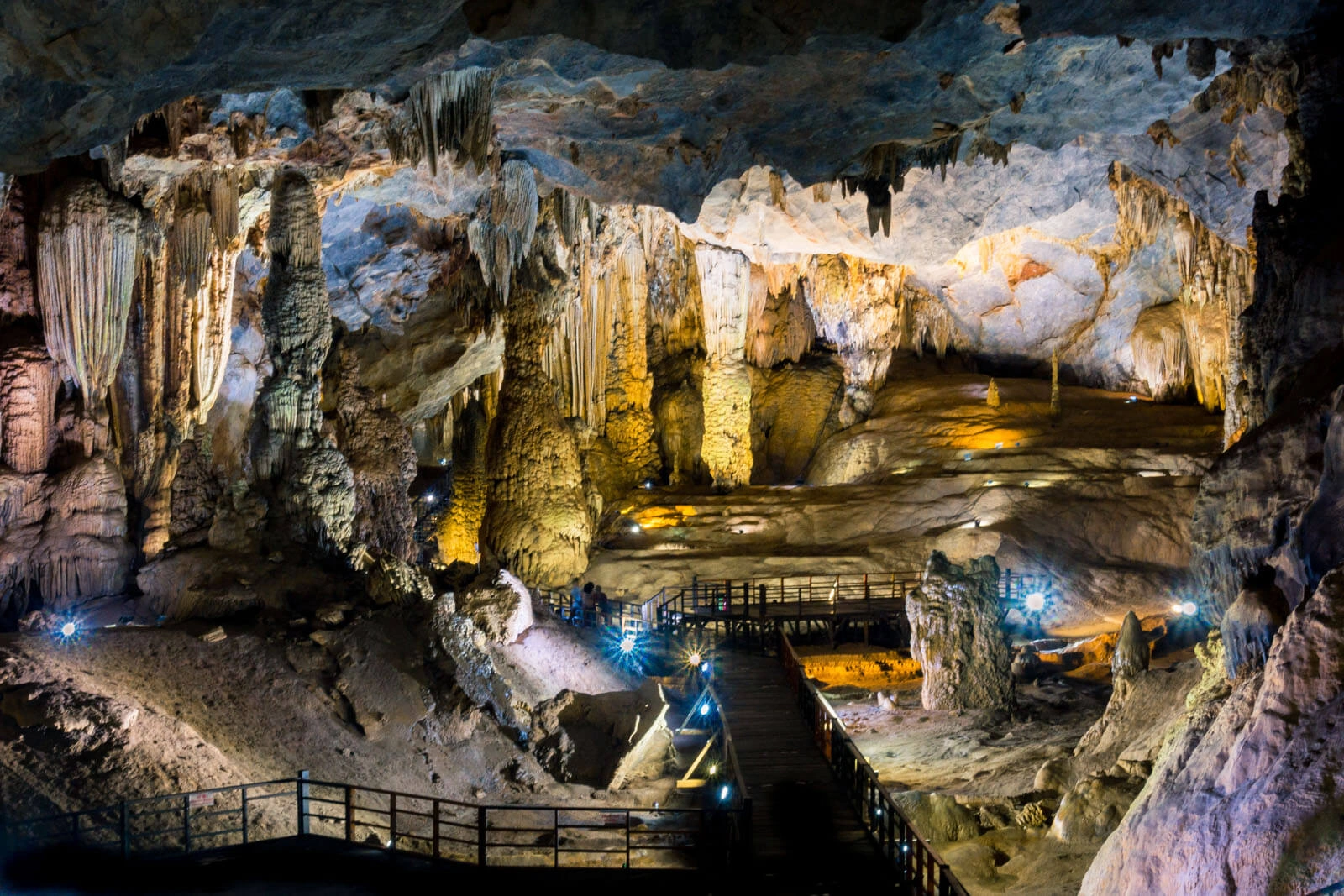
The wooden staircase gives no warning 🧗♂️. One moment you are climbing through ordinary jungle heat, sweat at your collar, cicadas overhead, and the next you are standing at the mouth of a cave so vast that your own footsteps stop sounding like footsteps and start sounding like something happening inside a cathedral. Cool, dry, mineral air moves past you. Somewhere above, unseen, a ceiling rises higher than most cathedral naves, and ahead, lit gently enough that shapes seem to reveal themselves rather than be shown to you, come the formations, stalactites built one mineral-laden drop at a time over a span of time no cathedral’s own stone ever had to wait through ✨. This is Paradise Cave, also called Thien Duong, and the one kilometre of walkway beneath your feet is real, safe, and genuinely beautiful. It is also, if nobody tells you otherwise, a small fraction of a much larger truth.
I am Vani, founder of Truly Voyage. Paradise Cave’s own marketing, and most of what gets written about it online, leans hard on a single fact, 31 kilometres, one of the longest dry caves in Asia. What that marketing rarely explains is how much of those 31 kilometres an ordinary ticket actually buys you, and visitors who arrive expecting a 31 kilometre experience can leave feeling shortchanged by a boardwalk, without ever understanding why the gap exists or that a genuine way to close it is available. This guide states the real length against the walkway length honestly, then lays out the separate, considerably wilder 7 kilometre route for anyone who wants the rest of the story.
Table of Contents
ToggleHow Was Paradise Cave Discovered?
A local resident found the entrance in 2005, and British cavers spent the next five years mapping its full length before the cave opened to visitors in September 2010.
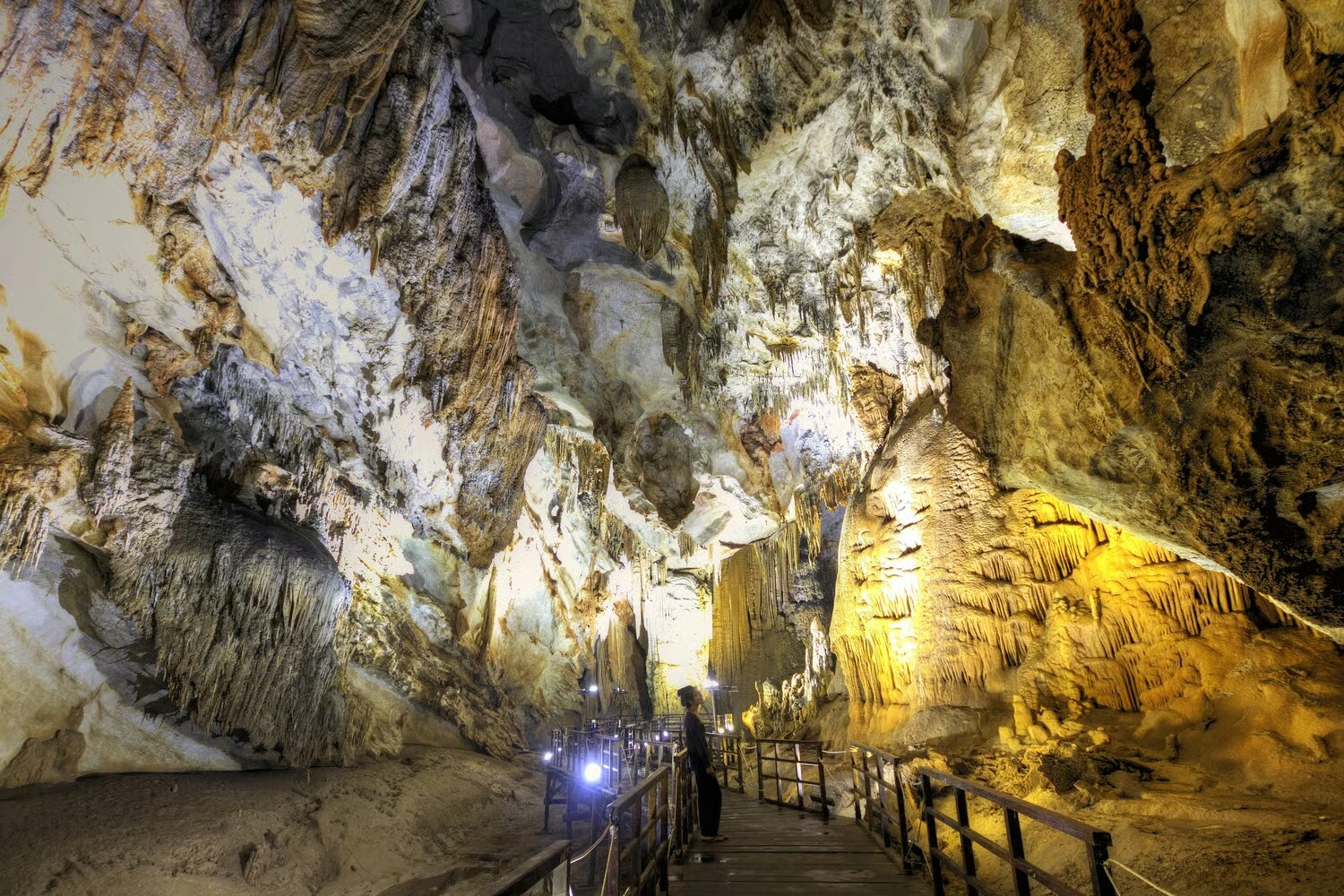
Paradise Cave was found in 2005 by a local resident out in the forests west of Phong Nha, a discovery that echoes how nearly every major cave in this park has come to light, someone who knew the land noticing what generations before had walked past 🌿. The British Cave Research Association took over from there, surveying the cave’s full extent between 2005 and 2010 (Source: South China Morning Post). It was BCRA’s own cavers who named it Thien Duong, Paradise, struck by the beauty of what their headlamps revealed. Access roads, staircases and a one-kilometre wooden walkway followed, and Paradise Cave opened to the public in September 2010 (Source: Oxalis Adventure). Two years later, in 2012, researchers described a species previously unrecorded in science inside the cave, a troglobiontic scorpion named Vietbocap thienduongensis, rarely found in other environments 🦂, a small, precise reminder that this is a living scientific site as much as a photogenic one.
Is Paradise Cave Really 31 Kilometres Long?
Yes. Its full surveyed length runs to roughly 31 kilometres, a figure that has held consistently since the British Cave Research Association completed its survey, marking it among the longest dry caves in Asia.
That characterisation traces directly back to BCRA’s exploration work rather than to tourism marketing invented after the fact, and it has held up consistently across the fifteen years since (Source: South China Morning Post). Inside, the scale matches the reputation. Chambers reach up to 100 metres high and 150 metres wide in places, dimensions that make the boardwalk section alone feel considerably larger than most visitors expect from a single kilometre of any cave anywhere. The length is genuine. What is worth understanding, before you plan a single day around it, is how much of that length an ordinary visit actually reaches.
Want to Explore Vietnam’s Natural Wonders?
Let us help you design the perfect itinerary through Phong Nha Ke Bang National Park and beyond.
How Much of That 31 Kilometres Can You Actually See?
On a standard ticket, one kilometre, roughly 3 percent of the cave’s full surveyed length, reached along a 3.5 metre wide wooden staircase and walkway.
This is the honest number that most write-ups skip past. Of Paradise Cave’s 31 kilometres, only the first kilometre is developed for general visitors, a well-built, well-lit, 3.5 metre wide path that never asks anything technical of you (Source: Oxalis Adventure). That leaves roughly 97 percent of the cave’s surveyed length sitting beyond the public route, unlit, unwalked by the vast majority of the people who buy a ticket. None of this makes the standard visit a lesser experience. The walkway kilometre holds highly popular photographed formations in the entire park, and most visitors leave genuinely moved by it. But arriving with the right expectation, one remarkable kilometre rather than a 31 kilometre expedition, changes how you experience it.

| Feature | Standard 1km Walkway | 7km Adventure Route |
|---|---|---|
| Terrain | Wooden boardwalk, stairs | Raw cave floor, underground river |
| Lighting | Fully illuminated | Headlamps only |
| Group Size | Unlimited (can be crowded) | Capped at 15 visitors per day |
| Physical Demand | Low to Moderate | High (trekking, kayaking, crawling) |
| Cost | 250,000 VND | 2,000,000 VND |
What Waits Beyond the Boardwalk?
Where the walkway ends, a gate opens onto raw cave floor, and the same space that felt lit and cathedral-calm a moment ago becomes a passage lit only by the beam on your own helmet 🔦.
A specialist 7 kilometre adventure route continues past the developed section through genuinely undeveloped passages, stream crossings, sections of kayaking across an underground river, and low crawls through spaces the boardwalk never has to navigate around, ending at a doline known as Heaven’s Well (Source: Phong Nha Viet; Phong Nha-Ke Bang National Park official site). This is not a longer version of the same walk. The light disappears almost entirely, the sound changes, water becomes something you move through rather than admire from a boardwalk 🛶.
The First Four Kilometres
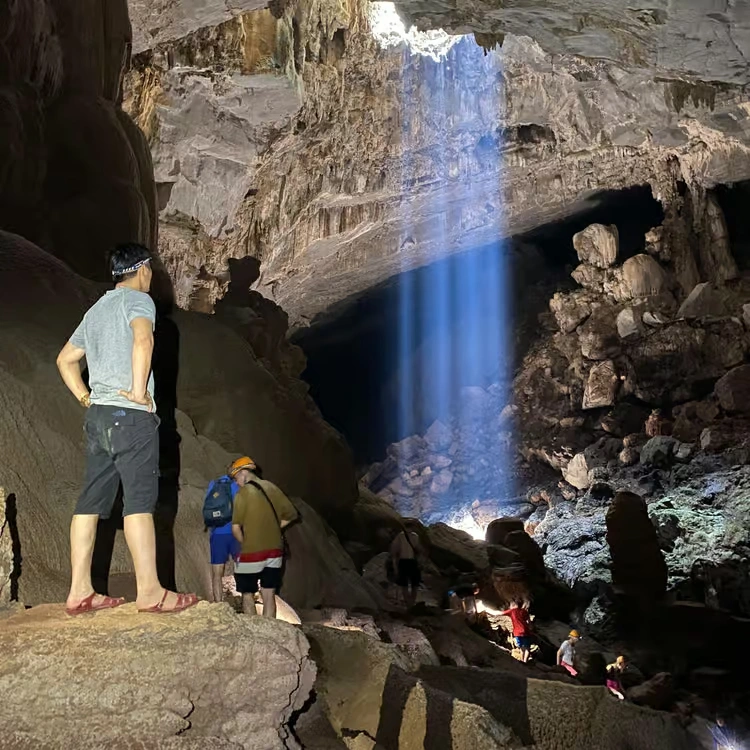
Past the boardwalk gate, the route continues on foot through the cave’s undeveloped floor, reaching roughly the four kilometre mark by late morning on the official park itinerary. This stretch stays largely dry underfoot, though the ceiling and walls close in noticeably compared with the wide, lit chambers behind you, and every formation here is exactly as centuries of dripping water left it. Guides pause often to point out shapes and mineral deposits a boardwalk crowd would walk straight past without noticing. A riverside stop around this point typically serves as the lunch break before the route continues into the cave’s wilder second half (Source: Phong Nha-Ke Bang National Park official site).
Heaven’s Well and the Walk Back
Beyond the four kilometre mark, the route crosses an underground river, by kayak on the official park tour, then continues roughly three more kilometres on foot to Heaven’s Well, a skylight doline where daylight finds its way down through the mountain above ☀️. Guides describe the well as a meeting point between the cave’s underground world and the open sky, and after time to rest, eat and take photographs, the full group retraces its steps back to the entrance (Source: Phong Nha Viet).

Case Study: A Real Step-by-Step Experience on the 7km Route
To give you a practical perspective, here is a step-by-step breakdown from one of our recent guests, Mark, who opted for the 7km adventure instead of the standard walkway:
- Step 1: Gearing Up (8:30 AM) – Mark’s group of 10 met the guide, strapped on headlamps, and bypassed the standard tourist barrier.
- Step 2: The Dark Zone (10:00 AM) – The artificial lights faded. Mark described navigating over jagged rocks and squeezing through tight corridors that felt entirely disconnected from the outside world.
- Step 3: The Kayak Crossing (12:00 PM) – After a quick field lunch, the group boarded small kayaks to cross a crystal-clear subterranean river. “The silence was heavy,” Mark noted.

- •
Step 4: Reaching Heaven’s Well (1:30 PM) – Arriving at the doline, a massive shaft of natural sunlight broke through the cave ceiling, illuminating a lush underground jungle patch. - •
Step 5: The Return (4:30 PM) – After trekking back, Mark noted that the physical demand was genuine, requiring good footwear and stamina, but the reward of seeing a pristine environment was immeasurable.
How Much Does It Cost to Visit Paradise Cave?
250,000 VND for a standard adult walkway ticket, or 2,000,000 VND per person for the full 7 kilometre adventure route 💵.
Standard walkway tickets cost 250,000 VND for adults and 125,000 VND for children between 1.1 and 1.3 metres tall, with children under 1.1 metres admitted free (Source: Vietnam Tourism). An optional electric buggy can cover the approach road for a small additional fee, though the walk itself is entirely manageable on foot for most visitors.
The 7 kilometre adventure route is priced separately at 2,000,000 VND per adult, run as a full day trip and capped at 15 visitors a day to keep the undeveloped sections of the cave from being worn down (Source: Phong Nha Viet; Laugh Travel Eat). The two tickets are entirely separate purchases, and booking the 7 kilometre route in advance is genuinely necessary given how few spaces exist each day.
Ready for a 7km Expedition?
Spaces for the wild adventure route are limited to 15 per day. Secure your spot in advance with Truly Voyage.
Should You Pair Paradise Cave with Anything Else?
Most visitors combine Paradise Cave with Dark Cave on the same day, since the two sit close enough together to make a genuinely full, contrasting day out.
Paradise Cave’s calm, dry, cathedral-like walkway and Dark Cave’s zipline, underground swim and mud bath sit close enough together geographically that combining them is a popular Phong Nha itinerary among first-time visitors. Each has its own dedicated guide, and its own separate ticket, in this cluster, our Dark Cave guide covers the zipline and mud bath in full, while our full cave roundup for Phong Nha compares the park’s major caves side by side if Son Doong or Tu Lan are also on your list.

Frequently Asked Questions About Paradise Cave
Is Paradise Cave really the longest dry cave in Asia?
Quick Answer: Yes. Its surveyed length of around 31 kilometres is widely and consistently reported among the longest dry caves in Asia, a claim that traces to British Cave Research Association exploration work between 2005 and 2010.
How much of Paradise Cave can visitors actually see?
Quick Answer: The standard walkway covers about 1 kilometre of the 31 kilometre cave, roughly 3 percent of its full surveyed length, reached along a 3.5 metre wide wooden staircase.
Can you go beyond the walkway?
Quick Answer: Yes, through a separate 7 kilometre adventure tour, capped at 15 people a day, priced apart from the standard ticket and booked as a full day trip.
Can you visit Paradise Cave without a tour?
Quick Answer: Yes, for the standard 1 kilometre walkway, which has its own ticket counter and requires no guide. The 7 kilometre adventure route is different, it requires a licensed guide and advance booking.
How do you get to Paradise Cave from Dong Hoi?
Quick Answer: By road, roughly an hour’s drive from Dong Hoi into the national park. Our How to Go to Phong Nha Ke Bang National Park guide covers routes and timing from Dong Hoi, Hanoi and Hue in full.
Which is better, Phong Nha Cave or Paradise Cave?
Quick Answer: They are different experiences rather than better or worse versions of each other. Phong Nha Cave is explored by boat along an underground river, while Paradise Cave is a dry, walkway-based cave.
What should you wear inside Paradise Cave?
Quick Answer: Vani Tips: wear proper shoes even for the standard walkway 🥾. The staircase is long enough that sandals become uncomfortable well before the end. For the 7 kilometre route, quick-dry clothing and shoes with real grip matter considerably more.
Conclusion
Paradise Cave earns its reputation honestly, a genuine 31 kilometre cave system, discovered in 2005 and fully surveyed by British cavers within five years. What most marketing leaves out is that an ordinary ticket buys you roughly 3 percent of that length, one kilometre of wide, lit, cathedral-scale walkway, while the remaining 97 percent stays reachable only through a separate, considerably wilder 7 kilometre route capped at 15 visitors a day. Neither version is the lesser one. Knowing which you are booking, and what each genuinely costs, is what turns a potentially disappointing surprise into a choice you make on purpose. Book the standard walkway if an easy, unforgettable cathedral of stone is what you want from your day, or ask Truly Voyage about securing one of the 15 daily 7 kilometre adventure spots if the raw, unlit 97 percent is the version of Paradise Cave you actually came for.
Start Your Adventure with Truly Voyage
Whether it is the stunning walkways of Paradise Cave or a custom trip across Vietnam, we are here to craft your ideal holiday.
Further Reading & Resources
- South China Morning Post — discovery history, BCRA survey, and the longest dry cave in Asia claim. Direct Link
- Oxalis Adventure — walkway width, opening date, and the 1km versus 7km split. Direct Link
- Vietnam Tourism — current standard walkway ticket pricing. Direct Link
- Phong Nha Viet — the 7km adventure route itinerary and Heaven’s Well. Direct Link
- Phong Nha-Ke Bang National Park official site — official 7km tour schedule and pricing. Direct Link
- Laugh Travel Eat — the 15-visitor daily cap on the 7km route. Direct Link

Vani is the Founder and Lead Travel Designer at Truly Voyage. With over a decade of experience and a deep passion for her Vietnamese heritage, she specializes in crafting bespoke, unhurried itineraries. Vani is dedicated to helping travellers experience the authentic soul of Southeast Asia with absolute financial security and 24/7 on-ground support.
0 Comment