
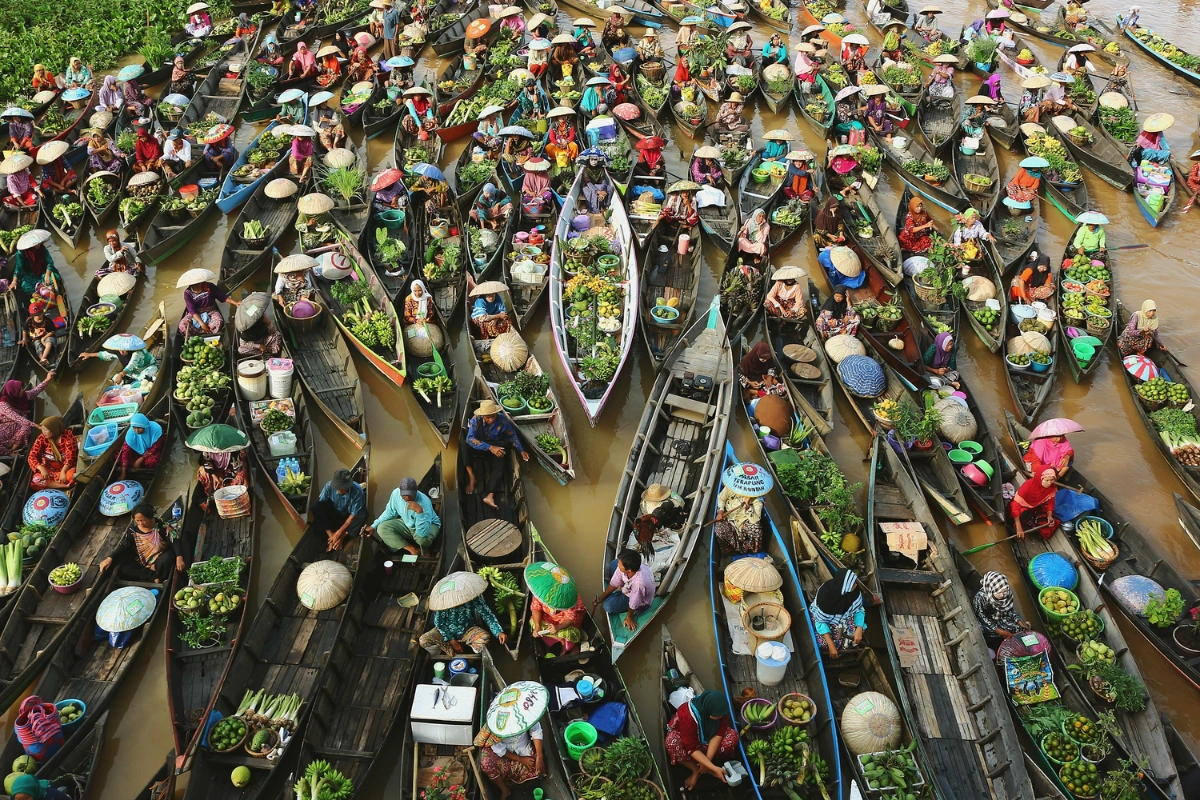


Which floating market is worth a 5am alarm in 2026? Cai Rang 🚤. Not because it is perfect, but because the other two are smaller. I checked Cai Rang, Cai Be and Long Xuyen against boat counts, dated interviews and local press instead of tour-listing copy, and no other topic in this cluster shows a wider gap between sources. Booking pages still describe all three as busy. Vietnamese newspapers, an Al Jazeera feature and named traders describe two of them as close to gone. I am Vani, founder of Truly Voyage, and this is the comparison I would want before giving a morning to a boat. Every count below carries its year, because a boat count is a moving number and the older ones are the ones still repeated online 📊.
Table of Contents
ToggleWhich Floating Market Actually Has the Most Boats Left?
Cai Rang, by a wide margin. Sources cite roughly 100 to 250 boats there today against 400 to 600 at its peak, and it is also the easiest of the three to reach, about 5 kilometres and 15 minutes by motorbike from central Can Tho, or about 30 minutes by boat from Ninh Kieu pier (Source: Can Tho Portal). A Tuổi Trẻ reporter measured about 6 kilometres of river between the two in July 2024.
| Market | Peak | Latest counts I found | What the boats are |
|---|---|---|---|
| Cai Rang | 500 to 600 per Can Tho’s culture and tourism department, more than 400 in the 1990s per Al Jazeera | 200 to 250 in 2023, over 100 merchant boats in July 2024, about 200 vessels in February 2025, under 250 trading boats in July 2025 | Wholesale sampans, plus a large and growing fleet of tourist and food boats |
| Cai Be | Regularly 80 to 100, hundreds at the top | About 30 in 2018, over 10 moored in 2023, 15 to 20 in July 2025, a few boats selling to tourists in December 2025 | Mostly moored boats and tourist service, no organic wholesale |
| Long Xuyen | Boats once filled a river stretch about a kilometre long | Under 20 produce boats in April 2025, 23 boats in a late-2024 count of which 6 traded produce | Small wholesale trade in coconuts and root crops, plus boats used as homes |
Table 1: Detailed 2024-2026 boat counts and status for Cai Rang, Cai Be, and Long Xuyen based on local press and field data.
(Sources: Tuổi Trẻ, Al Jazeera, VTV, Vietnamese Wikipedia, Tiền Phong, Báo Vĩnh Long).
How Many Boats Does Cai Rang Really Have?
Between 100 and 250, depending on who is counting and what counts. The spread is a method problem, not a contradiction. Officials from the Cai Rang district and the city’s culture and tourism department counted 200 to 250 boats and vessels in 2023, a fall of 50 to 60% from a peak of 500 to 600 (Source: Tuổi Trẻ). A Tuổi Trẻ reporter who visited in July 2024 counted only a little over 100 merchant boats and found small tourist boats outnumbering them. Al Jazeera’s February 2025 figure of about 200 vessels is fewer than half its 1990s peak, and it notes that tour boats make up a significant part of the traffic. The lowest figure I found, 50 to 100 merchant boats, comes from a 2026 commercial guide that cites no count, so I treat it as a floor, not a fact (Source: Vietnamtourism.com). Do the arithmetic on the reporter’s numbers and the decline from 600 is about 83%, which is why the honest answer is 100 to 250 and not a single number.
What the boats do matters more than how many there are 🍍. Al Jazeera found sampans still being loaded with produce from larger wholesalers for onward sale to land markets, and it also found that trade at Cai Rang is over by 8am (Source: Al Jazeera). That is a working market in shrunken form, wrapped in tourism. For timing the visit around it, my Mekong day trip versus overnight guide shows why a 7:30am arrival misses most of it, and the Cai Rang floating market guide covers prices and safety.
💡 Vani Tip: when anyone quotes a boat count to you, ask what is being counted. A figure that includes tourist and food boats can be twice the number of merchant boats, and the merchant boats are the market.
Which Province Is Each Market in Now?
All three sit inside the provinces redrawn in mid-2025, and older province names still circulate in competitor content, so here is the current map in one place 📍. The merged provinces began operating on July 1 2025, and the map of 34 provinces was published on June 12 (Source: Dân Trí).
| Market | Province before mid-2025 | Province now | From central Ho Chi Minh City |
|---|---|---|---|
| Cai Rang | Can Tho | Expanded Can Tho, which absorbed Hau Giang and Soc Trang | About 170 km, about 2 hours by car on the expressway, 2.5 to 3 hours in a tour van |
| Cai Be | Tien Giang | Dong Thap, which absorbed Tien Giang | About 2 to 2.5 hours in a tour van |
| Long Xuyen | An Giang | An Giang, which absorbed Kien Giang | 187 km, about 4 hours 20 minutes by car |
Table 2: Updated provincial locations and estimated travel times from Ho Chi Minh City as of the mid-2025 map update.
(Sources: Dân Trí, TNK Travel, Báo Xây dựng). See my Mekong Delta transport guide for detailed logistics to Cai Rang.
Vietnamese Wikipedia now lists the Cai Be market under Cai Be commune in Dong Thap (Source: Vietnamese Wikipedia). Some English coverage gets it wrong. Al Jazeera places Cai Be in neighbouring Ben Tre, when it belongs to the old Tien Giang, so a reader who searches by province name can end up in the wrong place.
Did Cai Be Floating Market Actually Close?
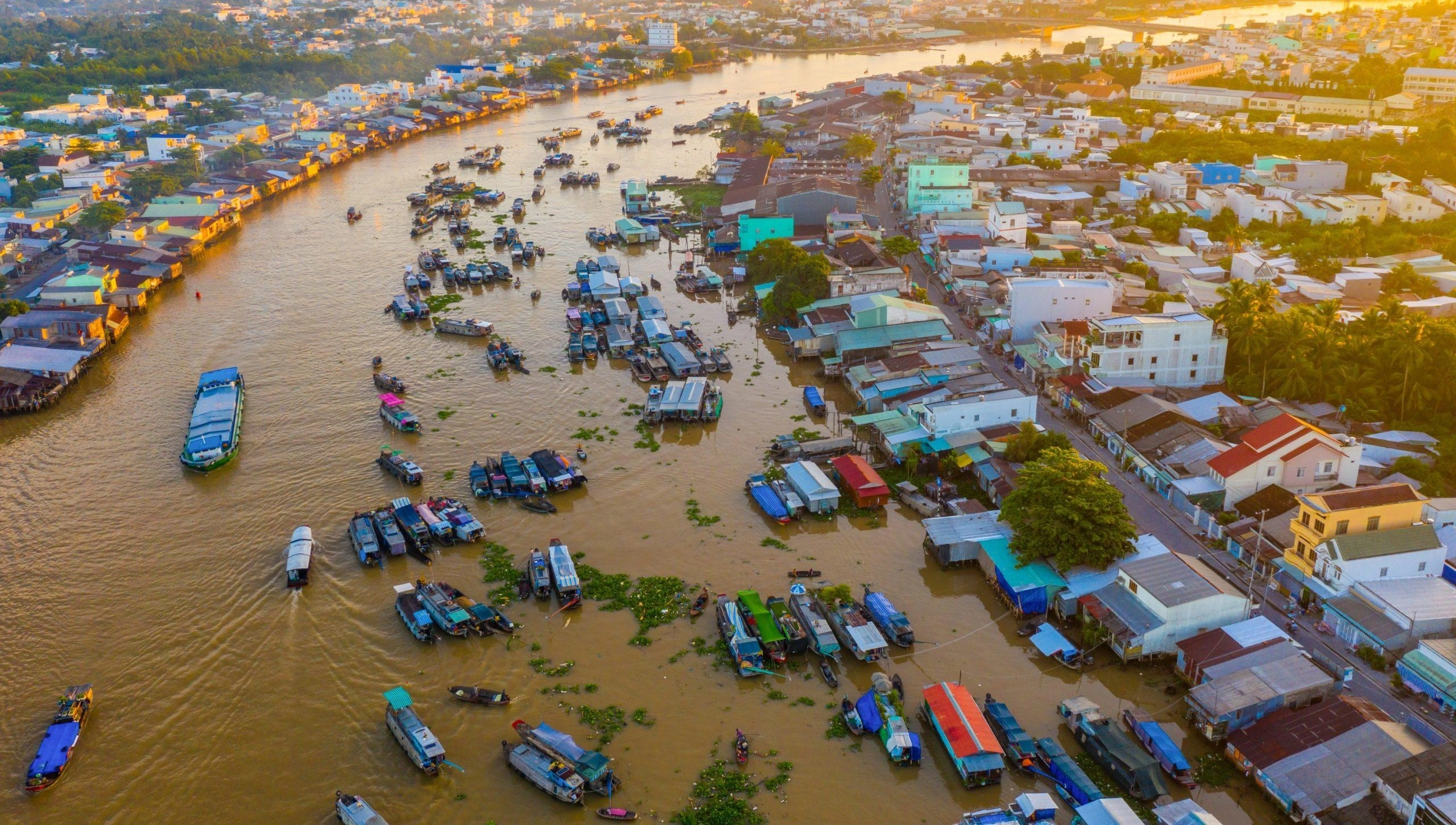
As an organic trading market, effectively yes ⚓. Al Jazeera reported in February 2025 that Cai Be closed for good in 2021, and Tuổi Trẻ found only scattered boats there in 2024. The December 4 2025 revival was an artificially staged festival event, not a sign that organic trading returned, and platforms that still market Cai Be as active deserve real scepticism.

What Do the Sources Actually Say?
They disagree on the word closed, and agree on the substance. Al Jazeera says the market vanished and closed for good in 2021 (Source: Al Jazeera). Vietnamese local press describes a slower fade with a few boats left. Tuổi Trẻ counted more than 10 boats moored along a 2 kilometre river stretch in 2023, and its July 2024 visit found only scattered boats, with the Cai Be culture office blaming road trade for the loss of merchants (Source: Tuổi Trẻ). VTV reported in July 2025 that only about 15 to 20 boats were operating, a fall of more than 90% from the peak (Source: VTV). Báo Vĩnh Long, in December 2025, wrote of a few boats selling to tourists (Source: Báo Vĩnh Long).
Read together, Cai Be has not lost every boat. It has lost the market. A handful of moored boats and tourist service craft is not wholesale trade, and TNK’s own two-day itinerary, updated in August 2026, says improved roads moved much of the wholesale trade ashore and that a few vendors still trade the old way (Source: TNK Travel). A local project to save the market was drawn up in 2017 with a vision to 2025 and did not reverse the decline (Source: SGGP).
What Was the December 2025 Revival?
A festival feature 🎊. Dong Thap staged a recreation of the Cai Be floating market inside the sixth Dong Hoa Hiep Ancient Village culture and tourism festival, which ran from December 3 to 7 2025, and the commune opened it on December 4 with boats, goods, folk music on the river and traditional games (Sources: SGGP, Tuổi Trẻ). It was billed as the special feature of that year’s festival and ran alongside it for the festival’s duration (Source: Người đưa tin). The festival is annual, but I found no announcement that the floating market will return as a permanent daily event, and a reader comment on one report simply hoped it would last beyond the festival days (Source: Thời báo Kinh tế Sài Gòn). Enjoy it if your dates fall in early December. Do not read it as organic trade coming back.
Who Still Sells It as Active?
Some booking and guide sites. A Tien Giang travel guide updated in April 2026 calls Cai Be a traditional market where trading takes place on boats, open from 5:00am to 6:00pm daily (Source: Mekong Smile). A national airline’s guide gives 5:00 to 6:00am as the time when boats are actively trading (Source: Vietnam Airlines), and my September 23 fact-check found an English booking platform describing it as an active hub, busiest between 4:00 and 6:00am (Source: Klook). None of those pages gives a boat count or a dated visit. The operator with the most candid page, TNK, does not oversell it.
💡 Vani Tip: test any Cai Be listing with two questions. How many trading boats did your guide see last week, and what is the date of the photo on the page? If either answer is vague, assume you are buying the river cruise, the cathedral and the workshops, which are worth having, not a market.
Is Long Xuyen Worth the Extra Distance?
Only if you are already in An Giang. A named trader interviewed in 2025 put the number of produce boats at under 20 and predicted that in one to two more years no one would trade there. It is technically still floating, neither closed nor moved onto land, but it is on the edge of disappearing, and it sits 187 kilometres and roughly 4 hours 20 minutes from Ho Chi Minh City with no continuous expressway link, farther than Can Tho.
What Did the Traders Say in 2025?

The clearest account is Tiền Phong’s April 9 2025 report. Nguyễn Tấn Lộc, 64, from Châu Phú in An Giang, has worked the Long Xuyen market for 40 years dealing in sweet potato and cassava, and once ran three boats of 15 to 20 tonnes each 🍠. He moved onto land about a year before the interview and rented a warehouse. He told the reporter that although the pier looks full of boats, fewer than 20 actually trade agricultural produce, and that he expected no one to come and trade there within one to two years (Source: Tiền Phong). A coconut trader interviewed at the same pier, Lê Văn Sơn, 54, said a cargo that once sold in one or two days now takes a week, and that buyers no longer come out each morning because trucks deliver to their doors.
A second voice agrees on the count. Nguyễn Văn Sơn, 70, has ferried traders and visitors out to the market from the Ô Môi ferry landing for 35 to 40 years, and he told a Tuổi Trẻ women’s edition reporter in 2025 that fewer than 20 boats remain (Source: Tuổi Trẻ). He told Tiền Phong that the dozens of boats moored along the bank are mostly homes, since their owners now trade from land, and that fewer than a hundred boats of any kind come and go (Source: Tiền Phong). Two named men, one a trader and one a boatman, give the same number from different sides of the river.
Is It Closed or Just Very Small?
Small, not closed. A tourism workshop count reported by Báo Vĩnh Long in December 2025 found 23 boats at the market, of which 6 traded produce and 17 were residences, with 3 food and drink boats among them. The reporter’s boat moored next to a coconut boat from Soc Trang that had come upriver to sell its load, and morning food boats worked the water at first light 🍜. Visitors are more numerous at weekends, and rubbish near the ferry landing is the main complaint (Source: Báo Vĩnh Long). That is a real, if reduced, trade. A tour operator in that report calls it the only market that is still crowded. The count does not support crowded, though it does support real. A 2026 commercial guide goes further and calls it the most authentic in Vietnam, with few tourists and real trade, and it is worth reading that as praise for what the place is, which is quiet and genuine, and not as a promise of activity (Source: Vietnamtourism.com).
How Far Is Long Xuyen, Really?
Farther than most itineraries admit. The route from central Ho Chi Minh City via National Highway 1A and National Highway 80 runs 187 kilometres and about 4 hours 20 minutes by car (Source: Báo Xây dựng), and a July 2026 guide puts it at 4.5 to 5 hours depending on traffic (Source: Vietmaptravel). No continuous expressway serves the run yet. The Chau Doc to Can Tho to Soc Trang expressway that will help is still being built. Its An Giang section had a technical opening on December 19 2025 (Source: Cổng thông tin An Giang), but on September 12 2026 the Can Tho-managed part was only about 58% complete (Source: Báo Chính phủ). From Cai Rang it is about 60 kilometres upstream (Source: Tiền Phong), and Chau Doc is about 61 kilometres and roughly 1.5 hours away by road (Source: Vinamoving).
💡 Vani Tip: treat Long Xuyen as a stop, not a destination. If you are already in Chau Doc for the floating villages, the Sam Mountain temples or Tra Su, add it on a weekend morning and be at the Ô Môi landing before sunrise, because the market empties quickly once the boats have sold.
Which One Should You Actually Choose?
Cai Rang. Do not treat Cai Be or Long Xuyen as authentic escapes from a touristy Cai Rang, because both currently have less real organic trading activity than Cai Rang. The honest hierarchy runs Cai Rang first, Cai Be as a staged photo stop, Long Xuyen only for travellers specifically chasing a market on the verge of vanishing.
| Your situation | Choose | Why | Catch |
|---|---|---|---|
| First floating market, limited time | Cai Rang | Most boats, real wholesale, 5 km from Can Tho | Tourist boats are a large share, and trade ends by about 8am |
| Upper delta cruise, no market expected | Cai Be as a stop | River, cathedral, workshops, ancient house | Not a working market |
| Already in Chau Doc or Tra Su | Long Xuyen as an add-on | Small but real wholesale trade, few tourists | 23 boats in a late-2024 count, 6 trading produce |
| You want to see one before it goes | Long Xuyen | Traders themselves expect it to end within a couple of years | 187 km from Ho Chi Minh City |
| You want a quieter alternative to Cai Rang | Neither | Both have less trading, not more authenticity | Phong Dien has under a dozen boats |
Table 3: Honest recommendations on which floating market to choose based on your specific travel situation.
Ready to Experience the Authentic Mekong Delta?
Join our expertly crafted tours to see the real floating markets before they vanish.
Real Case Study: A Two-Day Market Comparison Experience
To show how this looks on the water, consider Sarah and Mark, a couple from the UK who booked a customized delta trip with us in early 2026. They wanted to witness “authentic trading” and initially requested Cai Be.
- Step 1: The Upper Delta Test. We arranged a stop at Cai Be during their transfer to Can Tho. Arriving at 8:30 AM, they saw beautiful riverside churches and enjoyed the fruit orchards, but counted exactly zero wholesale merchant boats actively trading.
- Step 2: The Early Alarm. The next morning, they took our advice for Cai Rang. Leaving Ninh Kieu pier at 5:15 AM in a small sampan.
- Step 3: The Real Trade. By 6:00 AM, they were weaving through over 100 large wooden barges. Mark bought a pineapple directly from a merchant who tossed it down to their boat, while Sarah enjoyed a hot bowl of Hủ Tiếu cooked on a moving rowboat.

Their takeaway? The “touristy” market was the only one that actually functioned as a market.
Why Is the Touristy One Still the Recommended One?
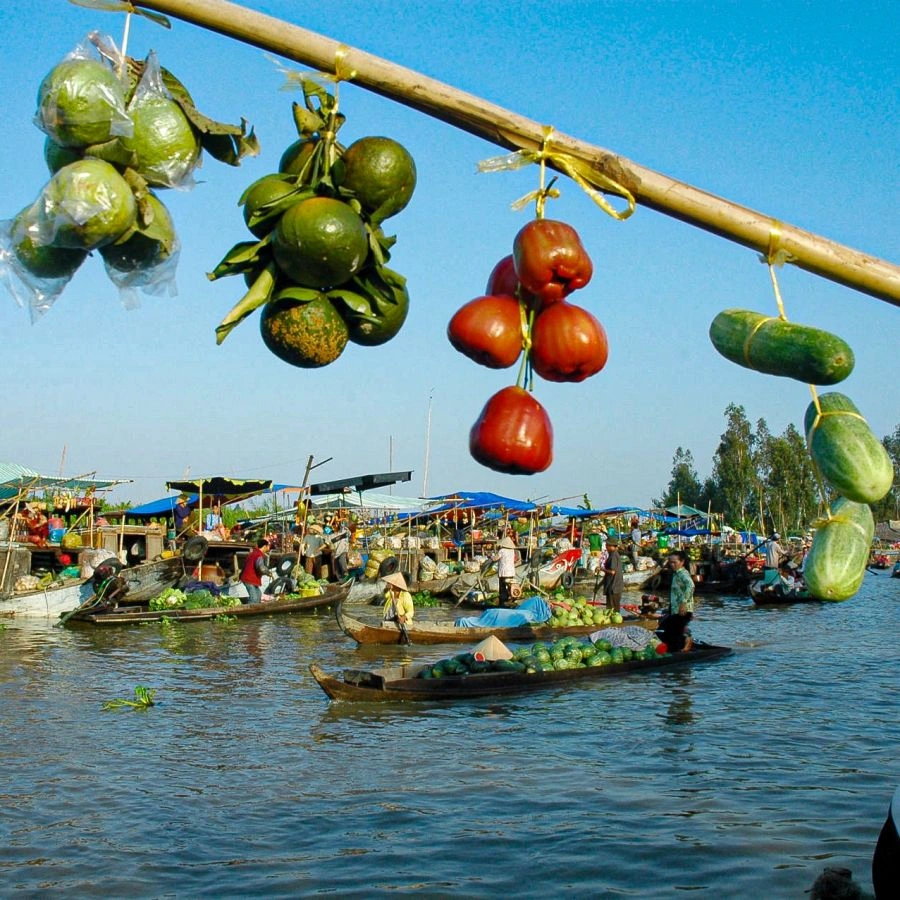
Because scale is what makes a floating market look like a market. Cai Rang has the most merchant boats, the most produce moving between them and the strongest tourism infrastructure, and it is the one Vietnamese press still describes as holding its character while others have lost it (Source: Báo Văn hóa). Its problems are real. A city councillor told Can Tho’s council in July 2024 that visitors complained of little beyond a few boats and inflated prices (Source: Tuổi Trẻ), and other voices in Tuổi Trẻ blamed the concrete embankments for its lost appeal (Source: Tuổi Trẻ). A November 2025 visitor review on Wanderlog found trade limited to wholesale and food and drink boats (Source: Wanderlog). All of that is consistent with a market that is smaller than its photographs, and none of it makes the other two better.
The alternatives cannot offer what visitors imagine. Al Jazeera’s feature counted only two of the delta’s 10 major markets still retaining any significant presence, and said Phong Dien, the small market near Can Tho that some guides recommend as a quieter option, had shrunk to fewer than a dozen boats (Source: Al Jazeera). If quiet is what you want, ask us for the smallest boat and the earliest departure at Cai Rang. Neither of the other two markets gives you a quieter version of the same scene, because both have less trade to watch.
💡 Vani Tip: book Cai Rang from Can Tho, leave Ninh Kieu pier by 5:30am, and read the Cai Rang sunrise tour guide before you choose an operator. The market is over by about 8am, so the timing decides more than the choice of market ⏳.
Where Does the Hierarchy Bend?
In one place, and it is worth being exact. Ranked by real trading, Long Xuyen sits above Cai Be, because its traders still move coconuts and root crops by the boatload while Cai Be has a few tourist boats. Ranked by what a first-time visitor can reach and enjoy, Cai Be sits above Long Xuyen, because it is a 2 to 2.5 hour drive from Ho Chi Minh City and a working river cruise with a cathedral and workshops, whereas Long Xuyen is more than 4 hours away and offers a few dozen boats. I rank on the second measure for most readers and on the first only for someone who has already seen Cai Rang and specifically wants the thin end of the trade. Where you sleep changes this too: a stay from my homestay guide in the upper delta makes Cai Be a short river trip, and a base in Chau Doc makes Long Xuyen one.
💡 Vani Tip: choose by your second morning, not your first. If you have two, spend the first at Cai Rang and the second on a Cai Be cruise or a Chau Doc trip that includes Long Xuyen. Never spend your only morning on the two smaller markets.
Frequently Asked Questions About Floating Markets in the Mekong Delta
Which floating market is most recommended?
Quick Answer: Cai Rang, because it still has the most merchant boats, about 100 to 250, and is the easiest to reach.
Is Cai Be floating market still open?
Quick Answer: Not as an organic market. Al Jazeera reports it closed for good in 2021, Vietnamese press counts about 10 to 20 boats in 2023 to 2025, and a staged version ran on December 3 to 7 2025.
How many boats are at Cai Rang floating market?
Quick Answer: Between 100 and 250 depending on the count, against a peak of 400 to 600. A 2024 reporter counted just over 100 merchant boats.
Is Long Xuyen floating market worth visiting?
Quick Answer: Only if you are already in An Giang. A late-2024 count found 23 boats, of which 6 traded produce.
How far is Long Xuyen from Ho Chi Minh City?
Quick Answer: About 187 kilometres and 4 hours 20 minutes by car, or 4.5 to 5 hours in 2026 traffic, with no continuous expressway.
Which floating market is the least touristy?
Quick Answer: Long Xuyen has few visitors and Cai Be has little left to visit. Neither is more authentic than Cai Rang in trading terms.
What time should you go to a floating market?
Quick Answer: Cai Rang is best between about 5:00 and 6:30am, and Al Jazeera found trade over by 8am.
Which province is Cai Be in now?
Quick Answer: Dong Thap. It was in Tien Giang before the mid-2025 mergers, and one English feature wrongly places it in Ben Tre.
Conclusion
Book Cai Rang, leave Ninh Kieu at 5:30am, and treat every other floating market as a bonus you verify by boat count and date before you pay for it. If a listing cannot tell you how many merchant boats were on the water last week, it is selling scenery. Scenery is fine, and it is not a market.

Plan Your Perfect Mekong Itinerary Today
Don’t leave your morning to chance. Let us organize a seamless, authentic journey.
Further Reading & Resources
- Can Tho Portal: Cai Rang Floating Market — 5 km, 15 minutes by motorbike and 30 minutes by boat. Direct Link
- Tuổi Trẻ: Ngắm chợ nổi Cái Răng thời trên bến dưới thuyền — the peak of 500 to 600 and the 2023 count of 200 to 250. Direct Link
- Tuổi Trẻ: Chợ nổi: thay đổi hay lụi tàn — district officials’ Cai Rang figures and the Cai Be stretch of 10 moored boats. Direct Link
- Tuổi Trẻ: Chợ nổi Cái Răng giờ đã khác, chợ nổi Cái Bè chìm dần — the July 2024 count of over 100 merchant boats. Direct Link
- Tuổi Trẻ: Chợ nổi miền Tây nổi theo cách nào — embankments and the case for change at Cai Rang. Direct Link
- Tuổi Trẻ: Chợ nổi Cái Răng chẳng có gì ngoài mấy chiếc ghe — the July 2024 council criticism of Cai Rang. Direct Link
- Al Jazeera: Business is not good — Cai Rang at about 200 vessels, Cai Be closed for good in 2021. Direct Link
- VTV: Chợ nổi miền Tây trước nguy cơ mai một — 2025 counts for Cai Rang and Cai Be. Direct Link
- Vietnamese Wikipedia: Chợ nổi Cái Bè — historic and 2017 to 2018 counts and the current commune. Direct Link
- SGGP: Mai một chợ nổi Cái Bè — the 2017 conservation project. Direct Link
- SGGP: Đồng Tháp: Khai mạc Chợ nổi Cái Bè — the December 4 2025 opening. Direct Link
- Tuổi Trẻ: Đồng Tháp tái hiện chợ nổi Cái Bè — the staged recreation. Direct Link
- Người đưa tin: Không gian chợ nổi và làng cổ ở Đồng Tháp sống dậy trong không khí lễ hội — the recreation ran through the festival. Direct Link
- Thời báo Kinh tế Sài Gòn: Tái hiện chợ nổi Cái Bè — the festival feature and reader comment. Direct Link
- Tiền Phong: Bài 3: Thoi thóp chợ nổi Long Xuyên, Ngã Năm — the named traders and the under-20 count. Direct Link
- Tuổi Trẻ: Sinh kế chìm theo đà suy tàn của chợ nổi — the ferryman’s account. Direct Link
- Báo Vĩnh Long: Chợ nổi Long Xuyên, nơi thời gian ngừng lại — the 23-boat count and the December 2025 visit. Direct Link
- Báo Văn hóa: Khi chợ nổi không còn nổi — Cai Rang as the last market keeping its character. Direct Link
- Vietnamtourism.com: Can Tho floating market complete 2026 guide — the low Cai Rang estimate. Direct Link
- Vietnamtourism.com: Vietnamese guide to the best floating markets of 2026 — the 2026 view of Long Xuyen. Direct Link
- Wanderlog: Can Tho attractions — a November 2025 visitor review of Cai Rang. Direct Link
- Mekong Smile: Cai Be Floating Market — an April 2026 guide describing Cai Be as active. Direct Link
- Vietnam Airlines: Floating markets in Vietnam — a guide giving Cai Be trading hours. Direct Link
- Klook: Cai Be Floating Market — the booking-platform description of Cai Be. Direct Link
- TNK Travel: Mekong Delta 2 days 1 night — the Cai Be pier time and the candid market note. Direct Link
- Dân Trí: Bản đồ chi tiết 34 tỉnh, thành mới — the 2025 provincial mergers. Direct Link
- Báo Xây dựng: Từ TPHCM đi An Giang bao nhiêu km — 187 km and about 4 hours 20 minutes. Direct Link
- Cổng thông tin An Giang: Thông xe toàn tuyến cao tốc Châu Đốc-Cần Thơ-Sóc Trăng — the December 2025 technical opening of the An Giang section. Direct Link
- Vietmaptravel: TPHCM đi An Giang bao nhiêu km — the 2026 travel-time estimate. Direct Link
- Vinamoving: Đoạn đường từ TPHCM đi An Giang — the Long Xuyen to Chau Doc distance. Direct Link
- Báo Chính phủ: Phó Thủ tướng Thường trực Phạm Gia Túc làm việc về tình hình triển khai các dự án giao thông trọng điểm tại ĐBSCL — the unfinished Chau Doc expressway. Direct Link

Vani is the Founder and Lead Travel Designer at Truly Voyage. With over a decade of experience and a deep passion for her Vietnamese heritage, she specializes in crafting bespoke, unhurried itineraries. Vani is dedicated to helping travellers experience the authentic soul of Southeast Asia with absolute financial security and 24/7 on-ground support.
0 Comment