

 By Vani
Mosquitoes in Vietnam pose a daytime dengue risk year-round in cities and the southern delta, while malaria is rare along classic tourist routes. Pack a 100 ml bottle of 20% Picaridin or 20%–30% DEET for rural excursions, or buy local Soffell (13% DEET) and Remos (15% DEET) at Vietnamese pharmacies for $1.20–$2.85 USD.
Travellers planning their first journey through Hanoi, Ha Long Bay, Hoi An, and the Mekong Delta often worry whether tropical mosquitoes will spoil evening walks—or whether they need prescription antimalarial tablets for a two-week holiday. In practice, mosquito activity in Vietnam shifts noticeably with latitude, altitude, and rainfall: a dry January week in Hanoi or misty Sapa feels completely different from a humid July afternoon along a shaded Ben Tre coconut canal.
This guide breaks down realistic mosquito exposure across Vietnam’s main regions, explains why daytime-biting dengue vectors matter far more than malaria for standard itineraries, compares EPA-registered skin repellents against local Vietnamese pharmacy brands, and outlines clear medical steps—alongside our Vietnam travel sickness and hospitals guide—in case you develop a tropical fever.

How Bad Are Mosquitoes in Vietnam by Region, Season, and Disease Risk?
Dengue fever transmitted by daytime-biting urban and delta mosquitoes is the primary concern for travellers in Vietnam, whereas malaria is largely confined to remote forested borderlands.
When visitors picture Southeast Asian tropics, many think first of malaria. On standard cultural itineraries—including Hanoi, Ha Long Bay, Hue, Da Nang, Hoi An, Ho Chi Minh City, and coastal resorts—malaria risk is negligible, whereas rural highland borderlands and overnight forest treks warrant a pre-trip travel-clinic consultation (Source: Government of Canada). Japanese encephalitis also circulates in rural rice-growing and pig-farming districts, primarily affecting long-stay rural visitors rather than short urban hotel stays (Source: Government of Canada).
The everyday culprit across Vietnamese cities, garden cafes, and river towns is the Aedes aegypti (and Aedes albopictus) mosquito, which spreads dengue virus. Unlike night-biting Anopheles mosquitoes associated with malaria, dengue mosquitoes feed predominantly during daylight hours—peaking in the two hours after sunrise and the hours before sunset—and breed in tiny pockets of clean standing water such as courtyard flowerpots, roof drains, and shaded planters (Source: Government of Canada).
Seasonal weather shapes how many mosquitoes you actually encounter, as detailed in our best time to visit Vietnam guide and monsoon season in Vietnam guide. Cool northern winters (December–February in Hanoi) slow mosquito breeding substantially, while hot, wet months (May–October in the North and South; September–December along the Central Coast) bring peak activity. Historically, after bacteriologist Alexandre Yersin explored the cool Lâm Viên Plateau in 1893, Da Lat—and later northern hill towns such as Sapa—developed as high-altitude retreats above the humid lowland mosquito belt (Source: Wikipedia).

| Region | Peak Bite Months | Primary Risk & Advice |
|---|---|---|
| North Cities | May–Oct wet heat; low Dec–Feb | Daytime Hanoi dengue; spray at dawn & dusk |
| Highlands | Jun–Sep rainy valleys | Cooler Sapa & Da Lat; cover ankles on trails |
| Central Coast | Sep–Dec rains; warm Apr–Aug | Hoi An & Hue dengue; use evening skin spray |
| South & Delta | Year-round; peaks May–Nov | Saigon & Mekong dengue; reapply at midday |
| Forest Border | May–Nov humid forest season | Ask a travel clinic on malaria & encephalitis |
How to Recognize Dengue Fever Symptoms and Safe First-Day Care
Dengue symptoms typically appear four to ten days after an infective bite—marked by sudden high fever, pain behind the eyes, and intense joint aches that require paracetamol, hydration, and prompt blood testing rather than aspirin or ibuprofen.

Spotting the Signs After a 4-to-10-Day Incubation Window
According to the World Health Organization, dengue does not cause immediate illness the night you are bitten: symptoms usually begin 4 to 10 days after infection and last for 2 to 7 days (Source: World Health Organization). Unlike a gradual head cold with a runny nose, dengue typically begins abruptly with:
- Sudden high fever: Spiking quickly up to 40°C (104°F) (Source: World Health Organization).
- Retro-orbital headache: Sharp, throbbing pressure directly behind the eyes (Source: World Health Organization).
- Severe muscle and joint pain: So pronounced that American physician Benjamin Rush famously applied the name “break-bone fever” in his 1789 report on the 1780 Philadelphia dengue epidemic (Source: Wikipedia).
- Nausea, vomiting, swollen glands, or a flat red rash: Often appearing several days into the illness (Source: World Health Organization).
If these symptoms appear during or shortly after your trip, consult our directory of international hospitals and clinics in Vietnam for verified addresses and emergency numbers in Hanoi, Da Nang, and Ho Chi Minh City.
Ten Safe Steps to Take—and Nine Mistakes to Avoid—If Fever Starts
Ten practical steps to follow right away:
- Use paracetamol (acetaminophen) for fever and pain: Paracetamol lowers temperature and relieves body aches without impairing blood clotting (Source: World Health Organization).
- Hydrate steadily with oral rehydration salts (Oresol) and clear fluids: Dengue can cause plasma leakage and rapid dehydration; alternate bottled water, pharmacy Oresol packets, and fresh coconut water.
- Visit an English-speaking international hospital or clinic early: Facilities such as Vinmec, Hanoi French Hospital, or Family Medical Practice can run a rapid NS1 antigen and platelet blood panel rather than leaving you guessing.
- Alert your local guide or operations contact: If travelling with Truly Voyage, notify your guide or our Hanoi desk so we can help arrange transport to an international clinic, translate at a pharmacy, and adjust upcoming daily sightseeing at a sensible pace.
- Rest in an air-conditioned room: Cancel strenuous walking or cycling days so your body can recover calmly.
- Eat gentle, salted broths and porridge: Warm Vietnamese rice porridge (cháo) or clear phở broth replaces electrolytes gently when your stomach feels unsettled.
- Notify your travel insurer on Day 1: Because our tours do not include travel insurance, travellers carry independent medical and evacuation policies; opening a claim number early helps international hospitals coordinate billing or itemized receipts, as explained in our Vietnam travel FAQ.
- Watch closely for 24–48 hours after the fever drops: Severe dengue warning signs—persistent vomiting, severe abdominal pain, bleeding gums, restlessness, or rapid breathing—often emerge right as high fever subsides (Source: World Health Organization).
- Sleep indoors with air conditioning or a bed net: Keeping mosquitoes away while viremic prevents local mosquitoes from picking up the virus and biting your travel companion.
- Continue applying skin repellent during recovery: Even indoors on hotel balconies, maintaining bite protection protects fellow travellers.

Nine common mistakes to avoid when fever has not been ruled out:
- Never take aspirin, ibuprofen (Advil/Nurofen), or naproxen: Non-steroidal anti-inflammatory drugs (NSAIDs) thin platelets and increase the risk of internal bleeding during dengue (Source: World Health Organization).
- Do not dismiss a 39°C–40°C fever as jet lag or food fatigue: Any sudden tropical fever lasting beyond 24 hours warrants a simple clinic blood test.
- Do not try to “sweat out” a fever in a sauna or hot bath: Heat accelerates fluid loss when hydration is critical.
- Avoid navigating crowded public hospital wards alone without a translator: International clinics provide faster bilingual triage for visitors unfamiliar with Vietnamese hospital paperwork.
- Skip alcohol and strong diuretic coffee until cleared: Save draft beer and strong drip coffee until your hydration and platelet counts normalize.
- Avoid dark red or brown drinks during nausea: Red juices or dark cocoa can be confused with blood if vomiting occurs.
- Do not board domestic flights or overnight buses while acutely febrile: Remain near your treating physician until follow-up platelet counts stabilize.
- Do not scratch or scrub a recovering dengue rash: Ask your doctor about soothing calamine lotion or an oral antihistamine instead.
- Do not let mosquito anxiety overshadow your trip: Millions of visitors travel smoothly across Vietnam each year with simple daytime repellent habits.

Which Insect Repellent for Vietnam Works: DEET, Picaridin, or Plant Oils?
EPA-registered skin repellents containing 20% Picaridin or 20%–30% DEET deliver six to eight hours of reliable protection in Vietnam’s heat and humidity, outlasting short-duration essential-oil sprays.

The U.S. Environmental Protection Agency registers skin-applied active ingredients—including DEET, Picaridin (also labeled Icaridin in Europe, Canada, and the UK), IR3535, and Oil of Lemon Eucalyptus (OLE / PMD)—after evaluating both safety and bite-protection duration (Source: U.S. Environmental Protection Agency). Higher active percentages extend protection hours rather than making the repellent “stronger” per minute:
- 20% Picaridin / Icaridin: Odorless, non-greasy, and gentle on camera grips, watch straps, sunglasses, and synthetic rain jackets while matching 20%–30% DEET for 6 to 8 hours of mosquito and tick defense. Because Picaridin is harder to find in Vietnamese corner shops, bring one or two 100 ml pump bottles from home if you prefer its clean feel.
- 20%–30% DEET: Proven tropical benchmark giving roughly 5 to 8 hours of protection on Mekong Delta canal trips, northern highland treks, or Vietnam national park birding. Concentrations above 50% add plasticizer damage (softening acetate frames, nail varnish, and watch crystals) with diminishing extra benefit.
- Oil of Lemon Eucalyptus (30% OLE / PMD) vs. plain citronella or lemongrass oils: Refined OLE/PMD is EPA-registered (typically lasting 3 to 6 hours and not advised for children under three), whereas unrefined citronella, peppermint, or lemongrass body mists evaporate within 30 to 90 minutes in 32°C Vietnamese humidity (Source: U.S. Environmental Protection Agency).
| Formula | Target Strength | Coverage & Gear Check |
|---|---|---|
| Picaridin | 20% spray or lotion | 6–8 hrs; odorless, plastic-safe; pack ahead |
| Medium DEET | 20%–30% pump spray | 5–8 hrs; strong trek defense; mind plastics |
| Local DEET | 13%–15% (Soffell/Remos) | 3–5 hrs; $1.20–$2.85 USD in VN pharmacies |
| Refined OLE | 30% OLE / PMD plant | 3–6 hrs; plant scent; skip under age three |

A JOURNEY SHAPED AROUND YOU
Start with what matters.
We can plan from there.
Tell us what you enjoy, how you like to travel and where you would like more time. We can discuss a private itinerary around your interests and preferred pace.
Buying Mosquito Repellent in Vietnam: Local Soffell and Remos vs. Imported Sprays
Every Vietnamese pharmacy and convenience store stocks affordable 13%–15% DEET sprays and lotions for under $3 USD—ideal for city sightseeing and easy carry-on packing.
You do not need to weigh down checked suitcases with bulky aerosol cans for a 14-day Vietnam holiday. Step into any licensed pharmacy chain (Nhà thuốc Long Châu, Pharmacity, An Khang) or convenience store (Circle K, WinMart+, GS25) and ask for thuốc xịt chống muỗi (mosquito spray) or kem chống muỗi (mosquito lotion) to find two ubiquitous brands:
- Soffell (13% active DEET): Produced by Enesis Group in floral geranium and citrus-orange scents, Soffell contains 13% active DEET blended with skin moisturizers (Source: Enesis Group). Pocket-friendly 60 ml–80 ml mist bottles and lotions sell everywhere for roughly $1.20–$2.00 USD (30,000–50,000 VND), giving three to four hours of comfortable coverage for Old Quarter walks, temple courtyards, and riverside dinners.
- Mentholatum Remos (15% active DEET): Manufactured locally by Rohto-Mentholatum Vietnam for adults and children over four years old, standard Remos lavender and lemongrass formulas contain 15% Diethyltoluamide (DEET) with aloe vera and vitamin E—officially retailing around $1.20 USD (30,000 VND for 70 g cream), $1.70 USD (43,000 VND for 70 ml spray), and $2.85 USD (72,000 VND for 150 ml spray) (Source: Rohto-Mentholatum Vietnam). Pharmacies also stock Remos IB soothing gel for existing bites.
Smart hybrid packing strategy: Pack one 100 ml bottle of odorless 20% Picaridin (or 30% DEET) in your cabin liquids bag for cave, jungle, or Mekong orchard days, then pick up a $1.70 USD bottle of Soffell or Remos locally for casual city evenings.

Clothing, Permethrin Gear, and Daily Bite-Prevention Habits in Vietnam
Combining loose, light-colored woven layers with correct sunscreen-then-repellent timing cuts exposed skin bites dramatically without making you overheat.
Four Everyday Habits That Stop Bites Before They Happen
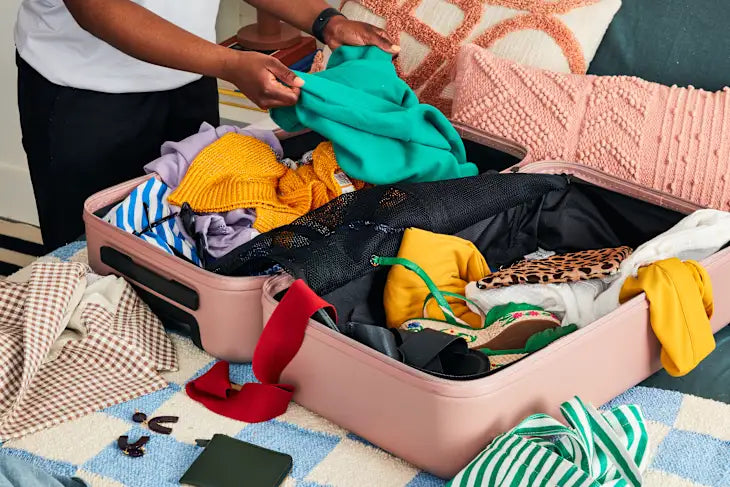
- Choose loose weaves over tight stretch leggings: Mosquito proboscises easily pierce thin, skin-tight elastane yoga pants. Loose linen shirts and lightweight ripstop hiking trousers leave an air gap over your skin while breathing better in humid weather.
- Favor pale neutrals over dark navy and black: Light khaki, stone, sage, white, and sand reflect tropical sun and attract fewer host-seeking mosquitoes than heat-retaining black or dark denim.
- Treat trekking socks and trousers with 0.5% permethrin before departure: For multi-day forest trails in Phong Nha, Cat Tien, or Ha Giang, EPA-registered permethrin fabric treatment (or factory-treated insect-shield clothing) bonds odorlessly to fibers and survives multiple washes—never spray permethrin directly onto bare skin (Source: U.S. Environmental Protection Agency).
- Layer sunscreen first, repellent second: Apply broad-spectrum sunscreen, let it set for 10 to 15 minutes, and apply insect repellent on top—avoiding combined 2-in-1 sunscreen/DEET lotions, since sunscreen needs frequent two-hour reapplication whereas 20% DEET or Picaridin lasts six hours.
Protect your ankles under shaded outdoor tables: Daytime Aedes mosquitoes hover low in cool shade beneath sidewalk coffee stools, garden restaurant tables, and wooden riverboats. A five-second mist of repellent around your ankles, Achilles tendons, and sandal straps at 07:30 and 16:30 stops the majority of surprise vacation bites.
Frequently Asked Questions About Mosquitoes and Bug Spray in Vietnam
Do I need malaria pills for a standard two-week trip to Vietnam?
For classic itineraries covering Hanoi, Ha Long Bay, Ninh Binh, Hue, Da Nang, Hoi An, Ho Chi Minh City, and Phu Quoc beach resorts, prescription antimalarial tablets are generally unnecessary because urban and coastal malaria risk is minimal. Consult a travel-health clinic four to six weeks ahead only if your route includes overnight forest stays along remote highland borders.
Does taking Vitamin B1, eating garlic, or wearing ultrasonic wristbands repel mosquitoes?
No. Controlled entomology studies consistently show that oral Vitamin B complex, garlic supplements, essential-oil slap bracelets, and ultrasonic keychains fail to prevent mosquito bites. Rely on skin-applied 20% Picaridin, 13 to 30% DEET, or 30% Oil of Lemon Eucalyptus instead.
Can I pack mosquito spray in my carry-on bag on flights to and within Vietnam?
Pump-mist bottles and lotions of 100 ml (3.4 oz) or smaller fit standard international and domestic Vietnam Airlines / Vietjet cabin liquid rules inside a clear 1-liter zip bag. Pack bottles over 100 ml in checked baggage—checking airline dangerous-goods limits on flammable pressurized aerosols—or buy 60 ml–80 ml Soffell and Remos bottles after landing.
Are mosquitoes worse in northern Vietnam or southern Vietnam?
Southern Vietnam—including Ho Chi Minh City and the Mekong Delta—stays warm (27°C–34°C) all year, so mosquitoes remain active twelve months a year with a peak during the May–November rainy season. Northern Vietnam (Hanoi, Ninh Binh, Ha Long Bay) sees heavy summer mosquito activity from May to September but drops sharply during cool, dry December-to-February winter weeks.
Is local Vietnamese bug spray safe for children and older travellers on medication?
Mentholatum Remos (15% DEET) is labeled for adults and children over four years old, while 20% Picaridin lotions are widely favored by dermatologists for sensitive mature skin and children from two months up (check your home product’s age label). Apply repellent to your own hands first before rubbing onto a child’s face or neck, keeping it away from eyes and palms.
Who Should Pack High-Strength Repellent Versus Buying Locally on Arrival?
Who should pack 20% Picaridin or 30% DEET from home
Travellers planning multi-day national park birding, Phong Nha cave expeditions, northern rice-terrace homestays, or rainy-season Mekong Delta stays—as well as guests with fragrance sensitivities who want an unscented, plastic-safe 20% Picaridin pump mist from Day 1.
Who can buy Soffell or Remos locally in Vietnam
Carry-on-only travellers sticking to air-conditioned hotels, cruises, and city cultural tours in Hanoi, Ha Long Bay, Da Nang, Hoi An, and Ho Chi Minh City who are happy picking up a $1.50–$2.85 USD 13%–15% DEET bottle at any neighborhood pharmacy.
Whether you are planning a relaxed heritage holiday for couples in their sixties and seventies or a family route from north to south, our 25–30 person team headquartered at 2nd Floor, 54 Hang Tre Street, Hoan Kiem, Hanoi—with regional teams in Sapa, Da Nang, Saigon, and Phu Quoc—builds air-conditioned private itineraries under our standing 10% deposit policy (WhatsApp +84 888 555 908; independent travel insurance recommended) via our contact page.
Further Reading & Resources
Sources
- Dengue and Severe Dengue — Fact Sheet World Health Organization
- Travel Advice and Advisories for Vietnam — Health & Vector Precautions Government of Canada
- Skin-Applied Repellent Ingredients (DEET, Picaridin, OLE) U.S. Environmental Protection Agency
- Repellent-Treated Clothing (Permethrin Guidelines) U.S. Environmental Protection Agency
- Soffell Active Ingredient & Product FAQ Enesis Group
- Mentholatum Remos Mosquito Repellent Specifications & Retail Pricing Rohto-Mentholatum Vietnam · in Vietnamese
- Dengue Fever History and Clinical Overview Wikipedia
- Da Lat — 1893 Lâm Viên Plateau Exploration by Alexandre Yersin Wikipedia
Related guides
A JOURNEY SHAPED AROUND YOU
Start with what matters.
We can plan from there.
Tell us what you enjoy, how you like to travel and where you would like more time. We can discuss a private itinerary around your interests and preferred pace.

Vani is the Founder and Lead Travel Designer at Truly Voyage. With over a decade of experience and a deep passion for her Vietnamese heritage, she specializes in crafting bespoke, unhurried itineraries. Vani is dedicated to helping travellers experience the authentic soul of Southeast Asia with absolute financial security and 24/7 on-ground support.
0 Comment