

 By Vani
A 16-day Vietnam birding and national park route links five distinct ecosystems from south to north: lowland tropical forest at Cát Tiên, coastal canopy on Sơn Trà Peninsula, cloud forest in Bạch Mã, ancient karst caves at Phong Nha–Kẻ Bàng, and limestone rainforests in Cúc Phương and Cát Bà, paced between November and April.

Flying halfway across the globe for a Vietnam wildlife expedition should never mean visiting roadside menageries, staged animal shows, or crowded tour-bus viewpoints. Stretching more than 1,650 kilometers across tropical lowland monsoon forests, coastal granite headlands, misty Annamite cloud peaks, and Paleozoic limestone karsts, Vietnam shelters over 900 recorded bird species alongside several of Earth’s rarest primates (Source: Vietnam National Authority of Tourism).
Because each habitat sits in a different climate band, linking Southern, Central, and Northern reserves into one coherent 16-day private route requires matching dry-season windows, dawn hide access, and realistic road or flight transitions—while leaving unhurried cultural days in Hội An, Huế, and Hanoi so non-birding partners enjoy the journey just as much.
Planning a 16-Day Vietnam Birding and National Park Route
Combining wildlife reserves from Ho Chi Minh City north to Hanoi works most comfortably from December through April—when southern Cát Tiên trails are dry and northern Cúc Phương forests host winter migrants—balancing dawn birding blocks with UNESCO heritage stops.
| Reserve | Prime Window | Trail Effort | Key Wildlife Focus |
|---|---|---|---|
| Cat Tien Park | Dec to Jul (dry) | Flat dirt & hides | Pittas, pheasants, gibbons |
| Son Tra Ridge | Feb to Aug (clear) | Paved road walks | Red-shanked douc langurs |
| Bach Ma Peak | Mar to Sep (dry) | Steep stone steps | Silver pheasant, babblers |
| Phong Nha Park | Feb to Aug (dry) | Boat & forest loop | Karst birds & macaques |
| Cuc Phuong | Nov to May (cool) | Shaded karst paths | Pittas, barbets, EPRC |
| Cat Ba Island | Sep to Nov (clear) | Rocky Ngu Lam hike | Cat Ba langur & bay birds |
Before diving into the day-by-day route, three planning principles make a two-week Vietnam birding and national park tour noticeably calmer—particularly for couples in their 60s and 70s or dedicated nature photographers:
- Seasonal timing across three climate zones: Southern lowland forests at Cát Tiên enjoy their dry season from December to July, Central Vietnam’s Bạch Mã cloud forest dries out from March to September (avoiding heavy October–November autumn rains), and Northern limestone parks like Cúc Phương National Park and Cát Bà offer crisp, comfortable temperatures outside peak midsummer humidity (Source: Vietnam National Authority of Tourism). Overall, late February through April delivers the strongest overlap of dry trails, breeding bird vocalizations, and clear coastal passes across all three regions.
- Split-day biological rhythm (05:30–09:30 AM and 15:30–18:00 PM): Tropical forest birds and arboreal primates forage actively in the cool hours after daybreak and again before dusk, retreating into deep shade at noon. Structuring each park stay around early-morning hide or trail sessions, a hot lunch and midday lodge rest, and a gentle late-afternoon walk prevents heat fatigue without sacrificing sightings.
- Domestic flight vs. private SUV pacing: Rather than enduring exhausting back-to-back highway days, this 16-day framework uses two short one-hour domestic flights (Ho Chi Minh City to Da Nang, and Đồng Hới to Hanoi) paired with spacious high-clearance private SUVs on scenic 2- to 4.5-hour overland legs.
Ethical, Observation-First Wildlife Standards in Vietnam
Responsible wildlife travel in Vietnam rests on strict non-interference: zero elephant riding, zero captive-animal photo props, zero food baiting or distressing playback calls, and quiet viewing with accredited national park rangers and rescue centers.
Observing wild birds and primates responsibly means adapting human behavior to the forest—never forcing wild animals to adapt to visitors. Across every reserve on our Vietnam adventure and nature itineraries, field conduct follows strict observation-first principles:
- No elephant riding—ever: Chair-mounted elephant rides have no place on responsible itineraries. Travelers interested in Asian elephants visit Yok Đôn National Park in Đắk Lắk’s Central Highlands—where traditional M’Nông communities historically honored elephants as village elders and where ethical forest walks observe unchained elephants foraging naturally from a respectful distance.
- No staged selfies or captive wildlife handling: Every stop avoids commercial venues that chain macaques, cage civets, or hold wild mammals as photo props.
- No hand-feeding or disruptive luring: Feeding wild primates along roadsides (a common mistake made by casual visitors on Sơn Trà Peninsula) habituates troops to traffic, spreads human respiratory illness, and alters natural foraging territories. All snacks stay sealed inside daypacks, and spotting scopes bridge the distance quietly.

Ranger-Led Access and Accredited Rescue Centers
Entering core forest trails, stationary bird hides, and nocturnal spotlight zones requires official park entry tickets and licensed local park rangers or specialist ornithological trackers at each reserve—including Cát Tiên National Park, Bạch Mã National Park, Phong Nha–Kẻ Bàng National Park, Cúc Phương National Park, and Cát Bà National Park (Source: Vietnam National Authority of Tourism).
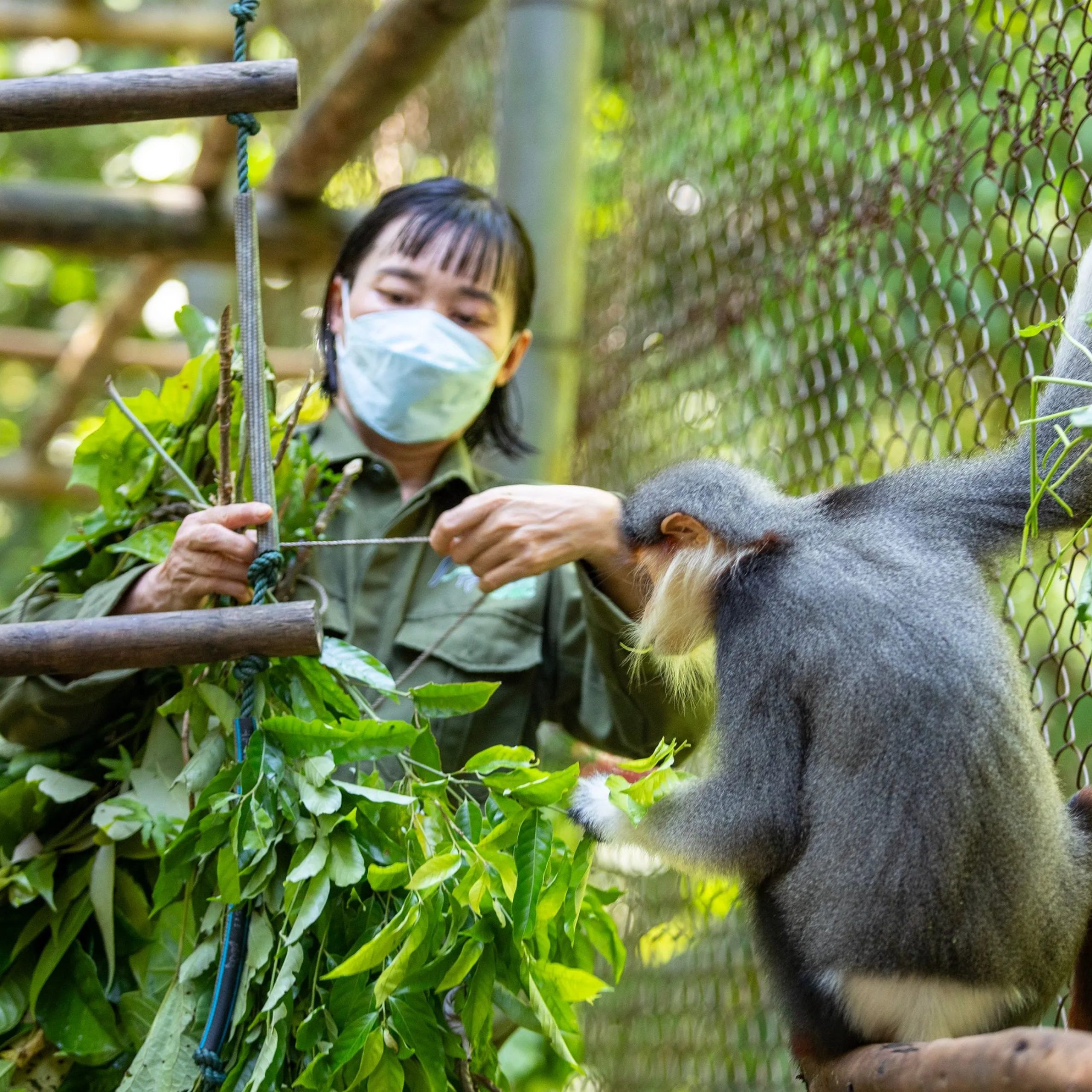
Alongside wild canopy tracking, two internationally recognized rehabilitation sanctuaries allow travelers to see conservation science firsthand without intrusive contact: the Dao Tien Endangered Primate Species Centre on a river island at Cát Tiên (rehabilitating golden-cheeked gibbons, black-shanked doucs, pygmy lorises, and silvered langurs confiscated from illegal trade) and the Endangered Primate Rescue Center (EPRC) inside Cúc Phương, caring for critically endangered Delacour’s langurs, Cat Ba langurs, and gibbons (Source: Wikipedia).
Day-by-Day 16-Day Vietnam Wildlife and Heritage Route
Starting in Ho Chi Minh City and finishing in Hanoi, this 16-day blueprint alternates multi-night national park stays (Cát Tiên, Bạch Mã, Phong Nha–Kẻ Bàng, Cúc Phương, and Cát Bà) with restorative cultural evenings in Hội An, Huế, and Lan Hạ Bay.
Day 1: Arrival in Ho Chi Minh City (Saigon)
Stepping out of Tân Sơn Nhất International Airport (SGN) introduces southern Vietnam’s warm tropical air, aromatic street kitchens, and lively urban boulevards. Rather than negotiating airport taxi queues after a long transpacific flight, a private driver meets you at arrivals for a calm 30- to 45-minute transfer to a quiet central District 1 hotel.
Historical context: Locally still called Saigon alongside its official post-1976 name Ho Chi Minh City, the metropolis grew around French colonial boulevards and river trade; Tân Sơn Nhất itself began in the 1920s–1930s as a modest unpaved colonial airfield before expanding into Vietnam’s busiest aviation hub. Use the first evening for an early dinner, hydration, and overnight rest ahead of tomorrow’s drive into the lowland jungle.

Day 2: Ho Chi Minh City to Cát Tiên National Park — Lowland Hides & Giant Tung Trees
After an unhurried breakfast and Vietnamese drip coffee, your private SUV heads roughly 150 km northeast (3.5 to 4 hours via highway and rural roads through Đồng Nai rubber and fruit orchards) to the Đồng Nai River crossing at Cát Tiên National Park (Source: Vietnam National Authority of Tourism). Recognized as a UNESCO Biosphere Reserve, Cát Tiên protects one of southern Vietnam’s largest remaining tracts of lowland moist tropical forest.

Once checked into your riverside forest lodge and briefed by an accredited Cát Tiên birding tracker, the afternoon focuses on quiet, stationary hide observation and level trail walking:
- Camouflaged forest hides: Ground-dwelling forest jewels such as the emerald-and-cobalt Bar-bellied Pitta (Hydrornis elliotii) and Blue-rumped Pitta at Cát Tiên forage shyly among damp leaf litter (Source: Wikipedia). Sitting silently behind a hide screen gives photographers crisp, eye-level views without flushing the birds.
- Ancient Tetrameles (Tung) canopy walk: Late-afternoon trails wind beneath buttress-rooted 400-year-old Tung trees where families of endangered Southern Yellow-cheeked (Golden-cheeked) Gibbons (Nomascus gabriellae) and black-shanked douc langurs swing across the upper canopy (Source: Wikipedia).
- Wet-season footwear note: From December to May trails are firm and dry; during June–October monsoon months, pack ankle-high waterproof hiking boots and pull canvas leech socks snug beneath lightweight trousers.


Day 3: Full-Day Cát Tiên Birding — Pheasants, Broadbills & Night Spotlight Safari
Setting out at 05:30 AM catches the lowland forest at its coolest and most vocal hour, when gibbon territorial duets echo across the mist over the Đồng Nai River and hornbill wings beat overhead:
- Dawn hide session (05:30–09:00 AM): Target Vietnam’s sought-after ground galliforms—including Siamese Fireback, Green Peafowl along open grassland edges, and the range-restricted Germain’s Peacock-pheasant (Polyplectron germaini), classified as Vulnerable on the IUCN Red List (Source: Wikipedia).
- Late-afternoon fruiting trees & Bàu Sấu wetland option: After lunch and a cool midday break at the lodge, scan fruiting figs and rattan thickets for Black-and-red Broadbill, Banded Broadbill, and Orange-breasted Trogon (active hikers can also trek + boat out to Crocodile Lake / Bàu Sấu for Siamese crocodiles and wetland birds).
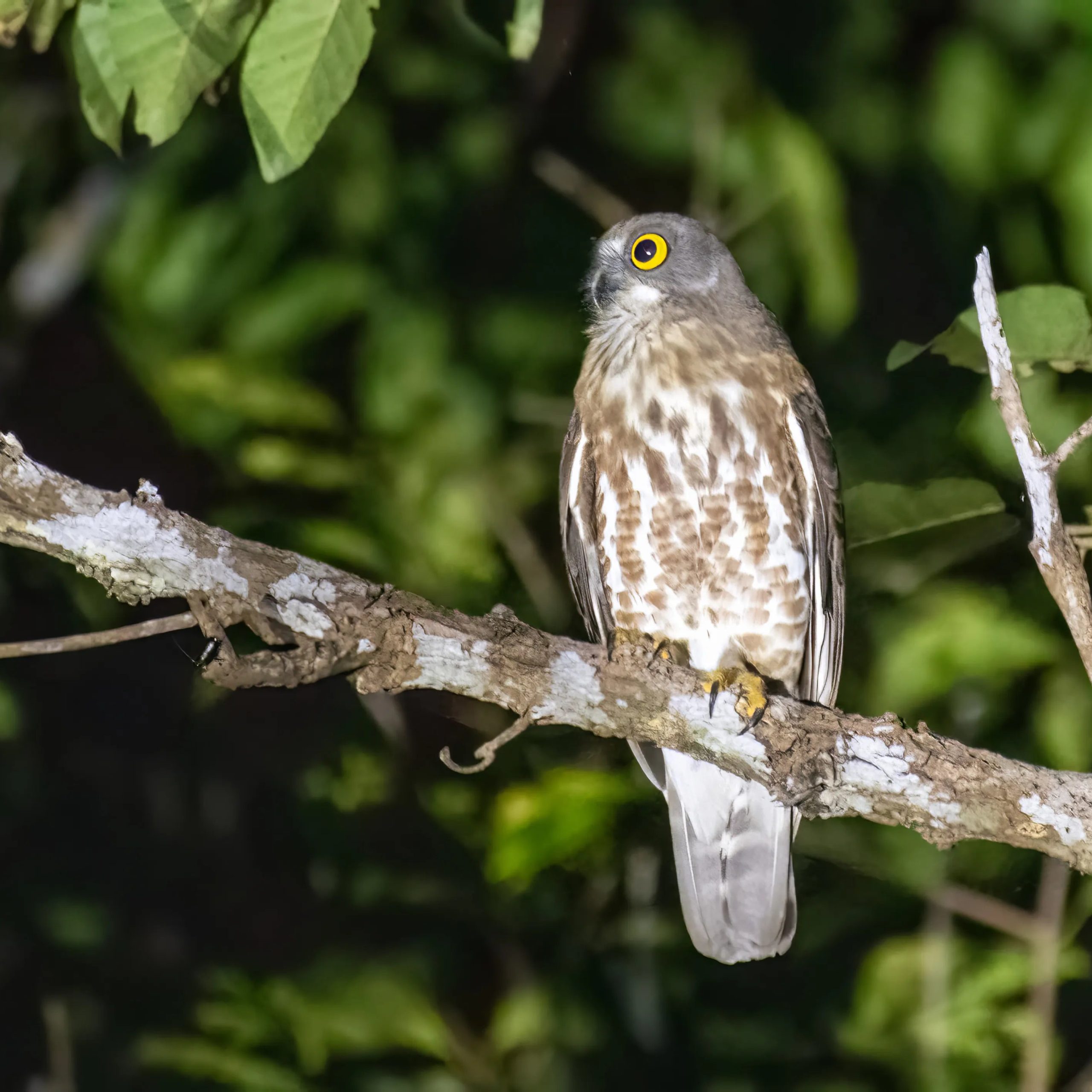
- Ranger-driven night safari: After dinner, board an open-air park vehicle along designated tracks to spot sambar deer, lesser mouse-deer, civets, and roosting nocturnal raptors such as the Brown Hawk-owl using low-intensity ranger spotlights.

Conservation & field-craft note: Across the river at Cát Tiên sits the Dao Tien Endangered Primate Species Centre, which conducts morning educational visits explaining how rescued gibbons and langurs are rehabilitated for wild release (Source: Wikipedia). On forest trails, skip bright white or neon athletic shirts and noisy crinkly snack wrappers; pack breathable olive, khaki, or muted brown layers so shy pittas and pheasants stay relaxed near hides.
Day 4: Morning Hornbills at Cát Tiên, Flight to Da Nang & Coastal Drive to Hội An
Enjoy one final early-morning walk along Cát Tiên’s open forest clearings—prime territory for spotting pairs of Oriental Pied Hornbills and Great Hornbills landing in tall fig crowns—before checking out after lunch for the 3.5- to 4-hour private SUV return to Tân Sơn Nhất Airport.
A 1 hour 20 minute evening flight carries you north to Da Nang International Airport (DAD), followed by a flat 45-minute coastal transfer south to a quiet riverside boutique hotel in Hội An. Domestic flight luggage tip: Carry-on weight allowances vary by carrier in Vietnam—Vietnam Airlines Economy typically permits 10–12 kg cabin bags, whereas low-cost carriers such as Vietjet enforce a strict 7 kg (15 lb) cabin limit—so keep heavy binoculars and telephoto bodies in a personal camera vest and pre-book checked luggage allowance before travel day, while watching digital gate monitors closely for last-minute gate swaps.


Day 5: Cultural Breather — Mỹ Sơn Champa Sanctuary & Lantern-Lit Hội An
Midway through the first week, Day 5 trades pre-dawn spotting scopes for Central Vietnam’s Champa and maritime heritage—starting with an early departure to Mỹ Sơn Sanctuary (~45 km southwest of Hội An), where electric buggies carry visitors through a forested valley bowl to red-brick Hindu temple-towers erected by the Champa Kingdom between the 4th and 13th centuries (inscribed by UNESCO in 1999).
Heat & crowd timing: Because Mỹ Sơn’s valley floor traps heat and large tour buses arrive around 09:00 AM, reaching the ticket gate near 06:00–06:30 AM gives you cool mountain air, birdsong in the surrounding hills, and quiet brick courtyards.

Returning to Hội An Ancient Town by late morning leaves time for a bowl of cao lầu (chewy ash-lye noodles with sliced pork, crisp rice-flour crackers, and fresh Tra Quế herbs), custom tailoring, or a shaded afternoon rest. After 15:00, when motorbikes are restricted from the pedestrian heritage lanes, stroll past charcoal-grilled pork skewers, Chinese assembly halls, and the historic Japanese Covered Bridge (Chùa Cầu, dating back to the late-16th-century merchant port era) as silk lanterns reflect across the Hoài River.


Day 6: Dawn on Sơn Trà Peninsula for Red-Shanked Doucs, Hải Vân Pass & Huế
Departing Hội An early puts you onto Da Nang’s forested Sơn Trà Peninsula (“Monkey Mountain,” anchored by the 67-meter Lady Buddha statue at Linh Ứng Pagoda) during the golden 06:00–08:30 AM foraging window.
Walking quietly along paved ridge roads above the East Sea offers Vietnam’s clearest wild encounters with the Red-shanked Douc Langur (Pygathrix nemaeus)—striking arboreal leaf-monkeys with amber faces, snow-white forearm fur, and maroon lower legs that were uplisted to Critically Endangered on the IUCN Red List in 2020 (Source: Wikipedia). Visiting at dawn matters: by late morning, family troops retreat deep into shaded ravines away from midday heat.

After your morning primate session and breakfast, your private driver climbs the 21-kilometer Hải Vân Pass (“Ocean Cloud Pass”)—historically the fortified frontier between Đại Việt and Champa and a dramatic climatic divide between Da Nang Bay and Lăng Cô Lagoon—descending comfortably into the former imperial capital of Huế (avoiding the safety hazards of self-riding scooters alongside steep mountain truck traffic).

Day 7: Imperial Huế — Nguyễn Dynasty Citadel, Perfume River & Khải Định Tomb

Serving as Vietnam’s royal capital under the Nguyễn Dynasty from 1802 until August 1945 (inscribed by UNESCO in 1993), Huế rewards an 08:00 AM gate arrival before sun warms its expansive stone esplanades:
- Imperial City (Hoàng Thành) on foot: Enter through Meridian Gate (Ngọ Môn) to explore Thái Hòa Palace, Dien Tho Queen Mother’s residence, and quiet moss-lined side courtyards that electric buggies bypass (use the main visitor restrooms near the entrance before walking deeper into the complex).
- Perfume River boat & Thiên Mụ Pagoda: Board a shaded wooden dragon boat along the Perfume River to the seven-tiered octagonal Phước Duyên tower at Thiên Mụ Pagoda set among riverside pines.
- Tomb of Emperor Khải Định (built 1920–1931): Drive 15 minutes into the hills to climb the 127 dragon-balustrade steps (wear grippy walking shoes) into Khải Định’s hillside mausoleum, blending European concrete geometry with intricate porcelain-and-glass mosaic dragon ceilings.


Pacing Huế between morning architecture, a river breeze at noon, and one afternoon royal tomb keeps walking mileage manageable so your legs stay fresh for tomorrow’s cloud-forest ascent into Bạch Mã.


Day 8: Cloud-Forest Birding in Bạch Mã National Park
Rising sharply to 1,450 meters less than two hours south of Huế, Bạch Mã National Park forms a coastal spur of the Annamite Range where moist sea air condenses into cool mountain mist—first surveyed by French engineer Girard in 1932 as a high-altitude summer hill station whose moss-draped stone villa ruins still line the forest roads (Source: Vietnam National Authority of Tourism).
Departing Huế by 06:30–07:00 AM with a specialist birding guide brings you up the winding summit road into submontane evergreen forest beneath towering Parashorea stellata (chò đen) trees.
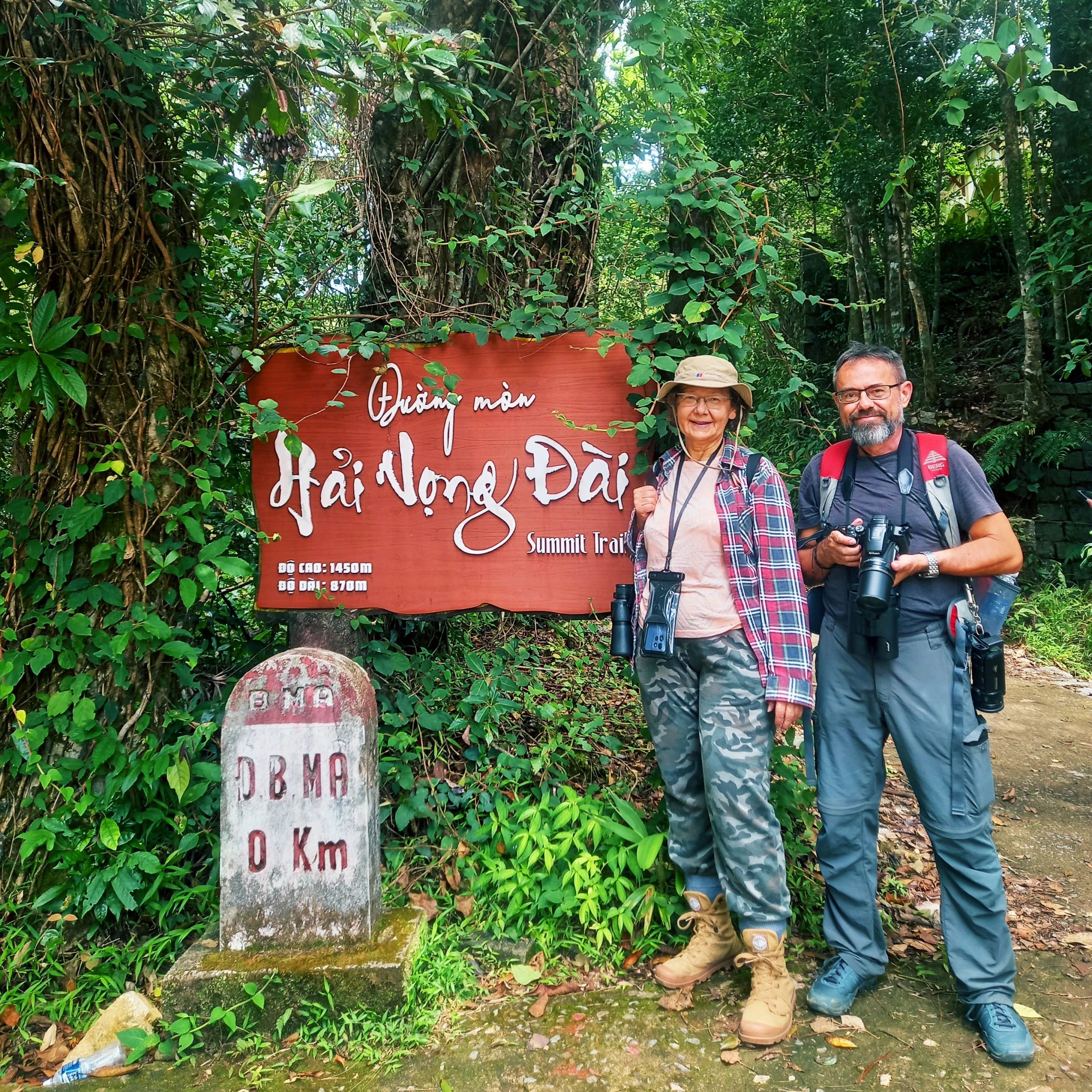
Designated an Important Bird Area by BirdLife International, Bạch Mã’s cool upper slopes reward slow, quiet scanning along Hải Vọng Đài, Rhododendron Trail, and Pheasant Trail:
- Montane target birds: Scan shaded trail bends and mossy gullies for Silver Pheasant (Lophura nycthemera), Indochinese Wren-babbler, Red-headed Trogon, Sultan Tit, Short-tailed Scimitar Babbler, and White-winged Magpie.
- Footing & weather preparation: Summit temperatures sit noticeably cooler than Huế, and passing clouds keep granite steps near Five Lakes (Ngũ Hồ) damp year-round—pack a breathable rain shell and lug-soled trail shoes, and visit between March and September for the driest mountain footing (Source: Vietnam National Authority of Tourism).


Days 9–10: North Across the Historic 17th Parallel to Phong Nha–Kẻ Bàng Caves & Botanic Garden
Day 9 provides a restful overland transition north from Huế to Phong Nha (~210 km, ~4 to 4.5 hours by private SUV), passing Quảng Trị’s historic 17th Parallel Demilitarized Zone and Hiền Lương Bridge over the Bến Hải River—the dividing line between North and South Vietnam from 1954 to 1975—before arriving mid-afternoon beside the Son River karsts of Phong Nha–Kẻ Bàng National Park.
Inscribed as a UNESCO World Heritage Site in 2003 (and expanded in 2015), Phong Nha–Kẻ Bàng protects Paleozoic limestone massifs formed roughly 400 million years ago—Asia’s oldest major karst landscape (Source: Wikipedia).

On Day 10, explore both the subterranean river caverns (which sheltered Ho Chi Minh Trail ferry depots and field clinics during wartime) and the surrounding limestone forest:
- Morning cave exploration: Glide by wooden boat into Phong Nha Cave’s cool mineral chambers or walk elevated wooden boardwalks beneath the cathedral stalactites of Thiên Đường Cave (note our Sơn Đoòng Cave expedition guide if comparing extreme multi-day caving vs. accessible boardwalk caves).
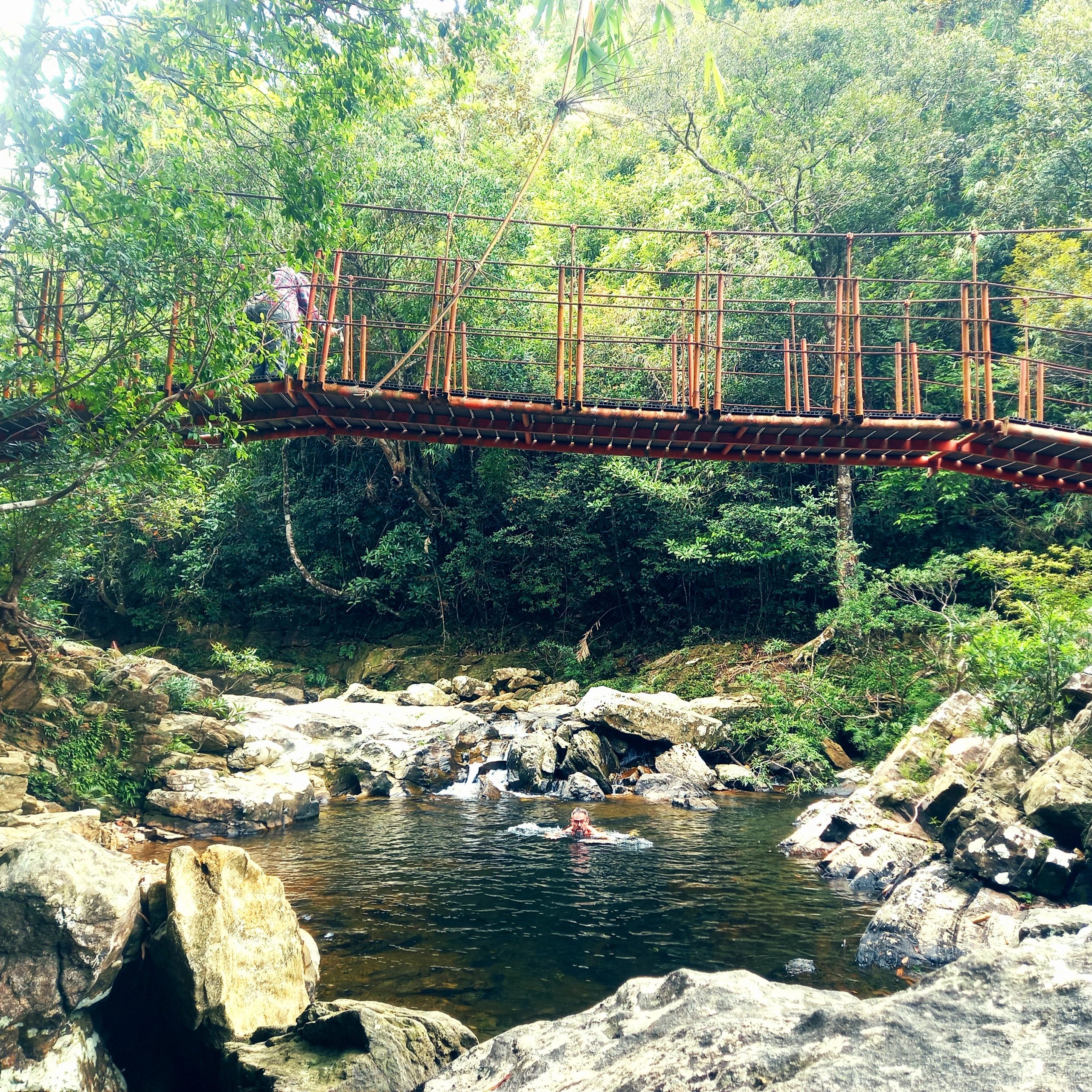
- Afternoon Phong Nha Botanic Garden loop: Walk shaded forest trails past Gió Waterfall, scanning karst cliff edges and streamside canopy for Sooty Babbler, Limestone Leaf Warbler, Red-collared Woodpecker, and wild macaques.


Days 11–12: Flight to Hanoi & Deep-Forest Birding in Cúc Phương National Park
On Day 11, a short one-hour morning flight from Đồng Hới Airport (VDH) to Hanoi’s Nội Bài Airport connects seamlessly with a 2.5-hour private highway and countryside drive south into Ninh Bình Province, arriving at the forested valley gate of Cúc Phương National Park before dusk (Source: Vietnam National Authority of Tourism).
Established as a forest reserve in 1960 and consecrated in 1962 as Vietnam’s first national park, Cúc Phương spans roughly 22,408 hectares of primary limestone rainforest sheltering some 300 bird species, 97 mammal species, and 2,000 vascular plant species (Source: Wikipedia).

Day 12 dedicates a full dawn-to-dusk field day inside northern Vietnam’s premier birding valley alongside an experienced Cúc Phương forest guide:
- 06:00 AM central valley road & hides: Early mist along the paved spine road and permanent hides offers prime views of Bar-bellied Pitta, Blue-rumped Pitta, Eared Pitta, Silver Pheasant, White-winged Magpie, and Green-eared Barbet (Source: Wikipedia).
- Limestone ridge & botanical trails: After hot phở and dark-roasted Vietnamese coffee at park headquarters, explore ancient Chò Chỉ tree trails for Red-headed Trogon, Ratchet-tailed Treepie, Pied Falconet, and the Annam Limestone Babbler (Gypsophila annamensis—split from the variable limestone babbler complex in 2020) (Source: Wikipedia), plus a guided educational stop at the Endangered Primate Rescue Center.


Days 13–14: Coastal Ferry to Cát Bà Island, Ngự Lâm Peak & the Critically Endangered Cát Bà Langur
On Day 13, trade inland rainforest for the salty breeze of the Gulf of Tonkin on a 3.5- to 4-hour private transfer northeast through Hải Phòng to the short ferry crossing onto Cát Bà Island—the largest island in a 366-island limestone archipelago sheltering the endemic Cát Bà Langur recognized alongside Hạ Long Bay by UNESCO (Source: Wikipedia).
Local folklore links the name Cát Bà (“Women’s Island”) to seaside shrines honoring three Trần Dynasty women washed ashore centuries ago; check into a sea-facing hotel for a restful afternoon overlooking emerald karst coves.


On Day 14, enter Cát Bà National Park (declared in 1986) for the 2- to 2.5-hour round-trip climb up Ngự Lâm Peak—a stepped, rocky limestone trail rewarding sure-footed walkers with 360-degree views across undulating karst ridges (because this route is private, guests preferring gentler terrain can swap the rocky summit scramble for flat valley birding and coastal boat scanning).
Cát Bà’s sheer sea cliffs represent the sole natural home on Earth of the Cát Bà Langur or Golden-headed Langur (Trachypithecus poliocephalus)—listed among the World’s 25 Most Endangered Primates and evaluated as Critically Endangered on the IUCN Red List, uniquely adapted to drinking rainwater pooled in karst pockets and tolerating brackish moisture on streamless sea cliffs (Source: Wikipedia).

Days 15–16: Quiet Lan Hạ Bay Cruising & Farewell Coffee in Hanoi’s Old Quarter
Day 15 unwinds aboard a calm small-vessel cruise across Lan Hạ Bay—the quieter southern neighbor of Hạ Long Bay—scanning cliff tops with binoculars for White-bellied Sea Eagles, Pacific Reef Egrets, and Black Bazas, with optional sheltered lagoon kayaking before your private driver brings you 2.5 hours along the expressway back to Hanoi by evening.

On Day 16, enjoy an unhurried final morning strolling Hanoi’s historic 36 Guild Streets (Hàng Bạc silversmiths, Hàng Mã paper crafts) and sipping a morning Vietnamese phin or egg coffee from a second-floor balcony overlooking Hoàn Kiếm before your private airport transfer to Nội Bài International Airport (HAN).

Target Bird and Primate Species Across Vietnam’s Parks
Accurate IUCN Red List statuses and habitat behaviors explain why stationary viewing hides, dawn arrival windows, and experienced park trackers dramatically raise sighting odds for Vietnam’s shy forest endemics.

| Species | Main Site | IUCN Red List | Field Viewing Method |
|---|---|---|---|
| Bar-bellied Pitta | Cat Tien & Cuc Phuong | Least Concern | Quiet dawn viewing hides |
| Golden Gibbon | Cat Tien canopy | Endangered (EN) | Dawn vocal & canopy scan |
| Red Douc Langur | Son Tra Peninsula | Critically Endang. | 06:00–08:30 fig-tree scan |
| Germain Pheasant | Cat Tien floor | Vulnerable (VU) | Stationary forest hides |
| Annam Babbler | Cuc Phuong karst | Split taxon (LC) | Limestone ridge trails |
| Cat Ba Langur | Cat Ba sea cliffs | Critically Endang. | Boat & cliff scope scan |
- Germain’s Peacock-pheasant (Polyplectron germaini — Vulnerable): Endemic to seasonal forests of southern Vietnam and eastern Cambodia, evaluated as Vulnerable on the IUCN Red List due to lowland habitat loss—most reliably observed quietly from Cát Tiên viewing hides (Source: Wikipedia).
- Red-shanked Douc Langur (Pygathrix nemaeus — Critically Endangered) & Cát Bà Langur (Trachypithecus poliocephalus — Critically Endangered): Both primates carry IUCN’s highest threat category prior to extinction in the wild; viewing them from paved Sơn Trà turnouts or Cát Bà boats at respectful telephoto distances protects wild troops from stress (Source: Wikipedia).
- Annam Limestone Babbler (Gypsophila annamensis): Formerly treated as a subspecies of the variable limestone babbler (G. crispifrons, rated Least Concern globally) until a 2020 study recognized it as a distinct karst-specialist species in northern/north-central Vietnam and Laos (Source: Wikipedia).
Matching This 16-Day Wildlife Route to Your Travel Style
Who suits this 16-day birding and national park blueprint
Active couples in their 50s–70s, birdwatchers, and wildlife photographers happy to rise at 05:30 AM for quiet hide sessions while enjoying private SUV transfers, boutique heritage hotels in Hội An/Huế, and flexible trail pacing.
Who may prefer a lighter nature-and-culture balance
Travelers uncomfortable with basic national park guesthouses, humid forest insects, or uneven stone steps—consider pairing easy morning wildlife stops (Sơn Trà douc langurs and Lan Hạ Bay) inside our 14-day Vietnam cultural itinerary or Vietnam Heritage Tour.
Frequently Asked Questions About Vietnam Birding Tours
How physically demanding is a 16-day Vietnam birding and national park tour?
Most birding in Cát Tiên, Sơn Trà, and Cúc Phương’s central valley takes place along flat or gently graded dirt roads and seated viewing hides over 2- to 4-hour morning blocks. Steeper stone steps appear at Huế’s Khải Định Tomb (127 steps), Bạch Mã’s waterfall trails, and Cát Bà’s Ngự Lâm Peak—all optional on a private itinerary where you set the walking pace and can substitute gentler valley or boat routes anytime.
Do we need to bring heavy spotting scopes and tripods from home?
No. Pack your own comfortable, humidity-sealed 8×42 or 10×42 binoculars and camera body, and leave heavy spotting scopes at home—specialist local birding guides bring high-magnification spotting scopes and tripods into the parks and dial in perched canopy or hide targets for you.
What are lodges, restrooms, and dietary hygiene like inside Vietnam’s national parks?
In Ho Chi Minh City, Hội An, Huế, Cát Bà, and Hanoi you stay in comfortable boutique or four-star hotels with full Western bathrooms. Inside forest reserves like Cát Tiên and Cúc Phương, park lodges are clean but simpler eco-accommodation, and deep forest trails have no restrooms—guides plan restroom stops at visitor headquarters before trailheads and coordinate gluten-free, vegetarian, or allergy-safe cooked meals in advance.
Is malaria or dengue a concern in Cát Tiên, Bạch Mã, and Cúc Phương?
According to U.S. CDC Travelers’ Health guidance, dengue (spread by day-biting mosquitoes) is a year-round risk nationwide with no routine traveler vaccine, whereas malaria risk exists in certain rural/forested zones—with zero transmission in Hanoi, Ho Chi Minh City, Da Nang, or Hải Phòng and rare cases in the Red River and Mekong Deltas. Pack EPA-registered 20–30% DEET or Picaridin repellent, wear light long sleeves at dawn and dusk, and consult a travel-medicine physician 4–6 weeks before departure regarding whether antimalarial prophylaxis suits your exact park nights (see our Vietnam travel health and hospital guide).
What happens if heavy rain or a storm affects a mountain trail or Cát Bà ferry?
Private itineraries allow flexible day-to-day adjustments without group-bus rigidity. When Central Vietnam autumn rain or a Gulf of Tonkin weather advisory affects Bạch Mã trails or Cát Bà ferry crossings, our operations specialists across Hanoi, Da Nang, and Saigon rearrange inland heritage activities, swap caves or lowland reserves, and rebook transfers smoothly during operating hours.
Can we customize hotel tiers, shorten the trip, or add extra rest days?
Yes. This 16-day route serves as a customizable private framework: you can upgrade city and coastal stays to five-star resorts, add beach recovery days near Hội An or Da Nang, swap Ngự Lâm Peak for leisurely Lan Hạ Bay cruising, or condense the route into a focused 10-day Cát Tiên + Cúc Phương birding trip with a 10% booking deposit.
Designing Your Private Vietnam Birding Itinerary
Few journeys stay with you quite like sipping morning coffee on a Hanoi balcony with Cúc Phương’s red limestone soil still dusted on your hiking boots—recalling the neon flash of a Bar-bellied Pitta in Cát Tiên, amber-faced douc langurs high above Da Nang’s surf, and golden-crowned langurs clinging to Cát Bà’s sea cliffs.
Coordinating dawn ranger permits, hide reservations, domestic flight baggage rules, and comfortable high-clearance SUVs across five national parks doesn’t require solo guesswork. With 25–30 specialists across departments at our Hanoi headquarters (2nd Floor, 54 Hang Tre Street, Hoan Kiem, Hanoi) and regional operations teams in Sapa, Da Nang, Saigon, and Phu Quoc, Truly Voyage builds private, observation-only wildlife and cultural itineraries paced around how you actually enjoy traveling.


Further Reading & Resources
Sources
- 7 Amazing National Parks in Vietnam — Seasonal Windows & Access Vietnam National Authority of Tourism
- Vietnam Traveler View — Malaria Transmission Zones & Dengue Precautions CDC Travelers’ Health
- Cúc Phương National Park — 1962 Founding, 300 Bird Species & EPRC Wikipedia
- Cát Tiên National Park — Avifauna, Gibbons & Dao Tien Rescue Centre Wikipedia
- Germain’s Peacock-pheasant (Polyplectron germaini) — IUCN Vulnerable Status Wikipedia
- Red-shanked Douc Langur — 2020 IUCN Critically Endangered Uplisting Wikipedia
- Cát Bà Langur — Critically Endangered Limestone Endemic Wikipedia
- Phong Nha–Kẻ Bàng National Park — 2003 UNESCO Karst Heritage Wikipedia
Related guides

A JOURNEY SHAPED AROUND YOU
Meet the people behind
your Vietnam plans.
Tell us what you enjoy, how you like to travel and where you would like more time. We can discuss a private itinerary around your interests and preferred pace.

Vani is the Founder and Lead Travel Designer at Truly Voyage. With over a decade of experience and a deep passion for her Vietnamese heritage, she specializes in crafting bespoke, unhurried itineraries. Vani is dedicated to helping travellers experience the authentic soul of Southeast Asia with absolute financial security and 24/7 on-ground support.
0 Comment